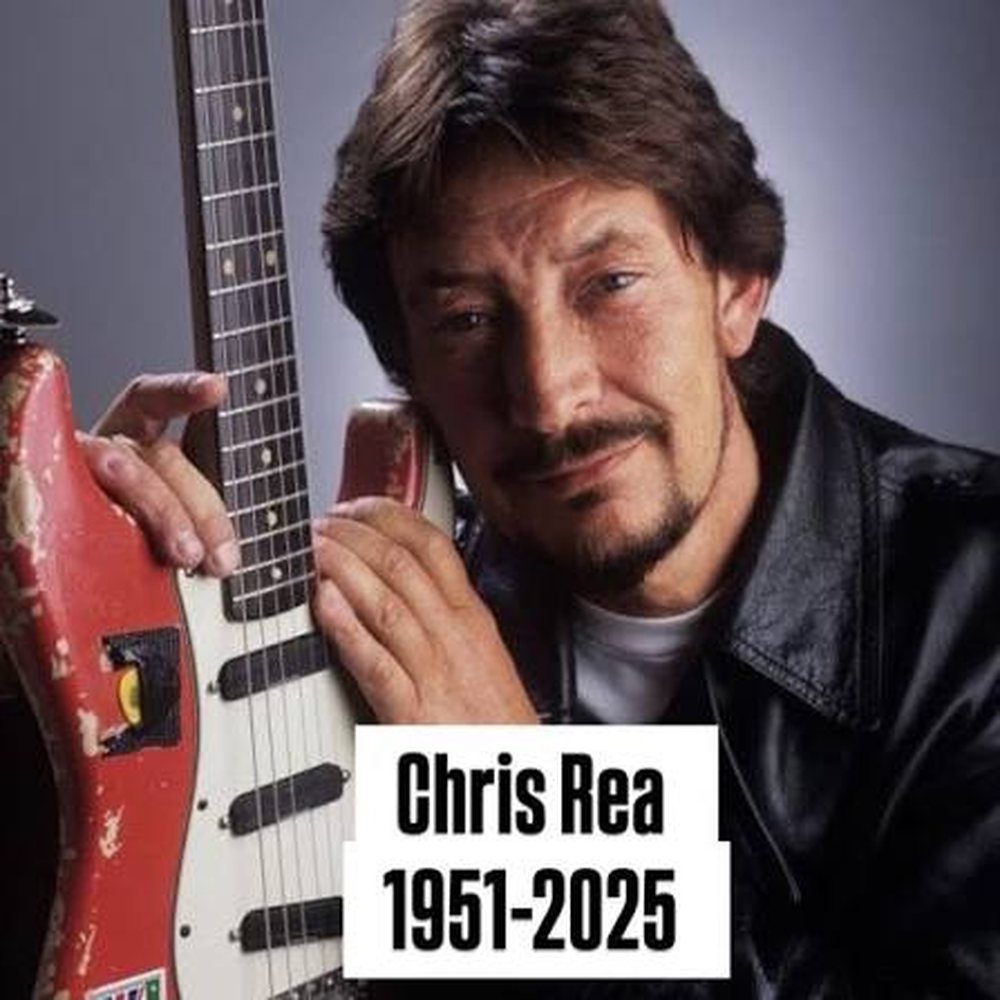
British singer-songwriter Chris Rea, one of the most distinctive and enduring figures in British music, has died at the age of 74. His family announced that the artist passed away peacefully in hospital after a short illness.
With a career spanning more than four decades, Chris Rea left behind a rich musical legacy, masterfully blending blues, pop, soul and soft rock. He released 25 albums and sold over 30 million copies worldwide, becoming one of the most beloved names in European music.
Rea became internationally known with now classic songs like "The Road to Hell", "Fool (If You Think It's Over)", "On the Beach", "Josephine" and especially "Driving Home for Christmas", which remains one of the most iconic holiday songs and continues to rank among the most listened to even decades after its release.
Born in 1951 in Middlesbrough, to an Italian father and Irish mother, Chris Rea was one of seven children. He often described his childhood as an experience of being "an outsider", due to his mixed heritage in an English industrial town. Before devoting himself fully to music, Rea worked in various occupations, including in the family ice cream factory, and for a time considered becoming a journalist.
His musical career began in earnest in the early 1970s, initially with local bands, before signing a record deal as a solo artist. His first major success came in the United States in 1978 with the song "Fool (If You Think It's Over)", which earned him a Grammy Award nomination for Best New Artist.
Rea's commercial peak came in the late 1980s, when his albums began to regularly top the British charts. The 1988 compilation album New Light Through Old Windows turned "Driving Home for Christmas" into the biggest hit of his career, a song that gained immense popularity over the years and reached high positions in the charts decades later.
In the 2000s, Rea gradually moved away from commercial pop and returned to the blues, the genre that had inspired him since his early days. In parallel with music, he had a particular passion for motor racing, participating in races and even working as a mechanic in the pits of a Formula 1 team.
His life was also marked by serious health challenges. In 2001, he was diagnosed with pancreatic cancer and underwent major surgery that changed his life forever. He later suffered a stroke and other health issues that forced him to reduce his artistic activity.
Chris Rea is survived by his wife Joan, with whom he had been in a relationship since adolescence, and their two daughters, Josephine and Julia – names he immortalised in song. With his distinctive style, distinctive voice and emotional lyrics, Chris Rea remains an icon of British music and an artist whose work will continue to be heard and appreciated for generations to come.