


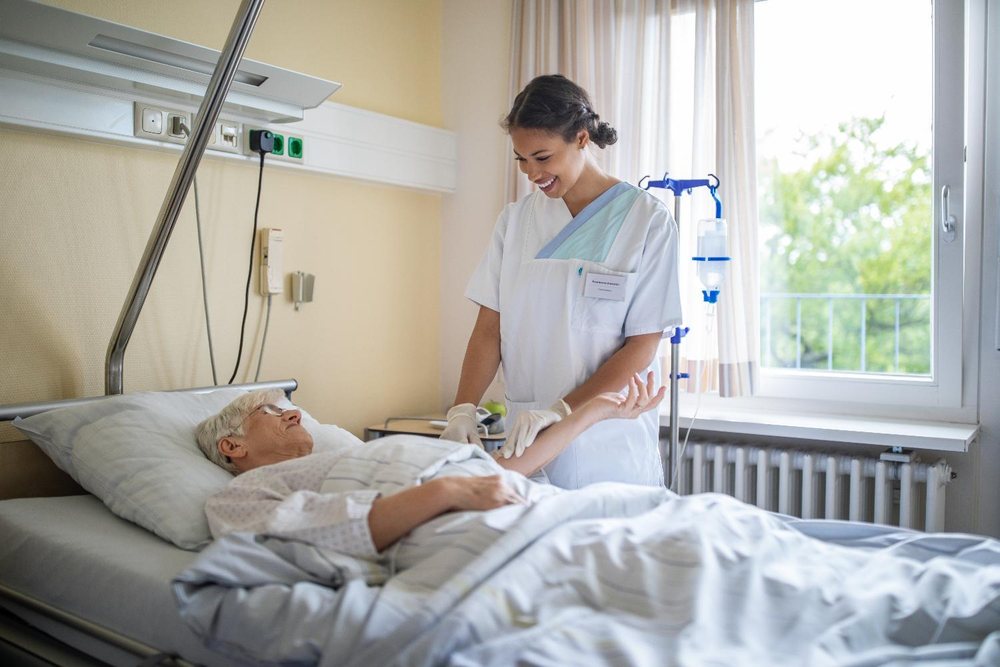
Around a fifth of those employed in the healthcare sector in Germany are foreign nationals, according to data published by the German Employment Agency on the occasion of Carers and Nurses Day on May 12.
In total, about 1.76 million people work in hospitals, clinics, outpatient services and residential institutions, caring for the sick, the elderly and the disabled. The sector has seen a 22% growth over the last decade.
According to the data, 734,000 employees are engaged in hospitals and clinics, while 843,000 provide care in homes and residential settings. Of this total, about 353,000 are foreigners, making up approximately 20% of the workforce in this sector.
The highest percentage of foreign workers comes from Bosnia and Herzegovina, Turkey and India, while more and more citizens from the Western Balkans are being employed in the German care system, with around 54,700 employees in total.
The number of employees from Syria has also increased, reaching around 9,300 within a short period.
The sector remains dominated by women, who make up about 81% of the workforce, with a large proportion working part-time. Even among men, only a fraction work full-time.
In some large cities such as Munich and Frankfurt, foreigners in the care sector even outnumber German workers, reflecting the growing dependence of the health system on skilled migration.
However, some countries such as Bosnia and Herzegovina, Jordan and Vietnam have limited cooperation with Berlin on staff recruitment, due to a shortage of manpower in their countries as well.
A report published by the portal mediendienst-integration.de also highlights that many foreign workers face integration difficulties and daily discrimination, while half of them report negative experiences in the workplace.
The problems are related to long procedures for the recognition of diplomas, the lack of integration policies, and differences in wages, as many foreign workers are employed in lower-paid services such as outpatient care.