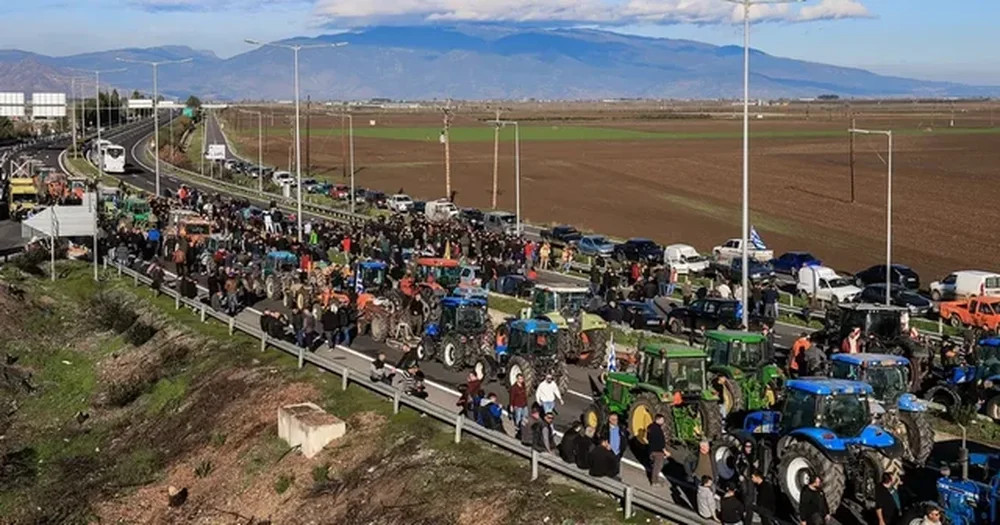
Farmers' protests in Greece are entering their most tense phase yet, with blockades increasing across the country and likely to last well into the holiday season. The number of blockades has surpassed 50, including on side roads, customs checkpoints and key segments of the road network, as the government grapples with a crisis that is already affecting critical infrastructure – from land routes to ports and airports.
All parties await the decisions of the Panhellenic Blockade Coordination Committee, where farmers are expected to determine the next steps. Meanwhile, Athens and Maximus are urgently seeking a mediator figure who can reopen the communication channel before the situation gets out of control.
With each new convoy of tractors on the national roads, the situation becomes more fragile. The government struggles to balance the normal functioning of the circulation of goods and passengers with the growing dissatisfaction of farmers who are demanding immediate and tangible solutions.
The next 72 hours are considered crucial, as blockades at ports and airports, as well as new national protests, are planned.
Thessaly, the epicenter of the protests
Thessaly remains the main “stronghold” of farmers. About 4,000 tractors have lined up at the blockade of Nicaea, which functions as the protest headquarters. Symbolic road blockades have started today, while a blockade of the port of Volos is planned for Wednesday, where fishermen from Magnesia will also join.
In Karditsa, roads to the E65 highway and the Domokos-Thessaly axis remain closed. “No meeting is needed to implement promises that have been broken for years,” declares Yannis Tsoutras, demanding an immediate increase in income and fair prices for produce.