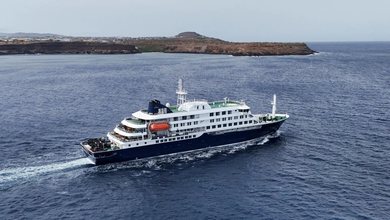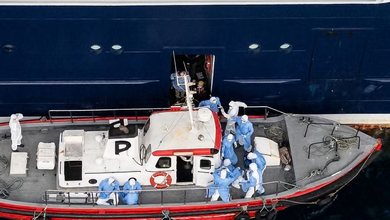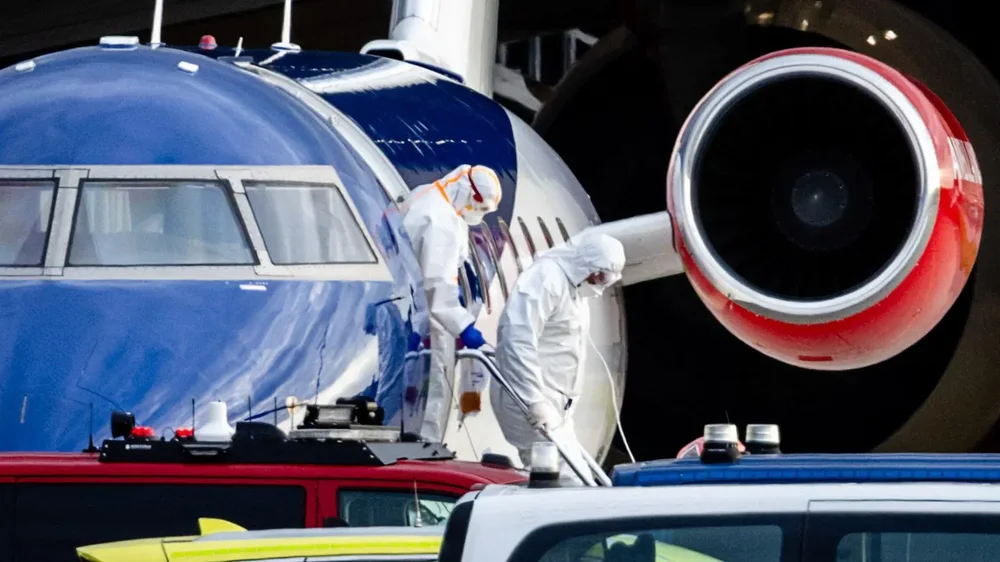
Health authorities around the world are conducting a wide-ranging tracing operation following the outbreak of the hantavirus virus on the Dutch cruise ship MV Hondius, where five cases and three deaths have been confirmed so far.
According to the UN, hundreds of people who have been in contact with passengers and crew are being monitored in several countries around the world, as the virus can have an incubation period of up to six weeks. However, the organization stressed that the situation is not considered a pandemic like Covid-19, as this variant of hantavirus is spread only through very close and intimate contact.
The ship had about 150 passengers and crew members from 28 countries. It set off on April 1 from Ushuaia in Argentina and is expected to arrive in Tenerife in the Canary Islands. Dozens of people disembarked on the island of Saint Helena on April 24 before the first cases were confirmed.
Experts have raised concerns that this is the first documented human-to-human transmission of hantavirus. The virus is usually transmitted by rodents, particularly certain species of mice that carry the Andean variant of the virus.
So far, authorities in at least 12 countries are closely monitoring the people on board. These include the United Kingdom, United States, Germany, Netherlands, Switzerland, Spain and other European and Asian countries.
Three British nationals have been identified as suspected cases in the UK. One is in a stable condition in the Netherlands, while another is being treated in intensive care in South Africa. Two other Britons are self-isolating at home, although they are asymptomatic.
In the US, health authorities in several states, including Texas, Georgia and California, are monitoring passengers who were on board. So far, no symptoms have been reported.
Two of the victims are a Dutch couple. The woman died in South Africa after testing positive for hantavirus, while the husband had died earlier in the trip. Another victim was a German passenger who developed severe symptoms of pneumonia.
In France, authorities have identified eight people who had contact with the Dutch woman who died on a flight from Saint Helena to Johannesburg. One of them has shown mild symptoms and is awaiting test results.
Meanwhile, a Swiss citizen who disembarked from the ship in Saint Helena tested positive for the Andean variant of hantavirus and is being treated in Zurich.
The ship was initially rejected by Cape Verde and stayed for several days off the coast of the archipelago before continuing on to the Canary Islands. Its arrival in Tenerife has caused concern among local residents and political debate in Spain. The president of the Canary Islands, Fernando Clavijo, opposed allowing the ship into port, stating that local authorities had not received sufficient information.
Under the current plan, passengers will undergo medical checks upon arrival in Tenerife. Non-Spanish citizens will be repatriated, while Spanish passengers will be quarantined at a military hospital in Madrid.
Experts emphasize that the risk to the public remains low, but warn that more cases may be discovered in the coming weeks due to the virus's long incubation period.