


In 2024, an Albanian citizen will need almost 19 annual salaries to buy an apartment, according to "Monitor" calculations based on the "Deloitte" methodology.
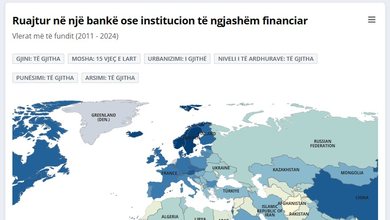
Even Numbeo's data for the first 6 months of 2025 confirms this difficult reality, placing Albania at the top of the list of European countries with the highest housing prices in relation to purchasing power.
While the government boasts of increasing investment in real estate and aims to attract foreign buyers, the middle and younger segments of the population are finding it increasingly impossible to secure a home.
Current housing policies fail to address this deep crisis, while the solutions offered remain fragmented, bureaucratic, and unadapted to the economic reality of the majority of Albanians.
Six national housing programs are implemented in the country.
The National Housing Authority (NHA) is the institution responsible for implementing the low-cost housing construction program, one of the six national housing programs. According to NHA data for “Monitor,” around 11,492 families have been housed since 1994.
The current social housing system, based on Law No. 22/2018 "On Social Housing", updated with the amendments of Law No. 48/2023, offers several targeted programs for vulnerable groups, including low-cost construction and rental subsidies.
The selection of beneficiaries is based on criteria such as: lack of housing, overcrowding, risk of collapse, family or social status, and belonging to marginalized groups.
Earlier, Prime Minister Edi Rama also announced that the government is in the process of creating a National Agency for Urban Planning and Housing, which will focus on a new approach to social housing, as well as initiatives to facilitate the purchase of housing by low- and middle-income groups.
"We will approach social housing in a new way, creating real opportunities for those who today find it impossible to buy a home on the open market."
However, urban planner and lecturer Gentian Kaprata warns that social housing cannot bear the weight of a disordered market, especially if the ratio between those who can afford to buy and those who depend on public assistance is deeply imbalanced.
“Social housing is the assistance that society as a whole, through the state budget and local common property, provides to a small part of it that is unable to turn to the free market for shelter.
However, there is a breaking point here: the social housing system can function on a certain ratio between two groups:
(i) the group that has affordable housing for itself and
(ii) the group that finds it impossible to secure a home without the help of society (the first group). If this ratio is not achieved, solidarity is impossible, the scales pull down the entire society, and not just with the issue of housing,” he says.
Experts recommend that Albania look to models that have worked in other countries with similar challenges.
Economist Elvin Meka suggests using housing bonds and creating hybrid schemes involving the government, municipalities, the banking sector, and private developers. These schemes would provide long-term financing for the construction of affordable housing and expanded access for citizens.
Stela Dhami proposes that the Austrian model of social housing with long-term rental and purchase options through soft loans could be adapted in Albania.
This model, which operates successfully in Vienna and other European cities, ensures not only low prices, but also security and quality of life.
“Many countries with growing demand for housing have responded by offering hybrid models of public residences, with long-term leases with full rights for tenants. These residents have a long-term and stable relationship with the state, thus building a successful model where they feel safe and protected.
One of the countries that has successfully applied this model is Austria, where a significant portion of the population lives in public residences.
These residences are distinguished by the quality of construction, which is equal to private housing, and by the legal protections and regulations that ensure clear rights for residents.
"In Albania, this model could be considered, offering the possibility for a portion of public residences to be sold to residents depending on their means. This would be enabled through access to financial capital, for example, through soft loans offered by banks," she asserts.
Some of the housing policies being implemented in EU countries
Housing policies vary significantly from one country to another in the European Union countries.
Poland is facing a significant housing shortage, with a deficit of up to 2 million units. Rent and sales prices have risen sharply, making housing unaffordable for many citizens.
As a result, Poland has taken a number of measures to address the housing crisis and improve access to affordable housing. Some of the key initiatives include:
The Key to Housing program aims to build 15,000 social and municipal apartments in the first year, with an annual target of 40,000 units by 2030.
In 2025, at least PLN 2.5 billion (about EUR 650 million) will be allocated for this initiative. The program includes: 8,000 municipal apartments for affordable rent, 6,500 social apartments for vulnerable groups.
Qeveria po mbështet ndërtimin dhe rinovimin e konvikteve për studentët dhe kandidatët për doktoraturë, duke ofruar grante deri në 80% të kostove të investimit. Kjo masë synon të lehtësojë ngarkesën financiare për studentët dhe të përmirësojë kushtet e jetesës për ta.
Qeveria ka miratuar një projektligj që rrit ndjeshëm financimet për strehimin social. Për vitin 2025 parashikohet disbursim fondi me vlerë 2.5 miliardë PLN (rreth 650 milionë euro), me mundësi deri në 5 miliardë PLN (rreth 1.3 miliardë euro).
Për periudhën 2025 – 2030, një total prej 45 miliardë PLN (rreth 11.7 miliardë euro), me një kufi vjetor prej 10 miliardë PLN apo 2.3 miliardë euro. Këto fonde do të përdoren për ndërtimin e 15,000 njësive strehimi sociale në vitin 2025, me grante deri në 80% të kostos për bashkitë që ndërtojnë ose rinovojnë banesa.
Për të nxitur kursimin për strehim, janë propozuar disa ndryshime në llogaritë e strehimit: Depozita minimale mujore 65 euro; Norma minimale e bonuseve vjetore rritet në 4% apo heqja e kufirit të moshës për kontribuuesit. Këto masa synojnë të rrisin kursimet për ndihmën në blerjen e një banese.
Spanja planifikon të investojë rreth 1.3 miliardë euro nga fondet e BE-së për ndërtimin industrial të strehimit social. Objektivi është ndërtimi i 15,000 banesave të reja çdo vit, për të zgjidhur mungesën e strehimit dhe për të përmirësuar përballueshmërinë për qytetarët.
Qeveria hungareze ka propozuar një subvencion vjetor prej 1 milion forintash (rreth 3,000 euro) për shërbyesit publikë – përfshirë mjekë, infermierë, mësues, policë dhe ushtarë – si pjesë e një programi për mbështetjen e strehimit dhe për rritjen e qëndrueshmërisë sociale. Kjo masë është paralajmëruar si pjesë e një pakete para zgjedhjeve të vitit 2026.
Në Gjermani, veçanërisht në qytetin e Berlinit, strehimi është bërë gjithnjë e më i papërballueshëm. Një e treta e familjeve nuk mund të përballojnë çmimet e qirave në tregun e hapur. Si përgjigje, autoritetet kanë ndërmarrë masa për të kontrolluar qiratë dhe për të nxitur ndërtimin e banesave sociale e të përballueshme, megjithatë mungesa mbetet një sfidë serioze në metropolet kryesore.
Në Itali, qeveria ka vendosur një garanci shtetërore prej 80% për hipotekat e blerjes së shtëpive të para për individët nën 36 vjeç, çifte të rinj, prindër të vetmuar me fëmijë të mitur dhe familje të mëdha.
Ky program është i vlefshëm deri në vitin 2027.
Ndërsa për qytetin e Milanos ka miratuar një plan ambicioz për ndërtimin e 10,000 njësive strehimi me qira të kontrolluar, me një qira maksimale prej 80 euro për metër katror në vit. Ky plan synon të mbulojë nevojat e qytetarëve me të ardhura mujore midis 1,500 dhe 2,500 euro.
In the Calabria region, a project to evacuate Roma from a camp (isolated from the rest of society) and house them in new housing units has been modified after the intervention of Roma rights activists. The modified plan now foresees the relocation of families to integrated social housing, avoiding the creation of a new ghetto./Monitor Magazine