


K-pop and anime are becoming the voice and symbolism of resistance
Monkey D. Luffy, the protagonist of "One Piece," a famous Japanese manga and anime series recently adapted by Netflix, is a spirited teenage pirate smiling under his straw hat.
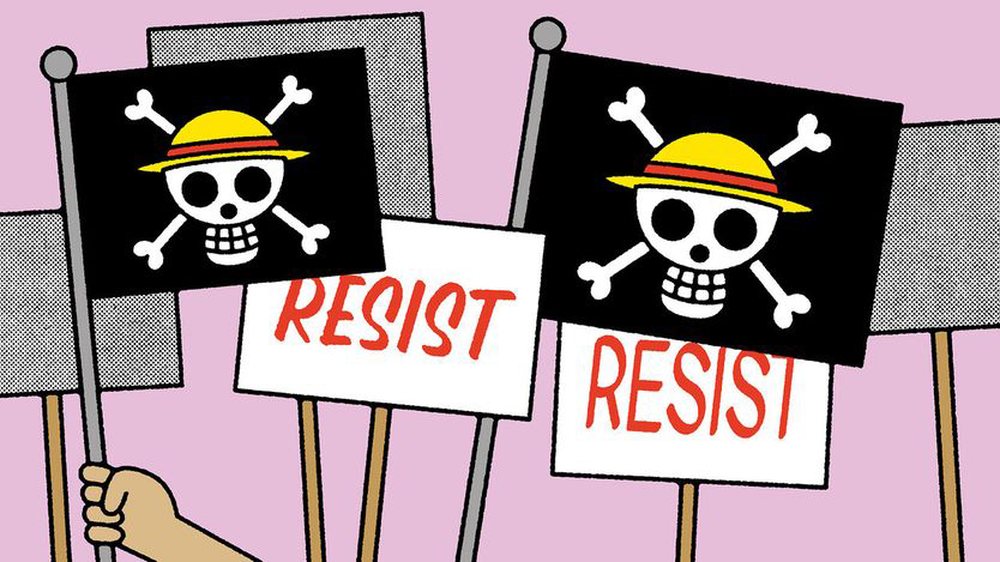
Luffy and his crew sail the seas in search of treasure, defying the corrupt World Government that rules over them. Their flag, a skull with Luffy's hat, waves with them.
In recent months, the flag has taken on new significance off-screen. Over the summer, young Indonesians protesting economic hardship and growing authoritarianism began waving the flag with the “One Piece” symbol.
The government threatened treason charges, but this only increased his popularity in the mass demonstrations. In September, the flag was seen in Nepal, where young people raised it during protests against nepotism and corruption that brought down the prime minister.
That same month, it also appeared in Madagascar, where similar protests culminated in a military coup that ousted the president in October. The flag has also been seen in the Philippines, Peru and Morocco.
Luffy's flag has become an example of a broader phenomenon. For generations, Western pop culture, from punk to hip-hop, has defined the spirit of youthful rebellion.
But today's generation's protests are being inspired by anime characters and K-pop anthems.
In South Korea, Girls' Generation's song "Into The New World" accompanied both the anti-corruption protests of 2016–2017 and the demonstrations against the imposition of martial law in 2024, which ended with the overthrow of two presidents.
The same song also rang out at pro-democracy rallies in Hong Kong during 2019 and 2020, as well as in Thailand in 2020.
Thai protesters donned hamster ears and ran around the Democracy Monument in Bangkok, chanting "The tastiest food is taxpayers' money," to the beat of the tune of "Hamtaro," a popular Japanese anime about a little hamster.
As Roland Kelts, a pop culture scholar in Tokyo, notes, East Asia, once associated with conformity and conservatism, is now providing “the image and soundtrack” of global resistance movements.
In part, this is because K-pop and anime have become common cultural reference points for today's youth, in the same way that Western music, films, and books were for previous generations.
Furthermore, the almost universal access to social networks allows a given symbol to spread rapidly from one place to another.
Watching protests in Nepal and Indonesia online, Shely Andriamihaja, a 26-year-old activist from Madagascar, realized that young people around the world were fighting “the same battle against corruption, bad governance and neglect.”
She and her peers decided to use the "One Piece" flag to express their solidarity. The flag made their protests even more visible online.
However, there may be something deeper behind this. K-pop, which became popular in the early 1990s, shortly after South Korea transitioned from military dictatorship to democracy, is associated with a spirit of civil resistance, despite its usually apolitical lyrics, argues Lee Gyu-tag of George Mason University Korea in Incheon.
Many of his fans belong to extremely organized communities, known for their powerful campaigns on social media and often supporting left-wing causes.
While anime, with its ethnically unidentifiable characters and fantasy worlds, offers a more relatable perspective than the American heroes of yore, Kelts says.
The fact that Luffy and his friends can represent everything to everyone helps explain why protesters in countries as diverse as Nepal, Indonesia, and Madagascar adopt them as their symbols.
In societies where freedom of speech is limited, playful anime characters can also serve as a cover for more serious criticism, at least for a while (Indonesian lawmakers soon decided that Luffy's flag posed a threat to national unity).
Ultimately, the attraction you feel for Luffy and his friends probably lies in their optimism, youthful enthusiasm, and sincere belief in friendship and solidarity. Luffy accidentally eats a “devil fruit” that gives him the power to become elastic as rubber and face formidable enemies.
But the fruit deprives him of the ability to swim, a fatal weakness for a pirate. However, whenever he falls into the sea, his friends are always there to save him.
For young people facing rubber batons and tear gas to make governments listen, Luffy's indomitable self-confidence is irresistible.
"You can hit me all day long," he says, as he falls to a powerful opponent. "But I will never give up on my dreams."/Monitor