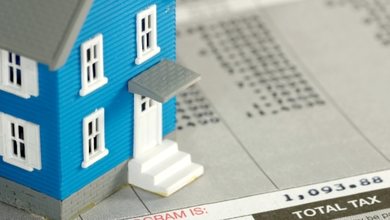



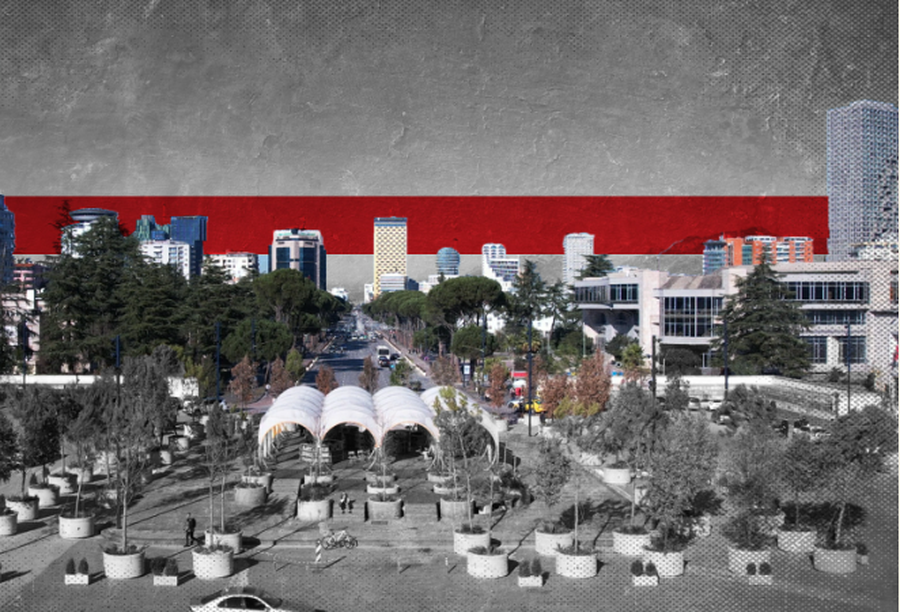
For more than a decade, Tirana has been undergoing rapid construction. The city has become a permanent construction site with millions of square meters of new construction every year.
High-rise towers and residential complexes have changed the face of the capital, while construction has become one of the main engines of the local economy.
But beyond this development, the 2023 census data shows a more complex reality. The population within the municipality of Tirana has fallen by around 30 thousand people, raising the question: for whom and for what is being built in this area?
Only 8% of the district lives in new housing
According to the 2023 Census, the Tirana district, which includes the municipality of Tirana, Kamëz, Vorë, Kavajë and Rrogozhinë, has 321,821 housing units, of which 85,475 are empty.
Tirana has the largest number of empty apartments with 52,871, followed by Kavaja with 21,765, Kamza with 4,151, Rrogozhina with 4,872 and Vora with 1,798 empty apartments.
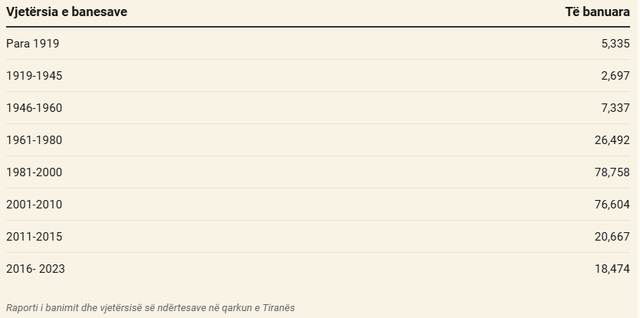
Of the total of 236,364 residential units in the region, the majority of apartments and houses were built between 1981 and 2010. Only 18,474 residents, or about 7.8% of the total, live in units built after 2016.
For economic expert Pano Soko, this is explained by the high prices of new construction, which keep it unaffordable for most of the population.
"High prices have served as a natural selector, with most being left out," says Soko.
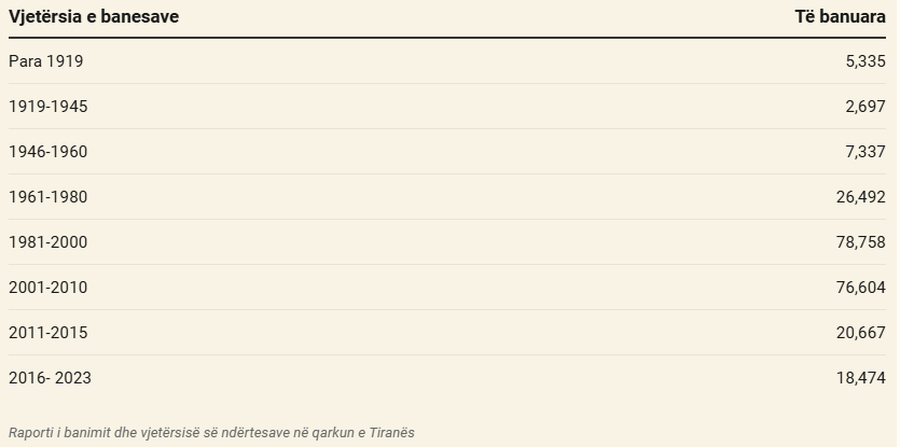
The 2023 census, in addition to the number of occupied and vacant dwellings, also provides the age of buildings, but the Institute of Statistics has published this information only at the district level.
Citizens.al requested data from INSTAT at the municipal and administrative unit level, but after communications with the institute and the Commissioner for the Right to Information, we were told that the data is still being processed and will be made available to us only after this process is complete.
We also requested information on the location and construction period of the empty apartments, but this information was also not made available with the same argument.
The census debunked the propaganda
In the last decade, around 10 million square meters of construction have been approved in Tirana, turning the capital into a huge construction site and its economy dependent on the construction industry.
In 2015, shortly before being elected mayor, Erion Veliaj declared his personal ambition:
"I do not intend to go down in history as a man who gave away palaces; I want to be remembered as a man who worked to return the city to normality and as a man who built more parks than palaces."
But today, the numbers are stubborn, construction sites are opening almost every day in every administrative unit of Tirana, raising questions about the real need for this pace of construction.
The argument of the mayor - who has been in custody since February 2025 as a defendant for corruption and money laundering - was that Tirana was increasing by 20-25 thousand inhabitants every year and that construction was necessary to curb price increases.
At the height of this debate, in 2023, Veliaj would state that permits were granted based on market demands.
“The number of square meters built in Tirana matches proportionally with the number of residents of Tirana,” Veliaj emphasized, “There is demand, but there is also supply, both must go in parallel.”
"We cannot put a bar on Tirana for these 20-25 thousand citizens who join us every year, nor can we divide it into locals and newcomers, because that is racist language from the '90s that should no longer exist," Veliaj said of the idea of "a good city for everyone."
But paradoxically, housing prices have increased despite the increase in the area provided for construction.
According to Pano Sokos, the trend is no longer related to market needs, but to the informal economy:
“Money laundering left the natural demand for citizens' apartments unmet, not because of a lack of supply, but because of high prices,” he says.
How many residents are added and how many apartments are built?
Mayor Veliaj's statements about residential displacement flows in Tirana of 20-25 thousand citizens occurred at a time when there was no independent data.
INSTAT published census data only in 2023. These data compared to 2011 show that the population of the Tirana municipality has increased by about 40 thousand inhabitants.
This means an average of about 3,500 residents per year. With an average family, about 1,500 apartments per year would be enough to accommodate them – a total of about 15,000 apartments in 10 years.
But for this period, the census shows that around 51,854 new housing units have been added. Of these, 38,000 are occupied and around 13,800 are empty.
Thus, in practice, for every new resident added to Tirana, more than one apartment has been built.
Population declines in the center, grows in the suburbs
The greatest construction pressure in the capital is concentrated in four areas: Tirana within the Grand Ring Road, Kashari, Dajti and Farka.
Since 2011, Dajti has grown by about 15 thousand inhabitants, Kashari by about 46 thousand and Farka by about 14 thousand inhabitants.
Kashari and Dajti are considered suburban areas with more reasonable prices, where middle and low-income families move. While Farka, on the contrary, has become an elite residential area with villas and luxury residences.
According to Pano Sokos, citizens are moving to the suburbs due to prices and the attempt to find a more peaceful life in the capital.
But, meanwhile, the population of Tirana within its central area – the former old municipality until the 2014 reform, commonly known as the yellow line – has fallen by 29,172 inhabitants.
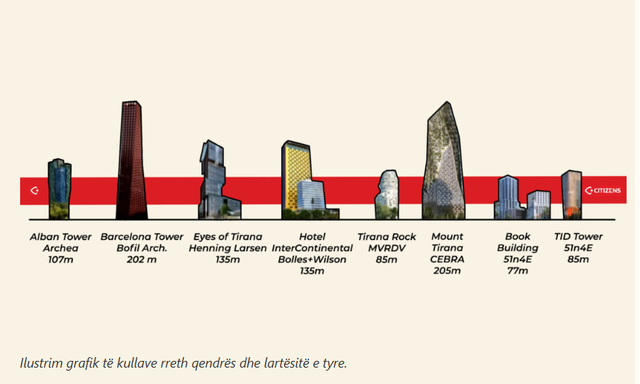
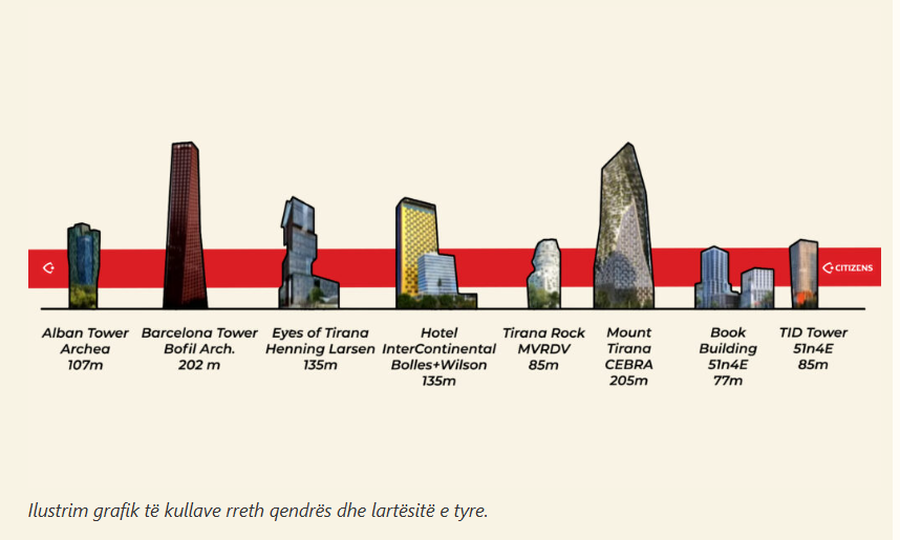
So, precisely in the area where the most towers are being built, the number of residents is decreasing.
This raises the essential question: who is buying and for whom is being built in the center when the area has emptied of about 30 thousand citizens in the last 12 years?
"Construction in the center seems to have been put into the function of laundering gray money. There is no longer a natural demand for housing; there is a demand to turn 'cash' money into concrete because they believe it is safer that way," says Soko./Citizens.al/