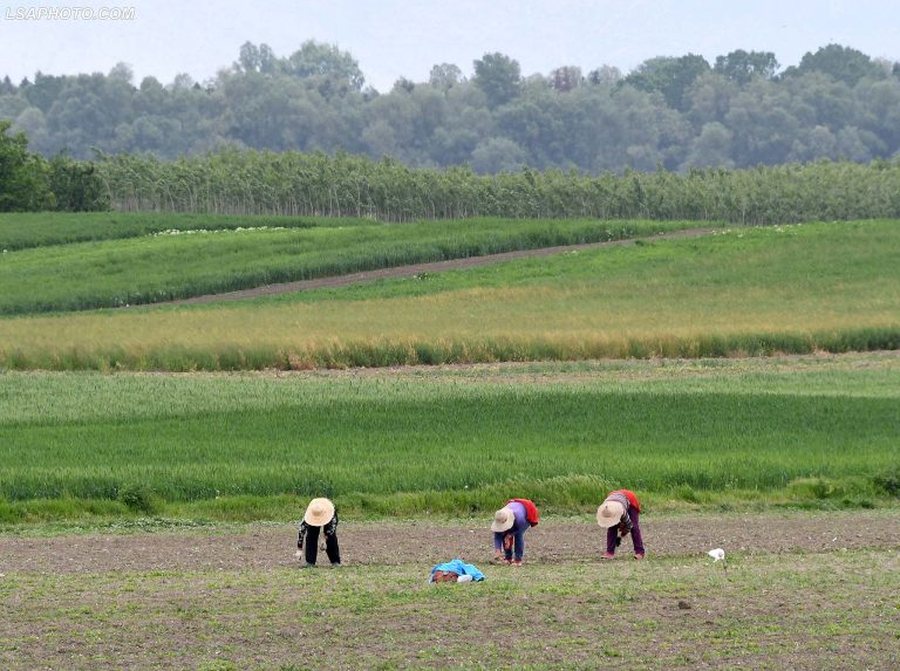
Albania's large agricultural sector is seeking to expand into European markets to thrive, but obstacles such as outdated methods, low productivity, banned pesticides and corruption stand in its way.
After Albania opened negotiations on agricultural standards as part of the European Union accession process late last year, Prime Minister Edi Rama announced the launch of a special platform called EuroAgro Albania 2025-2030 – which aims to help prepare farmers for European markets.
Rama, who has suggested that Albania could join the EU by 2030, said that the platform, which cannot yet be found online, will not be simply a website, but a "roadmap" for farmers who want to enter European markets.
"It is a guide for each of you at every step of the negotiation process and on the path to membership. It is a source of information on standards, deadlines and concrete obligations. It is a channel of dialogue, where each of you can enter, communicate, ask questions and receive answers on the issues you face," Rama said at the presentation ceremony in December.
Rama did not promise that access would be easy. He highlighted some of the main obstacles to potentially lucrative EU markets, citing competitive market conditions, high standards and “controls stemming from the very high level of product safety and quality required to be part of the European single market.”
Albania's exports to European markets are growing. However, its farmers face several challenges in the production process and in ensuring the quality of their products. During 2025, over 20 shipments of Albanian products were identified at European borders as containing banned pesticides. Albanian farmers also lack sufficient state support and face serious damage from adverse weather conditions.
Agriculture is an important part of the domestic economy, generating about 23 percent of Albania's GDP and employing about 43 percent of the employed workforce. The government has often promised that agriculture will be its top priority.
But the sector faces several major structural problems: the proliferation of small farms with low productivity, population depletion due to emigration from agricultural areas, and the slow adoption of modern methods and technology to increase productivity.
Lumturi Papa, professor at the Faculty of Agriculture and Environment at the Agricultural University of Tirana, listed the obstacles that make it difficult to develop Albanian agriculture and send more of its products to European markets.
“Farm fragmentation makes it difficult to produce consistent and standardized quantities, as does the lack of certification and documentation according to EU requirements for food safety and traceability,” Papa told BIRN.
“Fragmentation” means that there are many small farms with low investment, low yields and little profit. The Pope noted that farms in Albania have an average size of only 1.16 hectares. If they were consolidated into farms of 50 hectares, it would be easier for modern agricultural machinery to operate as needed, increasing productivity.
A European Commission report on Albanian agriculture in 2025 also identified small agricultural farms as a major obstacle hindering the sector.
"The biggest problems facing agriculture in Albania are: emigration from rural areas, the very limited size of farms (on average 1.2 ha - compared to 14 ha in the EU), poor marketing of products, underdeveloped irrigation and drainage systems, low levels of technology, poor organization of farmers and the low level of development in the processing industry," the report highlights.
Another issue, according to the Pope, is “poor infrastructure for the collection, storage and processing of products.” The lack of modern harvesting machinery and refrigerated warehouses for the preservation of some crops is also a consequence of low investment in small farms.
Edmond Panariti, Albania's Minister of Agriculture from 2013 to 2017, agreed that Albanian agriculture is not fully prepared to compete in European markets.
“More investment is needed in certifications, food safety, land consolidation and processing infrastructure,” Panariti told BIRN. Traceability of products is an important issue. For Albanian products to be widely accepted in European markets, they need to have a kind of passport explaining the origin of the product. “Mobile laboratories” are needed on farms to check the quality of the products.
Banned pesticides still in use
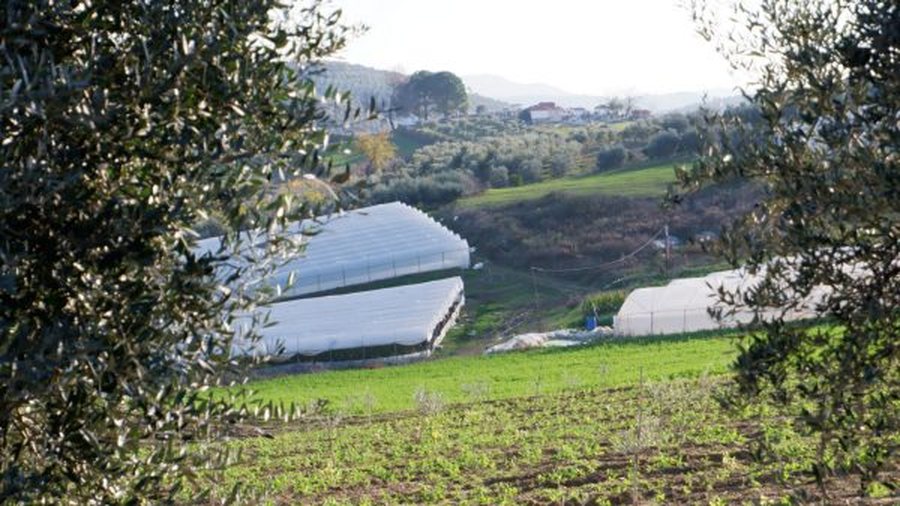
Albanian farmers admit to using pesticides banned by the European Union and by Albania itself, but they insist they are not guilty.
Rexhep Dedeji, 60 years old, from the village of Dushk in the Lushnja area of southern Albania, an area known for cultivating vegetables and fruits, has been involved in agriculture for about 30 years, cultivating wheat, barley and clover.
Dedeji told BIRN that there is a problem with pesticides that are banned in the EU and Albania, but are still used by farmers – and he blames the lack of information and control by state institutions.
"We have no way of having any control over pesticides," he said.
"I go to the pharmacy myself. If I say I want poison (pesticide) for alfalfa weevil, they give it to me, I spray it, then the cows come, they eat it – the plant has toxic residues and these residues will then pass into the milk," he explained.
Dedeji blames state institutions for “allowing” such pesticides on the Albanian market. “They should check at customs so that these pesticides don’t come here. There should be strict control,” he said. “It’s about people’s lives.”
Albanian farmers who use pesticides increase the risk of them entering the food chain, while Albania lacks an effective system for controlling and testing the toxicity of products.
The Ministry of Agriculture says that an action plan is in force, "On the Sustainable Use of Plant Protection Products (Pesticides) for the Years 2022–2032", which emphasizes that only professionals or certified persons who have undergone appropriate training may use pesticides.
"The sale of highly toxic pesticides is permitted only to professional users who are graduates in the field of agronomy or to persons who have undergone relevant training in the use of highly toxic pesticides and are equipped with a special certificate of competence for this use," the document states.
But Dedej claims that the entire procedure is reduced only to the farmer and the agricultural pharmacy.
Papa says that the use of banned pesticides, although it may not be completely widespread, affects the image and credibility of Albanian products as a whole.
"Control needs to be strengthened. Informing farmers and traceability are essential to ensure access to European markets," the Pope said.
Blerim Sina, 48, who grows vegetables and fruit, also told BIRN that there is a lack of information and control among farmers regarding the use of pesticides.
"They are not informed at all about pesticides... I go to the agricultural pharmacy and say: I want poison (pesticide) and he gives it to me. He doesn't explain anything. I may know about its use myself, but there are people who don't know about it at all," said Sina.
"There are no agronomists selling poisons here, these people are just traders," he added.
The fact that importing countries of Albanian agricultural products have discovered the presence of pesticide residues banned in EU countries "proves that these pesticides are illegally penetrating our agricultural input market," said Panariti.
"The biggest damage caused by them is not just the tons of contaminated products confiscated, but the broken trust in these markets and in consumers. And broken trust takes a lot of effort and time to restore," he warned.
Albania’s Agriculture Minister, Andis Salla, appeared to acknowledge the problem this month when he said that “we have built seven laboratories that should serve to control food safety.” However, further details were not available.
State support – only for the largest farmers
In 2025, the government introduced a new Value Added Tax (VAT) scheme, which is supposed to help farmers. However, the scheme risks excluding smaller farmers from its benefits.
Legislation approved in December last year defines the beneficiaries of the scheme exclusively as farmers registered with the tax administration and equipped with a NIPT, which also functions as a VAT identification number for businesses.
It excludes farmers who are registered as self-employed with the National Business Center – typically farmers who do not have many employees and whose businesses generate less than 100,000 euros per year.
According to the Ministry of Finance, only about 10,000 registered farmers will benefit from the new VAT scheme, while about 100,000 self-employed farmers will not benefit.
Arjana Dyrmyshi, general director of fiscal policies at the Ministry of Finance, stated: “The compensation scheme is for all farmers who are not registered with the National Business Center (but with the tax administration). A farmer registered with the National Business Center is considered self-employed.”
Corruption remains a problem
In June 2024, the European Anti-Fraud Office asked the European Commission to block around 112 million euros intended for Albanian agriculture, following the “serious misuse” of 33 million euros provided in a previous program.
The funds were misused corruptly by the National Agency for Agricultural and Rural Development, which managed the project, while the Anti-Fraud Office cited "several serious irregularities."
The office advised the Commission to block around 112 million euros planned for Albania in the next phase of the Instrument for Pre-Accession Assistance for Rural Development (IPARD) funding scheme.
Currently, an investigation by the Special Structure Against Corruption and Organized Crime (SPAK) is underway into the suspected misuse of funds and Albania cannot benefit from IPARD funds until the investigation is completed.
Zef Preçi, director of the Albanian Center for Economic Research, told BIRN that “corruption has damaged the agricultural sector in several ways; in this case, it has taken away funds that could have been used for its modernization.”
Preçi said that the funds should have been used to empower small farmers, but due to the problem of corruption, they were not used for this purpose.
"These funds were given to Albania for the development of farms, but they were not used for this purpose," he expressed regret.
Albanian agriculture should not be left without funds, he argued.
"The biggest mistake that has been made is that this sector remains underfunded, but at the same time it is a sector that has impact and potential," he concluded.
Climate change: a growing challenge
According to the World Bank's "Climate and Country Development Report", published in November 2024, Albania has one of the highest levels of risk and exposure to climate disasters in Europe.
"Climate events such as floods, forest fires and landslides, along with earthquakes, have affected 95 percent of municipalities in the last two decades. Climate change and unpredictable weather patterns threaten key sectors such as energy and agriculture," the report says.
Climate change could have a serious impact on Albania's hopes to develop its agricultural potential and benefit from sales to European markets.
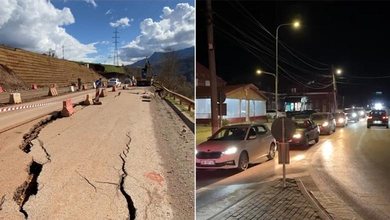
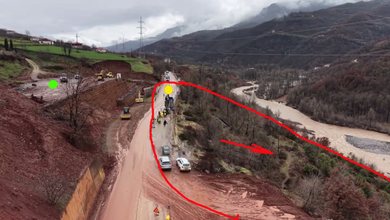
During the summer of 2025, Albania experienced significant wildfires. Heavy rains followed in late November 2025 and into January. According to Prime Minister Edi Rama, 13,000 hectares of land were flooded in January alone, with serious consequences for farmers. Rama promised “fair compensation for all.”
Strawberry farmers affected by the floods told the media that the water in their greenhouses reached up to two meters, "like never before."
"The damage is huge, it happened again, it's the fifth time. No measures have been taken to prevent it from happening again," said one farmer. "How many greenhouses need to be flooded for a state of emergency to be declared? We have never been compensated," he added.
According to a study on climate change adaptation by EU4Green, a project in support of the EU Green Agenda for the Western Balkans, climate change poses a major threat to agriculture and rural areas in the region and will affect rural livelihoods, food security and the overall economy of the country.
"This highlights the need for improved agricultural practices, investment in new technologies and support for farmers to build resilience in the face of climate change," the report says. /BIRN/