


While the number of inhabitants in Albania has decreased to 2.36 million, in contrast the number of vehicles is increasing. The 2023 census reduced the number of inhabitants in the country by at least 400 thousand, which caused the per capita indicators to jump due to the population reduction.
This caused the ratio of the number of passenger vehicles to the population to jump to 328 vehicles per 1,000 inhabitants in 2024, from 232 in 2022, before the Census. The data was made public by Eurostat, which reports on all European countries.
Despite the increase, which is largely due to population adjustment, Albania continues to remain among the countries with the lowest number of cars per population. According to Eurostat data, the European Union average in 2024 was 578 passenger vehicles per 1,000 inhabitants, or 75% higher than in Albania.
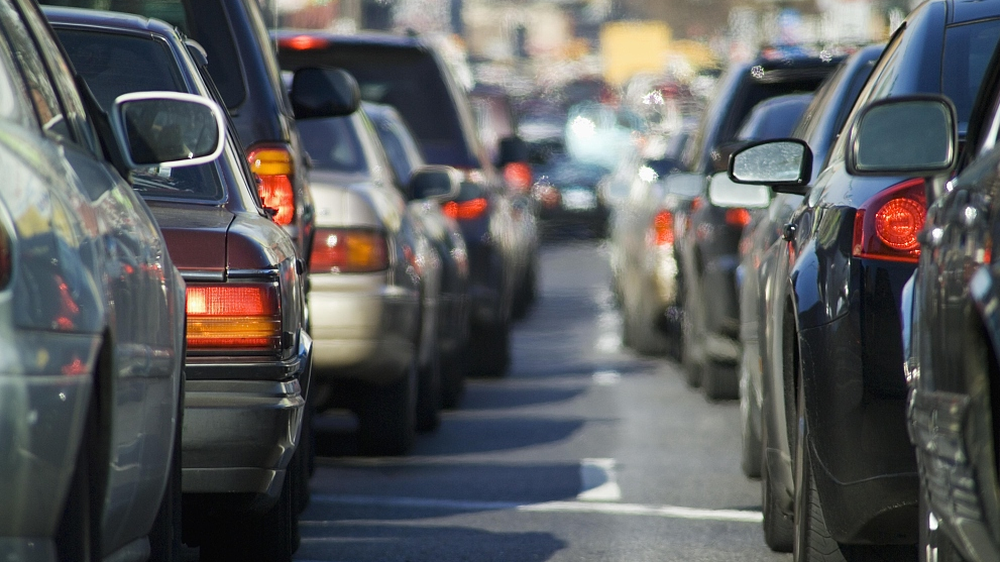
This indicator is in contrast to the high traffic that many vehicle owners face both on intercity roads and within them, especially in Tirana and Durrës. In addition to the traffic, the pollution they cause is also very high, because most of them are diesel. Very often the black smoke that cars emit in the middle of the city penetrates directly into the lungs.
In the region, Albania, which was once the penultimate (Turkey was the last) has left behind Bosnia and Herzegovina (321), North Macedonia (318) and Kosovo (232). In the region, Montenegro (417) and Serbia (377) surpass us.
Even if calculations are made for the year 2025, based on the number of vehicles at the end of the year, which according to the General Directorate of Road Transport, was 847 thousand vehicles, the indicator increases to 358 vehicles/1,000 inhabitants, remaining still lower than Serbia.
According to Eurostat's publication on transport in Europe, the motorisation rate for passenger vehicles on the road is the number of passenger cars in relation to the size of the population. In the EU, this indicator was on average 578 passenger cars per 1 000 inhabitants in 2024. The highest motorisation rates were recorded in Italy (701 per 1 000 inhabitants), Luxembourg (670 per 1 000 inhabitants), Finland (666 per 1 000 inhabitants) and Cyprus (661 per 1 000 inhabitants). The lowest rates were recorded in Latvia (424 per 1 000 inhabitants), Romania (444 per 1 000 inhabitants) and Hungary (447 per 1 000 inhabitants).
In Albania, new registrations are still with diesel, Europe towards gasoline and electric vehicles
Eurostat data, in its latest publication on Transport in the European Union, shows that 66.2% of passenger vehicles registered for the first time in 2024 in the country were diesel-powered, a share much higher than the European Union average of around 15%.
In total, 85.7 thousand passenger vehicles were registered for the first time in Albania in 2024, of which 56.7 thousand were diesel. Gasoline accounted for 17.6% of the vehicles, with a share that is among the lowest in Europe, and alternative energy 12.9%. Electric cars accounted for only 3.3% of the total.
The trend is quite different from what is happening in Europe. Eurostat data shows that the transition towards electric vehicles and less polluting alternatives is accelerating in Europe. In the EU, only 14.9% of vehicles registered in 2024 were petrol-powered; 58.6% were petrol-powered; 11.9% were electric and 14.6% were alternative energy./Monitor