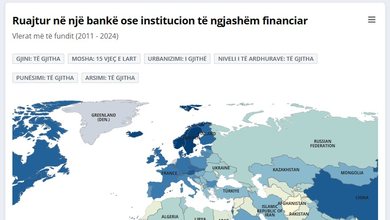




Albanians' perception of the financial situation is significantly more negative compared to a year ago, signaling a strong increase in dissatisfaction, according to data from the Balkan Barometer.
According to the data, 53% of respondents in Albania estimate that the financial situation is expected to be "worse" or "much worse" in the next 12 months, a level that makes pessimism dominant. 46% say that the situation has improved, while a minimal portion thinks that it has remained unchanged.
A year ago, in 2024, dissatisfaction was limited to 14%, while almost half of Albanians thought the financial situation would remain the same and 38% expected improvement.
A shift from a neutral climate of expectations to a massively negative judgment within just one year is observed, which indicates that a large portion of families have experienced a real deterioration in economic conditions, or at least a strong disappointment in previous expectations.
This change reflects the ongoing pressures on household budgets, particularly the rising cost of living and economic uncertainty, which appear to have eroded citizens' confidence.
Although official inflation has eased compared to the peaks of previous years, the prices of food, energy and basic services have remained high, reducing the purchasing power of salaries and pensions. For many families, the normalization of inflation has not translated into real relief of monthly expenses.
Another reason is related to the discrepancy between economic growth and real incomes. The increase in GDP and average wages has not been felt equally across all strata, especially among low- and middle-income workers.
Dissatisfaction is also fueled by uncertainty in the labor market, especially for young people, and by the lack of quality employment. Although employment in quantitative terms has increased, many jobs remain low-paid or without long-term stability, reinforcing the perception of financial insecurity and lack of prospects.
Increased emigration and constant comparison with income and living standards in EU countries deepen the feeling of dissatisfaction, even when macroeconomic indicators appear relatively stable.
Unlike 2024, when the idea of stability dominated, 2025 marked a turn towards dissatisfaction, placing Albania among the countries in the region with the strongest increase in negative perception of the economy in the coming months./Monitor.al/