


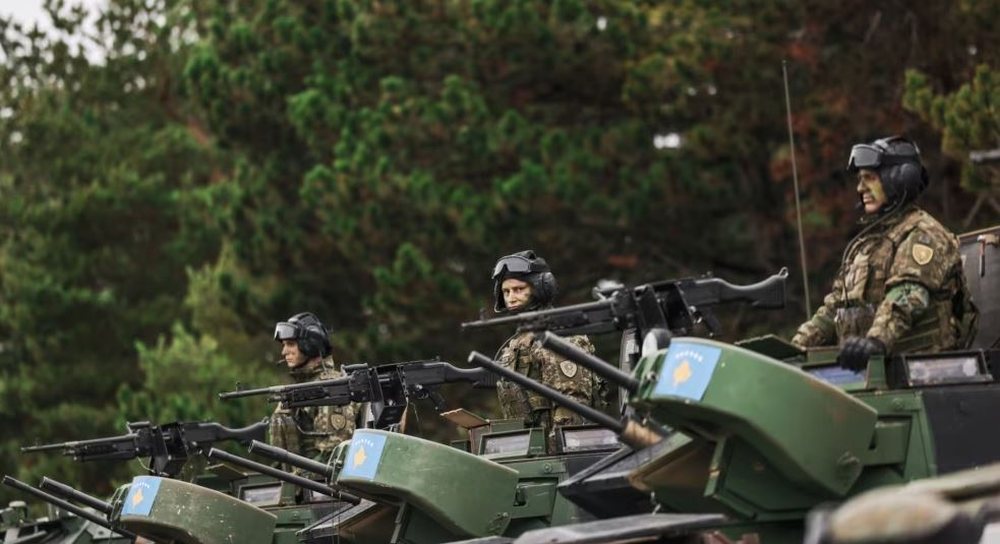
The Kosovo Government has approved the Ministry of Defense's proposal to send Kosovo Security Force (KSF) troops to Gaza, paving the way for the decision to proceed for approval in the Kosovo Assembly.
According to the legislation in force, after the executive's decision, the matter is passed to legislators for review and voting, while ultimately the approval of the country's president is also required.
Kosovo Prime Minister Albin Kurti, during a Government meeting, said that "we are ready to participate and help the people of Gaza, because we ourselves have been and are beneficiaries of international forces since 1999."
Minister of Defense, Ejup Maqedonci, emphasized that through this commitment, Kosovo aims to prove that it is a reliable partner and ready to act alongside allies in support of peace and security.
"This decision further strengthens the international profile of our state, affirms the professionalism of the KSF and places our republic among the states that not only benefit from international security, but also continuously contribute to maintaining international peace and order," he said.
The decision to send troops was approved without any votes against and without any abstentions.
The deployment of KSF troops is expected to take place within the framework of the International Stabilization Force (INS), a mechanism created as part of the so-called Peace Board initiative, proposed by US President Donald Trump, to achieve world peace.
Kosovo is among the first five states – along with Indonesia, Morocco, Kazakhstan and Albania – that have pledged to engage in this mission, with the aim of providing security and supervising the ceasefire in the Gaza Strip.
However, it is still not known when exactly the deployment of troops will take place and how many there will be. The Ministry of Defense has previously announced that the draft decision on this issue was forwarded to the Government on March 3.
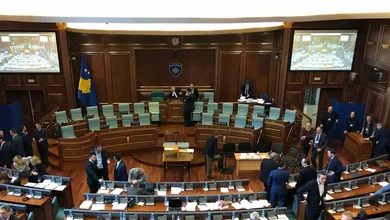
The Government's decision comes after the functionalization of the work of the Assembly, following the Constitutional Court's decision on March 25, has paved the way for addressing such issues.
In addition to authorizing the deployment of troops, the Assembly must also approve the agreement on Kosovo's membership in the International Stabilization Force.
Kosovo President Vjosa Osmani, who was one of the founders of the Peace Board, has publicly supported this initiative. Her presidential mandate ends on April 4.
According to reports by Israeli public broadcaster KAN, the International Stabilization Force is expected to begin its deployment in Gaza in May, including dozens of soldiers from Kosovo, although institutions in Pristina have not officially confirmed this deadline.
The Minister of Defense, Ejup Maqedonci, has stated that initially it is planned to send over 20 soldiers specialized in various fields, including demining and disposal of unexploded ordnance (EOD) units, special operations, planning and medical teams.
Ministry officials have announced that they are in constant coordination with the FNS structures and that a military liaison officer has been assigned to prepare for the deployment.
The International Stabilization Force is expected to be tasked with stabilizing the security situation in Gaza, following the war that began in October 2023, when Hamas - declared a terrorist organization by the US and the European Union - attacked Israel, killing over 1,200 people and taking hostages.
Subsequent Israeli attacks on Gaza caused tens of thousands of casualties, a humanitarian crisis, and extensive infrastructural damage.
The plan to create this force is part of a broader package for achieving peace, which has been accepted by the parties to the conflict.
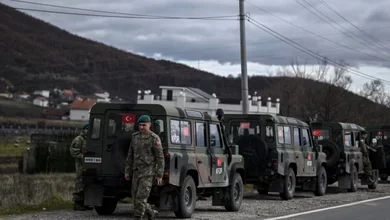
This would not be the first time the KSF has been deployed abroad. In 2021, it participated in a mission in Kuwait in cooperation with US forces, and in 2022 in the Falkland Islands, in cooperation with the United Kingdom.
The KSF is currently in the process of transforming into a full-fledged army, a process that is expected to be completed by 2028.
At the end of the meeting, the Government made several other decisions, including the allocation of a financial reward for the Football Federation of Kosovo (FFK), following Kosovo's victory in the playoff match that brings it closer to qualifying for the World Cup.
The executive also approved the payment of the 13th salary for around 91.2 thousand employees engaged in the public sector, at the local and central levels.
/ REL