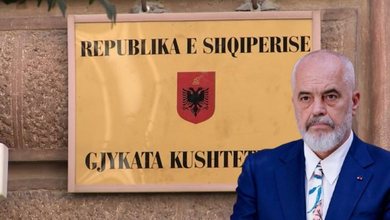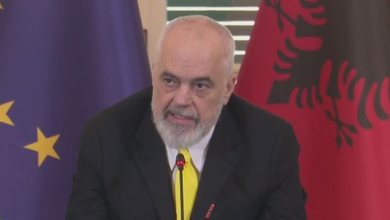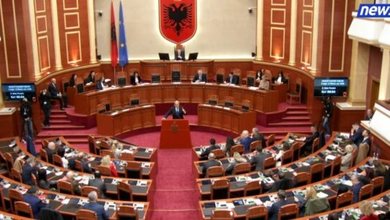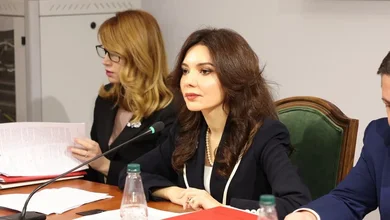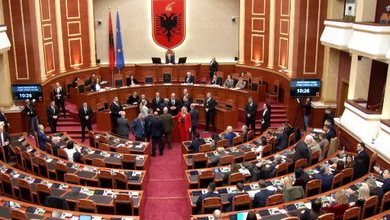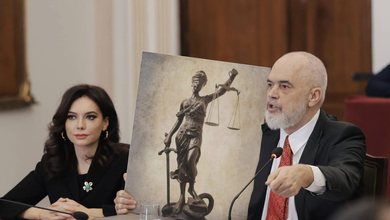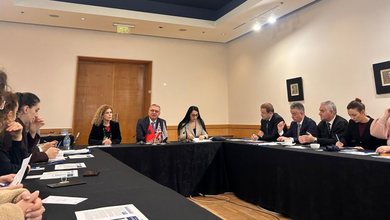



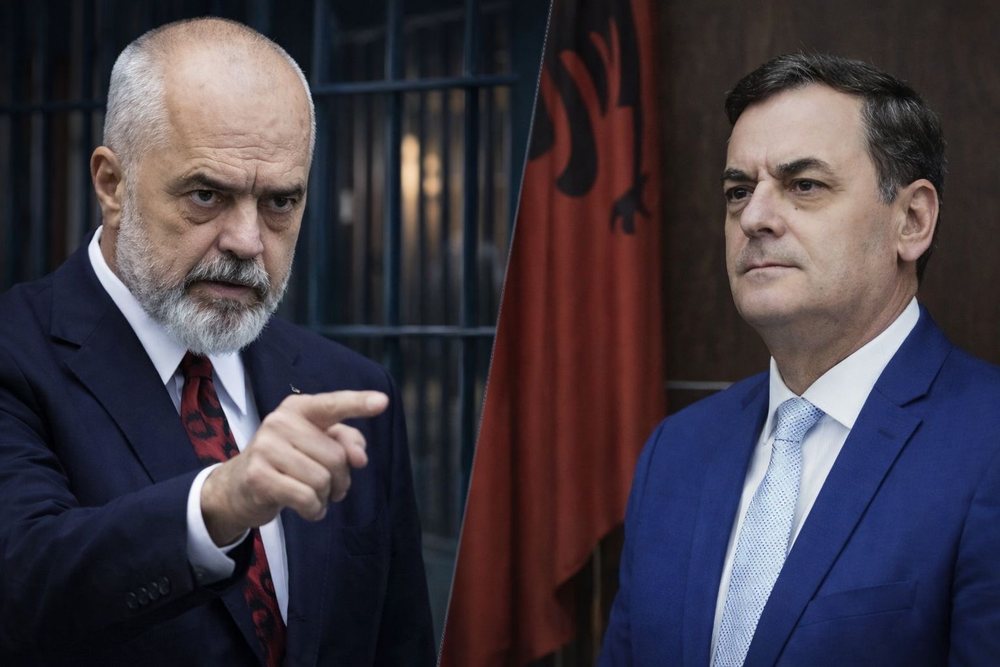
The presentation of the program for the international competition of the new Pole of Justice was accompanied by strong tones and clear insinuations between Prime Minister Edi Rama and the President of the Supreme Court, Sokol Sadushi.
The head of government described the project as "the largest investment that could ever be made for Albania's administrative infrastructure", emphasizing that the government's duty is to support the system to function at the highest standards. But from the beginning of his speech, there was no lack of stinging criticism towards the leaders of the justice bodies.
"We will make this effort because for us this is an effort that will not be reversed, despite the surprises you give us from time to time...", Rama said, implying that the decision-making of justice institutions has not always been in line with the expectations of the executive.
He even added, ironically, "This is the ideal case for us all to go to detention together for abuse of office," a statement that was read as a clear signal of his concern about possible accusations over the management of public projects and decision-making.
At the center of the debate remains the issue of accommodating the highest institutions of justice. An open question is where the High Court and the Constitutional Court will be housed, while there is already a building under construction for the High Court.
The President of the Supreme Court, Sokol Sadushi, clearly stated that the Supreme Court and the Constitutional Court should be separated from courts of ordinary jurisdiction, due to the role and function they have in the state.
"We are gradually entering the EU. In no EU country is the Supreme Court included with the courts of ordinary jurisdiction. Not for luxury, not for privilege, but because of the function it has and the seriousness it gives to the state and its image. The Supreme Court and the Constitutional Court should be separate courts," Sadushi declared.
For his part, Rama acknowledged that this remains a point for discussion and that the current plan provides as an alternative for placing the High Court in an administrative building that will be acquired through a private development scheme, where the state will receive construction space in exchange for land.
"This is something that needs to be discussed. Even from a financial point of view, a part of the overall expenditure is removed because we do not spend a single lek, but we take back space for the Supreme Court. We will do the right thing," said Rama.
Mutual statements show that beyond the major investment in infrastructure, the relationship between the executive and the heads of the judiciary remains tense, especially when in the background stands the prime minister's warning of criminal liability in the event of "abuse of office" — a term that seems to both annoy and challenge him.