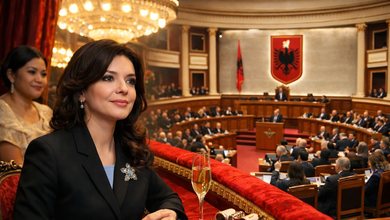



On January 28, members of the Albanian Parliament raised the green cards for new changes to the Criminal Code, including the criminalization of double parking on the street.
According to Article 293/1, stopping a vehicle on the roadway in the second row, when it clearly obstructs the movement of vehicles in the service of the police, firefighters or ambulances, constitutes a criminal offense and is punishable by a fine or up to 1 year in prison.
The tightening of the Criminal Code to punish what is considered the most common violation of road traffic rules is the latest act in a long series of changes undertaken by the governments of Prime Minister Edi Rama – which, according to experts, symbolize the populist approach of the socialist majority towards criminal policy in Albania.
Previously, the prison has been the focus of similar campaigns against unauthorized construction, illegal electricity connections, violation of social distancing measures during the pandemic, or waste of drinking water – which have led to the arrest of hundreds of ordinary citizens.
But the approach changed recently, as the "Rama" government is facing a request from the Special Prosecution Office to authorize the arrest of Deputy Prime Minister Belinda Balluku and other high-profile corruption cases.
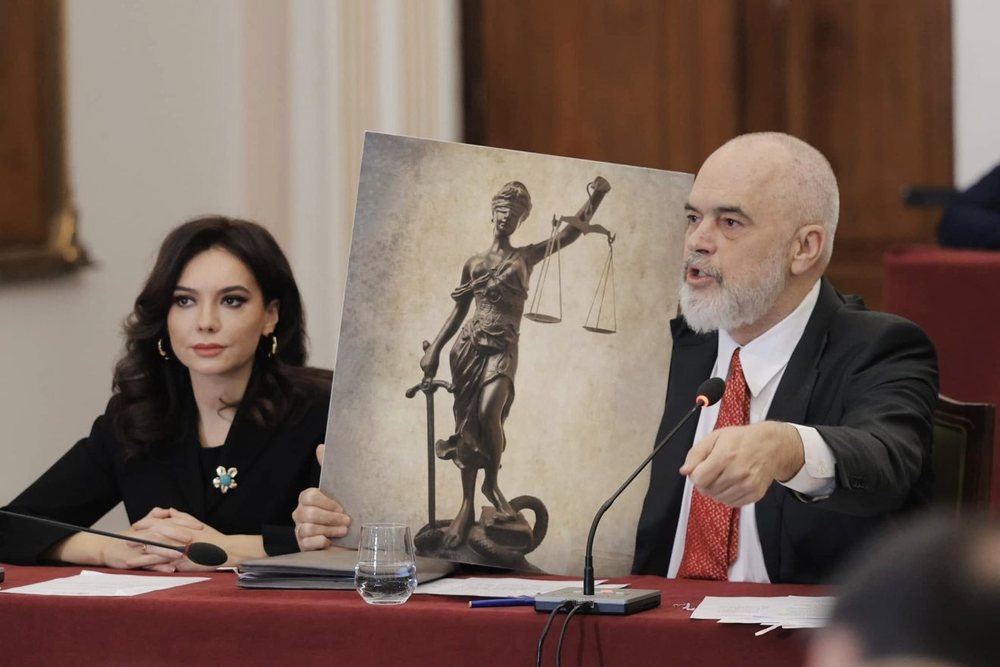
“We are the most scandalous country in the Council of Europe community,” Rama declared in a press conference on December 30, 2025. “In Albania, the probability of ending up in prison as a suspect is higher than ending up as a guilty person,” he added.
According to the Council of Europe, Albania is one of the countries with the highest number of pre-trial detainees on the continent – which is a concern for respect for human rights.
But according to legal practitioners in the justice system, this is an old and neglected problem, which is being resurfaced only because politics itself is feeling threatened.
“We have been raising our voices about the situation for years, but we have not been heard, perhaps because those who were put in prison were not important,” Arqile Koça, a prosecutor at the General Prosecutor's Office, told BIRN.
"They [politicians] kick him when he gets close to them," he added.
The high number of detainees in Albania’s prison system, with an average of 94 detainees per 100,000 inhabitants, has concerned the Council of Europe – the leading human rights organisation in Europe. In two consultation documents for Albanian lawmakers, the CoE suggests taking a series of measures to reduce the number of detainees in line with its human rights obligations.
The data is also supported by statistics from the General Directorate of Prisons, obtained by BIRN. In December 2025, the country had 4,503 people in prison, of whom 2,569 or 57 percent were pre-trial detainees.
Over 58 percent of detainees are incarcerated for socially dangerous criminal offenses such as drug crimes (30%), murders (12%) or thefts (15.6%). About 39% of detainees fall into a category of criminal offenses that is summarized as “other” and that includes a variety of lesser crimes. Complete statistics for each criminal offense are lacking.
Among the prison population, persons isolated by decision of Special Courts account for a small percentage.
By the end of 2025, the detainees from the Special Courts were 293 people in total, of whom 61% were arrested for organized crime offenses such as murder, international drug trafficking or structured criminal group.
Senior officials serving prison sentences for criminal offenses of corruption, abuse of office, or violation of equality in tenders are 26 people - or only 1 percent of the total number of detainees nationwide.
In its consultation documents for the Albanian government, the Council of Europe makes a distinction between the practice followed by courts of general jurisdiction and that of the Special Court, which examines highly complex cases against organized crime and corruption. However, the opinion emphasizes that even in this case there was a need for more efficiency.
However, Council of Europe experts point out that the data is incomplete and urge the government to study the reasons.
“To address the high rates of pre-trial detention, Albanian authorities should conduct an in-depth and comprehensive study, covering not only statistical and empirical data, but also thematic issues,” the opinion states.
According to experts and justice system officials, the high number of detainees in Albania's penitentiary system reflects the repressive and populist policies of the executive and legislative systems as well as a historically conservative mentality towards prison measures versus other alternative punishments.
Experts also pointed out that the same politicians who are complaining about pre-trial detention today have in the past toughened up low-risk criminal offenses to the detriment of the most vulnerable segments of society.
“The tightening of criminal policy for low-risk criminal offenses constitutes a populist and inhumane approach of our legislative body,” Erida Skëndaj, head of the Albanian Helsinki Committee, told BIRN.
Criminal policies of toughening sentences and expanding criminalization initially affect the volume of cases in the prosecution and courts, while increasing the tendency of prosecutors to request heavy security measures in the courts.
Sipas prokurorit Arqile Koça, politika priret të ndjekë rrugën e shkurtër, edhe pse i di pasojat. Ai theksoi gjithashtu se zgjidhja e problemit me paraburgimet nuk duhet të udhëhiqet nga raste të veçanta.
“Sa herë ka një problem dite, ai zgjidhet duke ashpërsuar dënimet penale edhe pse e dinë shumë mirë që dënimet më të ashpra nuk ulin kriminalitetin,” theksoi ai.
“Nëse nuk e diskutojmë me qetësi problemin, rrezikojmë ta përkeqësojmë,” shtoi ai.
Gjyqtarët e shkallës së parë dhe të Apelit kërkojnë gjithashtu ndërhyrje të matura nga ligjvënësi dhe një analizë të detajuar mbi efektet e politikës penale dhe përdorimit të masave të sigurisë.
Gjyqtarja e Apelit, Edlira Petri thotë se politikat penale të ashpërsimit të dënimeve sjellin rritje të volumit të çështjeve, një perceptim të rritur të rrezikut procedurial dhe prirje për masa më të rënda sigurie.
“Të gjitha këto mund të rrisin rastet e paraburgimit,” tha Petri.
Për juristin Julian Mërtiri, kriminalizimi i një morie veprash të lehta dhe fushatat politike me arrestime masive janë një problem i vjetër, që kanë sjellë ngarkimin e sistemit dhe rritjen e numrit të të paraburgosurve.
“Ky problem është prej vitesh. E kemi bërë problem disa herë, por normalisht politika reagon vetëm kur preket vetë. Reagon tani që janë zyrtarë të lartë që preken,” tha Mërtiri.
Përveç politikave penale të ndjekura nga qeveria dhe legjislativi, ekzistojnë një sërë problemesh të tjera komplekse që sjellin rritjen e numrit të të paraburgosurve. Mes tyre, prokurorët dhe avokatët rendisin edhe mentalitetin represiv mes institucioneve ligjzbatuese, të trashëguar nga regjimi komunist.
Probleme të tjera lidhen me kohëzgjatjen e hetimeve dhe gjykimeve, vakuumit të krijuar nga procesi i vetingut si dhe dështimit të përpjekjeve për promovuar dënimet alternative.
Për prokurorin veteran, Kosta Beluri, situata e tanishme me numrin e lartë të paraburgimeve është një kombinim i të gjithë faktorëve të mësipërm. Megjithatë, një udhëzim i Prokurorit të Përgjithshëm që synonte të nxiste aplikimin e më shumë masave alternative, pati sipas tij një efekt minimal.
“Në kohëzgjatjen e paraburgimit ndikojnë së pari kohëzgjatja në hetim e çështjeve ku ndikon ngarkesa, struktura e paplotësuar e prokurorisë dhe zëvendësimi i shpeshtë i prokurorëve për shkak të vetingut,” tha Beluri përmes një mesazhi.
“Ndikon gjithashtu një mendësi konservatore për masën e sigurimit arrest në burg. Prokurorët janë të prirur për këtë masë, pasi i tremben opinionit të palëve si dhe procedurat për masa alternative janë më të zgjatura,” shtoi ai.
Edhe prokurori Arqilea Koça pranon se sistemi në vetvete është i ashpër dhe ka një histori të të qenit i tillë prej kohës së diktaturës, kur nuk kishte masa alternative. Por Koça i vlerëson akuzat ndaj Prokurorisë si të padrejta.
"The prosecutor does not decide to arrest anyone, it is the court that decides. The prosecutor can be pushed for many reasons, including the effectiveness of the investigation and requests the measure because it makes his job easier, but it is the court that must control it," he stressed.
After an observation of the judicial practice of security measures, Appeals Judge Edlira Pjetri notes that problems appear at the initial stage - when abstract rather than concrete risks are identified.
According to her, this is related to 'external pressure', as there is a fear that a decision could bring public consequences such as removal or repetition of the crime.
Petri points out that courts should be more demanding of prosecutors and decisions should be made by looking at each case individually.
“If this obligation is accompanied by a procedural consequence (e.g., the rejection/rejection of the request when the request is not individualized), then the process would be disciplined from the start, because the debate in the courtroom would be built on concrete facts and risks, not on standard formulations. This, in essence, does not create a new standard, but simply makes the existing standard of individualization/proportionality more applicable,” said Judge Petri.
Lawyers, for their part, blame the prosecution and the court for not taking these decisions seriously.
“If the court were to demand strict implementation of the law, this would put the prosecutor in a position of power and the number of unnecessary arrests would decrease. The prosecutor would be forced to argue well the risk of evidence destruction or dismissal, and not wait for the court to cover up his shortcomings,” lawyer Isuf Shehu told BIRN./Reporter.al