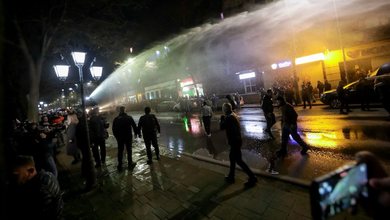




Ilir Prode's departure from the leadership of the State Police cannot be read in isolation from recent political developments. There is another argument, which shifts the focus from protests and security issues, towards deeper terrain: the rebalancing of forces within the Socialist Party.
The massive changes in the government clearly showed that the power relations in the SP are experiencing a significant rebalancing. Balluk's influence is obvious. The changes that brought about the growth of her followers in the government and the departure of her opponents (Spiropalit) are not an isolated episode. It seems to be a process.
Balluk's step back, with the aim of moving away from the eye of the storm, but maintaining immunity, requires compensation. This is the only reading based on realpolitik. And this compensation has already begun, apparently, in the composition of the government.
Balluku's real strength does not seem to be simply "irreplaceable in the many jobs she has done", according to Rama, but in the pole of strong financial-political interests, and not only, that she has grown to accumulate. And this compensation process cannot but extend to important positions, with significant power, such as the police sector.
In this reading, the move towards Prode is not just a reaction to an immediate security situation. It may be part of a redistribution of influence, a shifting of balances that is taking place within the majority.
And then the question changes: is Prode's dismissal an administrative measure, or a stone placed on the new table of power?