


The Special Court of Appeal for Corruption and Organized Crime decided on February 9 to uphold the decision to sentence the socialist mayor of Rrogozhina, Edison Memolla, to 1 year in prison, accused of "active corruption in elections".
Legal provisions provide that, with a final court sentence, Memolla can no longer exercise the duties of mayor, while the Rrogozhina Municipal Council, without a transparent procedure for the decision, has announced that the deputy mayor, Andi Proshka, has been charged with exercising the mayor's functions.
New partial elections in this municipality must be held within a 45-day timeframe according to constitutional provisions and other laws, deadlines that, apparently, will be violated, while the President of the Republic, as the institution responsible for announcing them, hides behind the procedures for receiving an official notification of Memolla's conviction.
The constitutional competence that recognizes the President's right to announce the date of elections for local bodies is limited in time by Article 10 of the Electoral Code, which specifies that: "In the event of termination of the mandate, for the reasons provided for in Article 115 of the Constitution, elections shall be held no earlier than 30 days and no later than 45 days from the date of notification of the termination of the mandate" and the issuance of the decree "no later than 48 hours from the notification of the termination of the mandate".
But, despite the fact that Memolla's final conviction by the court is a universally known fact, the President of the Republic does not recognize it as a 'notification' and is awaiting an official announcement from the Council of Ministers to acknowledge the fact that Memolla is no longer mayor.
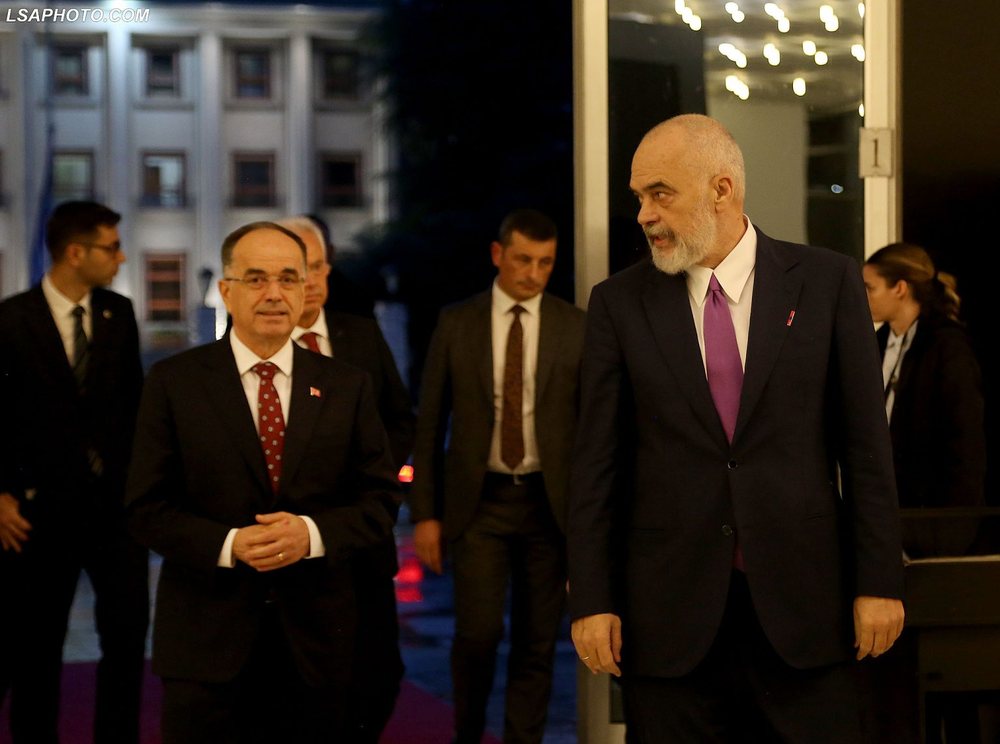
“The president is the final link in the procedure,” Arta Sakja, media advisor to President Bajram Begaj, told BIRN on Tuesday.
"This is a universally known fact, but the procedure is not related to this. The procedure is related to the notification, which in turn comes as a result of another preceding procedure," she added.
The Presidency's stance is the same as previous cases when resigned mayors of municipalities were not replaced for months, in violation of legal deadlines, until the Prime Minister's Office decided to send a formal letter to the President to 'announce' the vacancies.
Sakja emphasizes that the procedure has reference in the Electoral Code and the law on local self-government, but experts on local government and electoral processes see the President's behavior as an attempt to avoid institutional responsibility.
"The President of the Republic has a constitutional obligation to announce elections in Rrogozhina after the decision of the GJKKO and any delay or wait is a deviation from the public responsibility of this institution to give citizens the opportunity to elect the leader of their city," Rigels Xhemollari, director of "Citizen Stability", an organization that monitors electoral processes in the country, told BIRN.
According to him, both the decriminalization law, the court decision that has become final, and the sentence that has begun to be executed are facts that should set the institution of the President in motion.
"There is no need to wait for the Prime Minister to make an announcement, because the President's office is a public office."
Even for local government expert Agron Haxhimali, director of the Institute of Municipalities, the President's expectation of an announcement from the Prime Minister has no legal basis. "Now the vacancy in this case is like sunlight," he told BIRN.
According to Haxhimali, even if the President believes that legal procedure obliges him to wait for a letter from the Prime Minister, he still has the authority to take a position on cases where the Prime Minister does not comply with legal deadlines.
"For example, he could make a public statement on a universally known fact and invite institutions to implement procedures for the case," he suggested, adding that the President has a responsibility to control the situation and seek the implementation of legal deadlines for such matters.
On the other hand, for Haxhimali, holding by-elections a year before the new general local elections would not change anything for citizens, even though the Electoral Code, according to him, provides that by-elections are not held within 6 months before the next elections.
Even for Xhemollari, holding elections for only one year means new costs for citizens and the state budget.
However, he says that "the partial elections in Rrogozhina will be a public measure of the government's actions in relation to justice and an option for a model of opposition unity, as was attempted in the Tirana Municipality."/Reporter.al