

The Special Structure against Corruption and Organized Crime, known to Albanians as SPAK, has been the most trusted institution in the country for years.
Created in 2019, during the second mandate of Edi Rama's Socialist Party, under the auspices of the international community, it had one goal - to fight the chronic corruption affecting the highest levels of Albania's government.
Its mission, in popular terms, was to catch and bring to justice the “big fish.” And it did so, on a level that most Albanians would not have imagined.
Politicians previously considered “untouchable,” including former presidents and prime ministers, ministers and deputy prime ministers, important mayors, and members of parliament from the ruling Socialist Party, were accused and arrested. SPAK became, without a doubt, the most popular institution in Albania.
It seemed as if Albania had finally entered a true era of the fight against corruption. Even the ruling Socialist Party and its leader, Edi Rama, were offering strong public support for SPAK, which had uncovered disturbing levels of corruption and state capture at the highest levels of his government.
That is until SPAK began investigating and filing charges against Belinda Balluku, Minister of Infrastructure and Energy, Deputy Prime Minister, Rama's right-hand man and closest associate. In her case, Rama made a 180-degree turn, fighting SPAK at every turn.
When SPAK suspended Balluk from her ministerial post after accusing her of procedural violations and favoritism in major public tender processes, Rama refused to enforce the decision. Instead, he asked the Constitutional Court to rule on whether SPAK’s decision was constitutional or not. This was widely seen as a move to keep Balluk in office despite SPAK’s concerns that she could use her position to obstruct the investigative process, as well as public calls for her to resign.
Balluk’s Ministry of Infrastructure and Energy had long been embroiled in scandals that led to the arrest of her close associates. Numerous WhatsApp messages published in the media, the authenticity of which was not disputed by either her or the government, suggested that she had interfered in the awarding of public tenders – although she denies any wrongdoing.
However, Rama insisted that she remain in office until the Constitutional Court rendered its decision.
Socialist majority blocks arrest
After the Constitutional Court refused to lift Belinda Balluku's suspension from SPAK, Edi Rama took a step to stop her arrest, stating that the Socialist parliamentary group, which is under his influence, would not automatically approve SPAK's request to lift her parliamentary immunity, as it had previously done with other Socialist MPs.
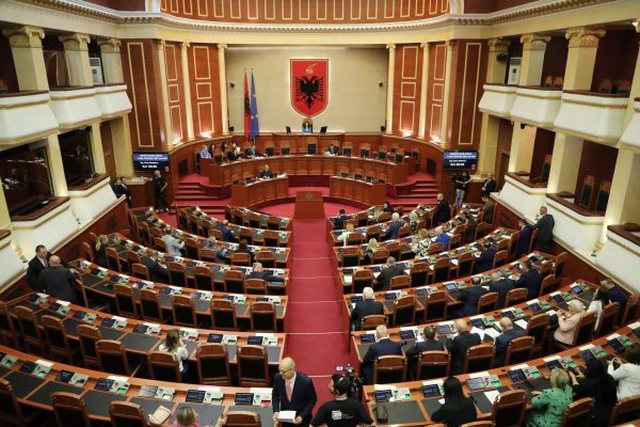
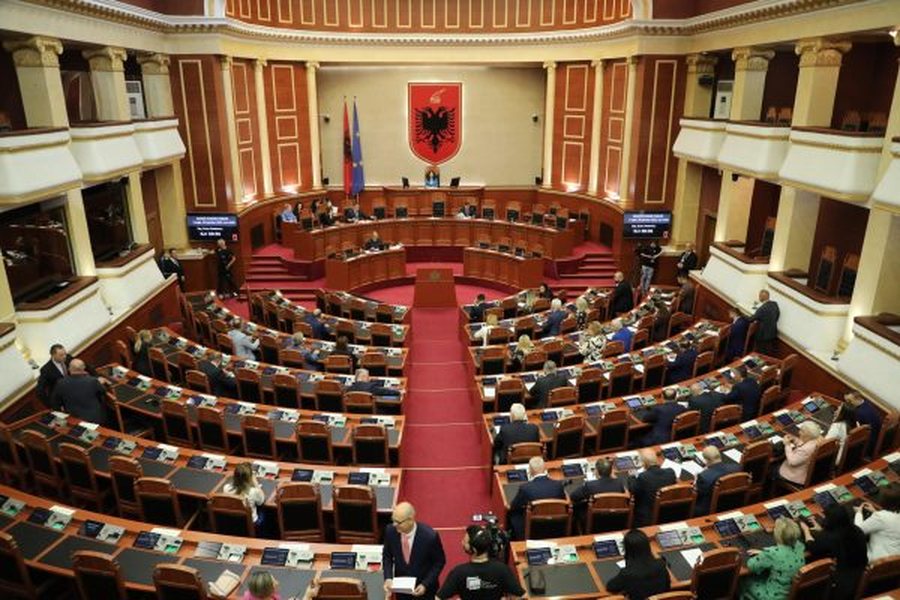
On March 12, the socialist majority in parliament refused, as expected, to lift Balluk's immunity, blocking her arrest.
This decision marked a clear case of the use of political power to protect high-ranking officials accused of corruption. It was precisely the phenomenon that SPAK was created to overcome, under international insistence, guidance, and monitoring.
It is no surprise that this change of stance on Rama's part caused great disappointment and skepticism not only in Albania, but also within international institutions, such as the EU Delegation to Albania and various European embassies, which criticized his decision to reject SPAK's request to lift Balluk's parliamentary immunity.
For his part, Rama presented this decision as a normal institutional dispute between the justice system, represented by SPAK, and parliament as a sovereign institution exercising its fundamental constitutional right.
Parliament is a sovereign body, not a formal seal of SPAK, Rama and his spokesmen declared, taking on the role of defenders of parliamentary sovereignty.
However, as appealing as this rhetoric may sound, it does not suit a prime minister who has already turned the socialist parliamentary majority into his personal stamp. Words about parliamentary sovereignty sound unconvincing when coming from a man who has de facto transformed parliament into an extension of his personal will.
Rama's arguments against lifting Balluk's immunity have not convinced even some of his supporters in the media. Socialist MPs have not offered any political argument as to why her arrest would harm the integrity and autonomy of parliament. No accusations have been made against SPAK that the request for Balluk's arrest was politically motivated or unconstitutional.
Instead, the Socialist parliamentary group offered a defense as a lawyer for Balluku, challenging the evidence presented in her case and what it called the disproportionality between the charges of administrative violations and the SPAK decision to arrest her. This placed Rama in a paradoxical position, as both judge and party to the case.
By concluding that Balluku's arrest was unjustified, given the evidence and accusations raised by SPAK, Rama and his parliamentary group assumed the attributes of a judge, while simultaneously being the defendant's most vocal defenders.
Such a persistent defense of Balluk, despite the major scandals related to her ministry – and in contrast to Rama's behavior in other similar cases – has raised suspicions that, more than parliamentary principles, Rama was defending Balluk as a person, if not himself.
These suspicions are strengthened by the fact that Balluk's alleged violations, if proven, could have the potential to bring down the prime minister himself.
SPAK ban undermines accountability

For many in Albania, the recent clash between Edi Rama and SPAK felt like the beginning of the end of an era – an era that had raised hopes that even the powerful could be held accountable.
Rama's decision, and that of his subordinate parliamentary group, to ban SPAK in the country, does not bode well for either Albania's democratization or the EU integration process.
Albanian democracy has now been emptied of any democratic substance, such as representation, political choice, or participation. As a result, democracy has become almost synonymous with the fight against corruption and the rule of law.
Rama's government may have offered little in terms of participation, transparency, and representation, as he weakened the Socialist Party and centralized power, but an illusion of democracy was nonetheless created through the political accountability that came from SPAK.
This illusion is now disintegrating, both for Albanians and for the EU institutions that monitor the country. In the bleak Albanian political reality, where a discredited opposition led by a permanent leader faces a government steeped in corruption, led by a permanent prime minister, SPAK and its successes against corruption were a ray of hope.
The European Union has relied heavily on the success of the campaign against high-level corruption in Albania, led by SPAK, as an example of the consolidation of the rule of law in the country. SPAK's successes opened a narrow path that seemed to legitimize Albania's integration into the EU.
The EU may have been able to ignore other democratic failures under the Rama government – the weakening of the role of parliament, the concentration of all executive powers, local and central, in the hands of the prime minister, the lack of transparency in governance, and even the “capture” of the state by private and criminal interests – by focusing on SPAK’s successes in the fight against corruption.
If these successes come to an end, Albania's democratic failures will become so great that even the EU itself will no longer be able to ignore them. /BIRN/