



According to the adopted legal provision, "an employed or self-employed journalist, registered and recognized as such in accordance with the legislation in force, regardless of citizenship or the place where the activity is carried out, shall not be held criminally liable for the offense of defamation under this article, for the dissemination in good faith of data/statements or any other information, through the press, audiovisual media, electronic media or other public communication platforms."
The provision is, however, accompanied by several conditions, such as that the journalist is not aware that the factual data or information is false and has made reasonable efforts to verify its accuracy and to act without delay when informed by the affected person.
The provision further clarifies that the term "good faith dissemination" means dissemination that is carried out in accordance with the ethical and professional rules of journalism, on a factual and reasonable basis.
"Assessments, opinions, comments, criticisms or interpretations, even when they are scathing, exaggerated or offensive, are not considered defamation, within the meaning of this article, unless they contain, expressly or impliedly, objectively false claims, facts, data or information," the draft states.
The changes also affected the article that defines "assaults in the line of duty" as a criminal offense, adding violence against journalists.
"When this criminal offense is committed against a person employed or self-employed as a journalist, registered and recognized as such in accordance with the legislation in force, regardless of citizenship or the place where the activity is carried out, due to the exercise of his professional activity and when his quality is apparent or known, he is punished with imprisonment from one to five years" - it is stated in the version approved by the commission.
Decriminalizing defamation for journalists has been an early demand of the European Commission and other international organizations.
Minister of Justice, Besfort Lamallari, defended the changes and described them as strengthening protection for journalists and media freedom, "by excluding criminal liability for journalists who act in good faith and in the public interest, while toughening penalties for violence and threats against them."
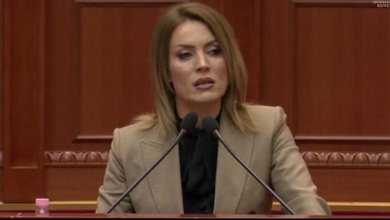
Earlier, the committee rejected the proposal of Democratic Party MP Jorida Tabaku for the article protecting journalists.
Tabaku defended its formulation as a more comprehensive protection for journalists and consulted widely with media and civil society organizations.
Meanwhile, other changes to the Criminal Code also affect other provisions that, according to the Minister, are related to the approximation of legislation with the acts of the European Commission, strengthen the rule of law and increase public security.
Among them, double parking is added as a criminal offense, in cases where it seriously impedes traffic and emergency vehicles. The new provisions bring a tightening of penalties for criminal offenses committed against children and those of a sexual nature and the spread of terrorism./Reporter.al