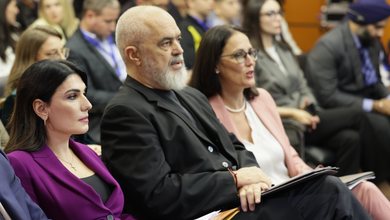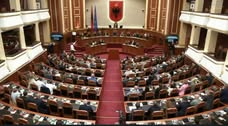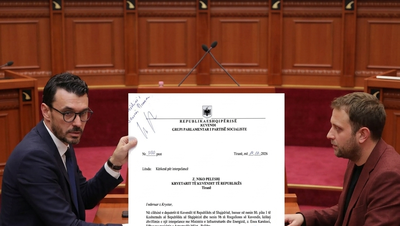


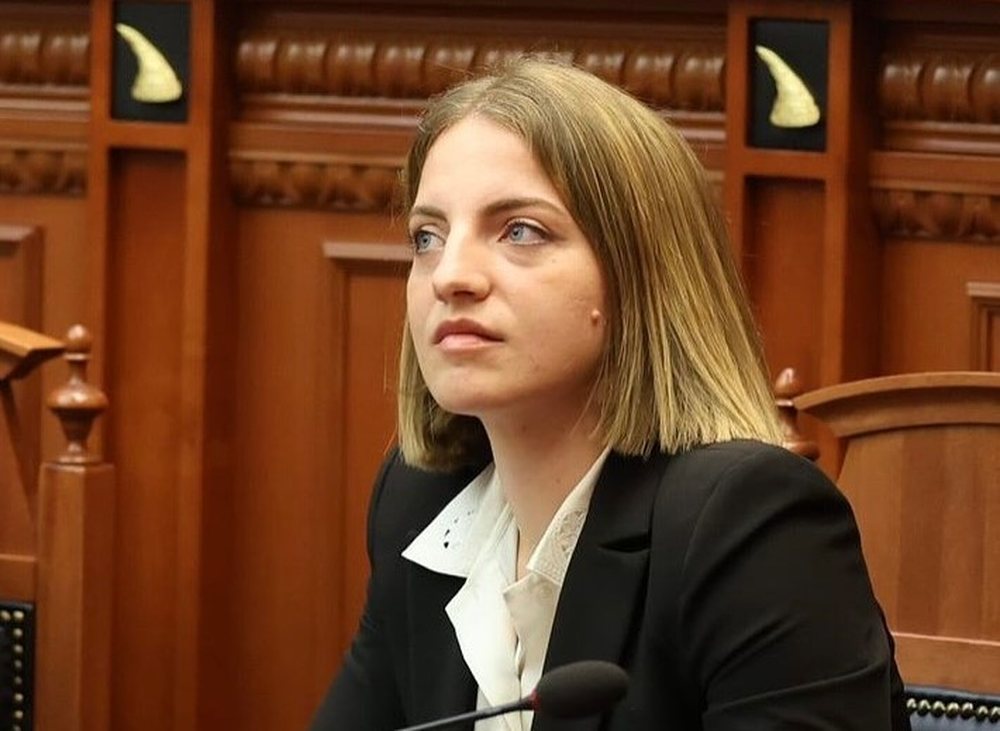
The Albanian Parliament censored the speech in Ghegnish by MP Marjana Koçeku (SP), transcribing it into the official standard Albanian language, it is known from the reading of the minutes of the April 14 session.
When asked by BIRN, the Parliament announced that the administration considers it "obligatory to use standard Albanian" and that it also feels obligated to fully respect the rules for the spelling of the Albanian language.
Koçeku, who was elected as a closed-list Socialist Party MP in Shkodra Region in last year’s elections, drew attention and sparked debate in her April 14 speech, not for what she said, but for how she said it. Her speech, which praised the Socialist Party’s policies for the development of the country, especially the mountainous areas of the north, where Koçeku comes from, was delivered in the Gheg dialect, while Koçeku responded to criticism of the dialect’s use over the official language by declaring that “my Gheg is political.”
The debate sparked by the use of the slang term in parliament attracted opposing opinions, some criticizing it and some praising it.
But if the audiovisual media recorded and debated Koçeku's slang, the documents of the Albanian Parliament recorded nothing. If, after a hundred years, someone finds it interesting to read the parliamentary debates of our time, they will find MP Koçeku speaking in the official standard.
Asked by BIRN, the Albanian Parliament said that "the minutes of the plenary session are an official document, which, in addition to being published on the official website of the Parliament, is part of the Parliamentary Documentation Archive, with permanent preservation value. As in any official document, it is mandatory to use standard Albanian, respecting the rules of Albanian Language Spelling."
Furthermore, according to the assembly, “given that in the Assembly of Albania, deputies represent different provincial areas (with their respective dialects), respecting the standard language norm guarantees the respect of another obligation of the institution: informing the public about parliamentary activity, in a clear and understandable language by all.”
The administration also announced that a deputy has the right to request correction of the minutes only for possible errors in content, but not regarding the use of dialects in political communication.
The spoken and written Albanian language developed gradually throughout the second half of the nineteenth century and the first half of the twentieth century with the free use of the constituent dialects, whether in everyday spoken use, in literature or in official documents.
Tosk took precedence after the establishment of the Communist Regime in 1945, while the use of dialects, in art or official documents, was completely banned after 1972.
During the communist regime, speaking in dialect was stereotyped as backwardness or ignorance.
In 2022, the Academy of Sciences practically announced the continuation of the ban on dialects at a conference, in which, in defense of his argument, the president Skënder Gjinushi cited a sarcastic article and referred to a scientific book that does not actually exist .
The status of Ghegnish and other dialects remains unclear, and the Albanian Parliament's refusal to record Koçek's speech in the minutes suggests that Ghegnish remains, even officially, illegal. Reporter.al