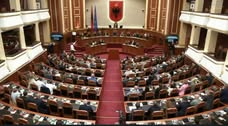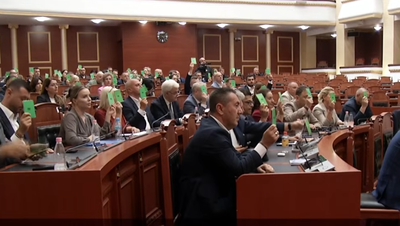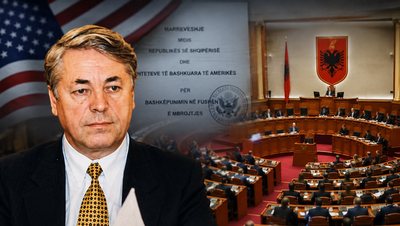




On December 10, 1991, in one of the most sensitive debates of the early years of pluralism, Abdi Baleta, a deputy of the Democratic Party of Albania, delivered one of the most direct speeches in the People’s Assembly of Albania during the debate on the request of the General Investigation of Albania to lift the immunity of two deputies. At a time when the new democratic institutions were trying to define the boundaries between politics and justice, Baleta warned that parliament should not become a shield for anyone and that obstructing investigations would create a dangerous precedent for the rule of law. Below is his speech, delivered at that session.
⸻
ABDI BALETA, DP MP:
"The People's Assembly is not a court. We are not here to judge the type of criminal offense, whether there is sufficient evidence or not. The People's Assembly is being requested by the investigative body to lift the immunity of two deputies, so that it can continue the proceedings to resolve an issue, the nature, character and importance of which for the political life of the country today and in the future we all know very well.
I do not consider it reasonable for deputies to start expressing personal considerations or judgments about how they imagine the law yesterday and today. These are the work of the judicial bodies.
We have accepted the great principle of the separation of powers. As a legislative body, it is up to us to do what is within our competence. It is not reasonable to say here that, since there are no signs of personal benefits, there is no reason to lift immunity. This is amateurism in explanation, if nothing else.
I listened carefully to the reading of the request of the Investigative Body of the In general, and as far as I understood, there is talk of abuse of office. And, when talking about abuse of office, the necessity of the element of personal gain is excluded. The gentlemen who lead the justice bodies and are dealing with a very important issue, which we have discussed and are discussing, have taken all these things into account. Here, in my opinion, we are faced with a fundamental problem: will we create all legal possibilities, will we remove every legal obstacle, always according to the law, so that the justice bodies can continue their further work? Or will we now come out and tie the hands of the justice bodies and say: “You will do this, because that is what we want, because we have the voting cards in our hands”?
Therefore, I would appeal to my colleagues not to look at this issue either as experts or as people who have the great privilege of using their vote unilaterally, according to their own will. Here we are facing a principled, serious problem, so we do not "We can prevent the justice bodies from continuing their work.
Lifting the immunity of a deputy in such cases does not mean that we admit guilt, nor do we blame them, nor do we put the seal of guilt on them, but it means creating legal conditions for the competent body, which has started a proceeding, to continue its work normally and reach correct conclusions. All those defenses that Mr. Korbeci presented are defenses that can be made very well during the investigative, judicial process, etc., and what he is asking for today can be achieved tomorrow. We take on a great responsibility and create a bad precedent, if we discourage the justice bodies in such a way to continue their normal work."
(Abdi Baleta, “Chronicle of Time”, volume 2, pp. 101–102)