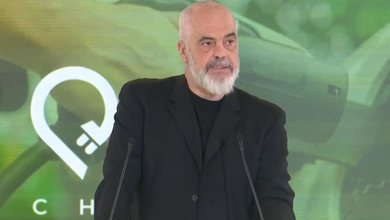




Chief Commissioner Ilirjan Celibashi described the testing of Artificial Intelligence in vote counting in Tepelena as “a technical success, with almost 100% accuracy.” But this “almost” seems to hide the entire problem.
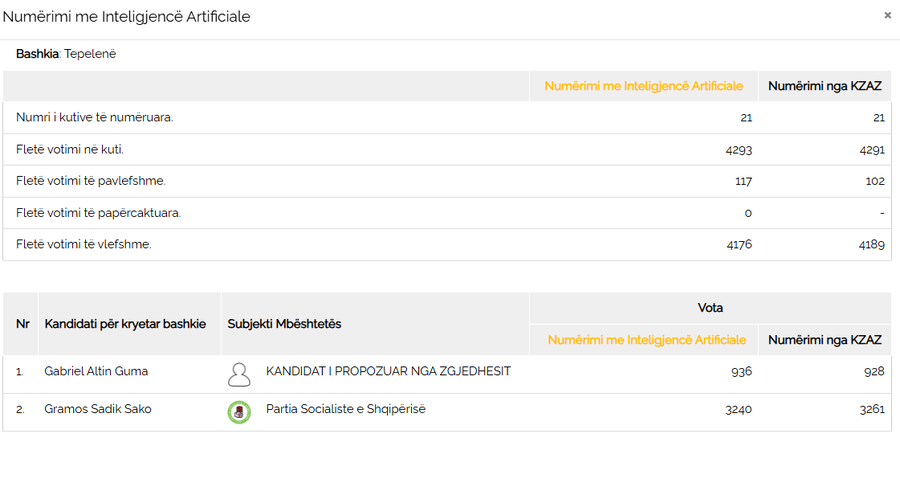
Out of 21 ballot boxes counted, the AI system found 4,293 valid votes , while the manual count at the CEAZ yielded 4,291, two votes fewer. In the category of invalid ballots, the difference was even greater: the AI identified 117, while the human count only 102.
For votes by candidate, the IA gave the SP candidate, Gabriel Guma, 3,240 votes , while the CEAZ gave him 3,261 , 21 votes more. Meanwhile, the IA counted 936 votes for the independent candidate, while the CEAZ counted 928, eight fewer.
In total, there was a 31-vote difference between the electronic system and the manual count — on the same day, the same process, and the same ballot boxes. However, the CEC declared the test “successful,” presenting it as a step forward toward digitizing the electoral process.
In fact, this “technical success” looks more like another justification for Celibashi’s budget, which does not spare spending on failed experiments. Because in Albania, even when Artificial Intelligence is wrong, the people who declare it a winner are the same ones who finance it — with taxpayer money, not with the accuracy of technology.