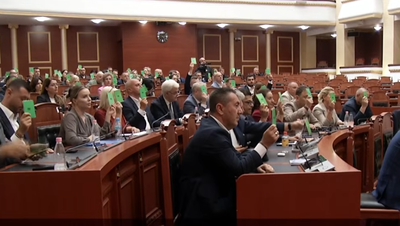




The Albanian Parliament will today adopt a new law on the Republican Guard, which corrects the actions of the Socialist Party a short time ago.
When he had to appoint the cousin of an oligarch as head of the guard, Rama intervened in the law, ensuring that the director was chosen through a competition and could even be from outside the circle of guardsmen.
But Ermal Onuzi did not last long at the head of the institution and after his departure, the Republican Guard is without a director.
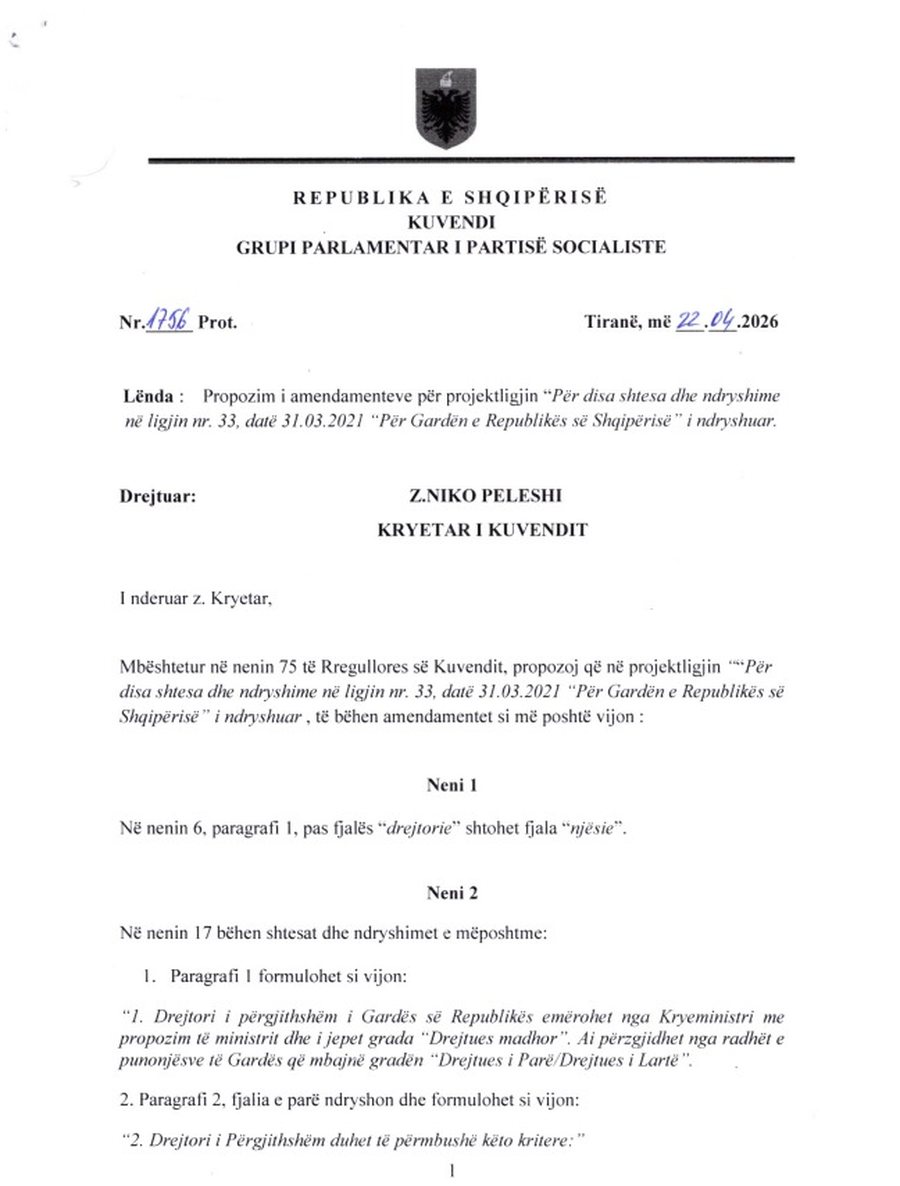
As he usually does when he wants to hide behind a finger, Edi Rama ordered one of his MPs (Antoneta Dhima) to propose legal changes that would restore the appointment of the head of the guard, not by competition, but by appointment by the prime minister, and specific criteria should be established (including changing the minimum education required) just so that the selection would go to a fixed name preferred in advance.
But if Rama changed his mind in 2 years, Antoneta Dhima herself changes her mind in 2 months. The documents were obtained by VNA, and show how last-minute lobbying, and not research, determines the fate of laws in the country.
She filed the first initiative on February 27, but yesterday, a few hours before the plenary session, she intervened in the law, introducing amendments to her proposal, and in this case, Erjon Malaj joined her as a signing deputy.
Of course, she has not taken away Edi Rama's monopoly on choosing the pre-designated leader of the Guard, but she has changed her mind one day before the session on recruitment into the Guard and their transfers.
In the new amendments, instead of repealing, a completely new wording is proposed for Article 23. This change aims to admit to the Guard employees from the Armed Forces, the State Police and other security structures for special needs (such as lawyers, doctors, engineers, etc.), while maintaining seniority of service and rank.
The initial draft law introduced in February by Ms. Dhima stipulated that the duration of a guard employee's transfer lasts as long as the reasons that dictated it exist. The new amendments set specific time limits: the duration of the transfer lasts as a rule up to 6 months, but no more than 1 (one) year.