



While prosecutors seized three forest plots on the coast of Velipoja as suspected assets obtained through forgery, Pëllumb Gjoka's main business - a casino in central Tirana and the company declared a strategic investor - remained outside the blocking measures, as SPAK chose not to use the "Anti-Mafia" law.
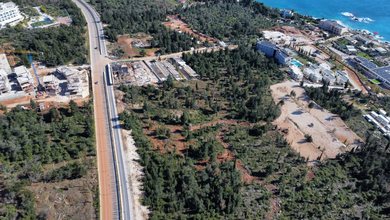
When the Special Court ordered the seizure of three forest lands in the village of Pulaj, Velipoja, in October 2023, prosecutors argued that the properties were suspected of having been obtained through forgeries committed more than a decade ago.
But while the coastal land was blocked, a much larger and more visible asset of businessman Pëllumb Gjoka – the casino in downtown Tirana and his company “Imperial Group”, declared a strategic investor by the government – was not affected by the seizure.
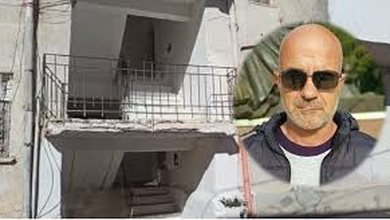
Gjoka, 49, has been in prison since July 2023 and is on trial for serious charges, including murder and participation in a structured criminal group, revealed after the decryption of communications on the encrypted application Sky ECC. However, his assets have not been investigated under the “Antimafia” law, the mechanism commonly used in Albania to confiscate assets suspected of criminal origin.
According to legal scholars, this procedural choice is of crucial importance because it changes the burden of proof.
“These are criminal offenses that create products, such as participation in organized crime,” said Lirime Çukaj, a professor of criminal law at the University of Tirana. “The ‘Anti-Mafia’ Law provides for the initiation of property proceedings without the need for a final criminal decision and the burden of proof shifts to the individual to justify the property.”
In the Gjoka case, financial investigations were conducted only within the criminal proceedings and not under the special law on confiscation of criminal assets.
SPAK did not provide detailed explanations for this choice, but in a written response it said that during the investigations no problems were found for the company "Imperial Group", where Gjoka owns the majority of the shares.
"The company you asked about is not included in these seizures, as prosecutors have assessed that the legal requirements for its seizure are not met," the response states.
The company “Imperial Group” sh.a., in which Gjoka owns about 56 percent of the shares, operates in the field of gambling and owns a casino in Tirana. In 2021, it was announced as a strategic investor for the “Silver Sand Resort” tourist project, a planned development worth about 52 million euros on the coast, which includes residential buildings, villas and hotels on an area of over 113 thousand square meters.
The criminal investigation against Gjoka began after Albanian authorities received information from Sky ECC about a criminal organization suspected of committing murder, hostage-taking, corruption and money laundering. In total, nine criminal charges have been filed against him and other members of the group.
Several other people have also been sent for trial in the same process, including Behar Brajović, Edmond Preka, Astmer Bilali, two police officers, Ardit Hasanbegaj and Oltian Bistri, and prosecutor Xhevahir Lita.
Gjoka challenged the arrest in the Constitutional Court, requesting that the Sky ECC communications be declared inadmissible in court, but his request was rejected in December 2024. During this process, SPAK also stated that there were reasonable suspicions that he had attempted to influence the court's decision-making.
Meanwhile, the only property seizure against him remained that of three plots in Velipoja.
The Special Appeals decision, obtained by BIRN through a request for information, shows that the forgery through which these properties were allegedly obtained dates back to 2012.
According to experts, if the "Anti-Mafia" law had been used, the property investigation would have had a much broader scope.
“When confiscation is made only within the criminal proceedings, the standard of proof is much higher – ‘beyond any reasonable doubt,’” Çukaj explained. “While in property proceedings, the existence of reasonable doubt is sufficient and the burden shifts to the person to prove the lawful source of the property.”
As a result, while a small portion of Gjoka's suspected properties were seized, the main assets of his business continue to remain untouched by preventive measures. /BIRN/