


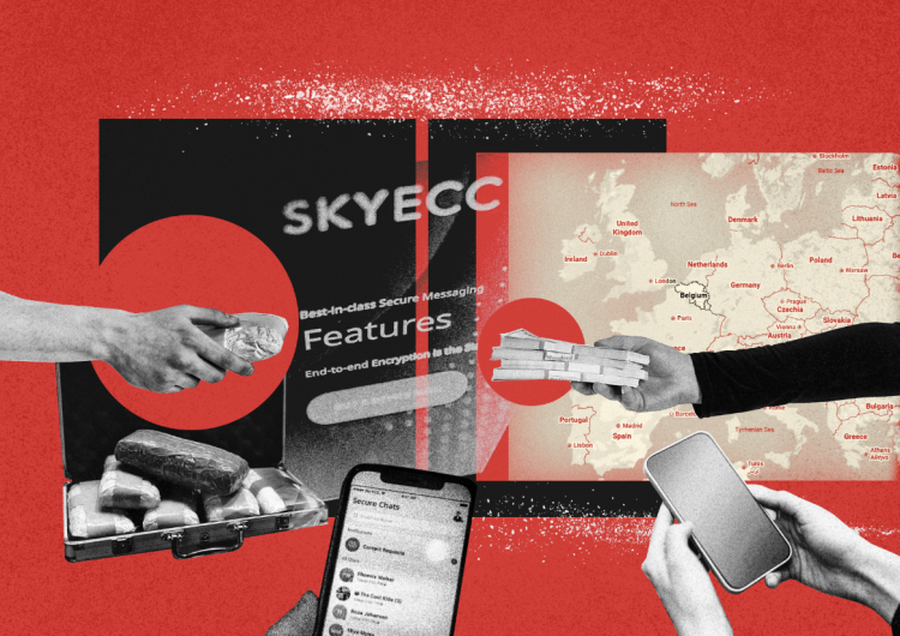
On the afternoon of November 5, 2020, while the roads remained closed due to measures against the Covid-19 pandemic, two Albanian men living in Belgium exchanged a series of short messages via the encrypted Sky ECC app – deciphered years later by European law enforcement authorities.
“We found the goods,” one of them wrote with satisfaction, while the other replied confidently [cit]: “Yes… I told you it’s there. The biggest job in history that has ever entered Europe, 12T… 8.7 was the record.”
The messages refer to tons of cocaine imported from Latin America and are part of the evidence against a criminal group under criminal prosecution by the Special Structure Against Organized Crime and Corruption (SPAK).
Cocaine is the most profitable drug in Europe and cocaine trafficking is considered a kind of “Champions League” of organised crime – where all groups aim for a seat at the table, as you can make a lot of money in a short time. However, compared to other drugs, cocaine has a long supply chain, which is complicated and requires many different elements to work together.
This complexity has created a segmentation of trafficking rings and a culture where crime is seen as a service – provided by a large number of operators rather than a single organization that manages the import from countries of origin to its sale on the streets of Europe.
To understand the role of Albanian criminal organizations in the European cocaine market, BIRN reviewed thousands of pages of court documents from nine SPAK criminal files and conducted interviews with local and international organized crime experts, academics and prosecutors.
The panorama that emerges from these sources is complex, but in essence it shows a clear trend – the continued consolidation of the power of Albanian criminal groups and the expansion of their influence along the entire cocaine supply chain in Europe.
Daniel Brombacher, one of the leaders of the Global Initiative Against Transnational Organized Crime, points out that before the Sky ECC and EncroChat investigations, investigators in Europe believed that the Italian mafia was the main protagonist in the cocaine business in Europe. But after these investigations it became clear that there are many other actors involved, with some of them playing a key role.
"Albanians are one of the dominant groups in the cocaine business, if not the dominant group," he said.
During just a short period of time, spanning from December 2019 to March 2021, Albanian criminal groups are suspected of trafficking tens of tons of cocaine from Latin America to Europe, with a market value of billions of euros.
“SPAK’s use of Sky ECC data has helped develop a new proactive investigative model, relying on advanced data analysis,” SPAK said in a written response.
"Around 60 criminal proceedings have been registered in the Special Prosecution Office based on the Sky ECC database," SPAK added, while emphasizing that the investigations conducted have resulted in the imposition of security measures - including "prison arrest" - against 340 people considered part of high-risk criminal networks.
The Rosetta Stone
The investigation into the encrypted Sky ECC application originated in 2016, as part of a drug trafficking case in Antwerp, Belgium, where judicial police seized several mobile phones with the application installed.
Belgian authorities found that these devices were widely used in criminal activities, while the application was openly advertised on the Internet as a secure communication tool, end-to-end encrypted and resistant to interference by law enforcement authorities.
The devices were sold through dedicated resellers and payments were made mainly in cash or through methods that guaranteed anonymity.
Attempts by Belgian and Dutch authorities to obtain information from the Sky ECC company went unanswered, prompting investigators to purchase their own equipment to understand how the system worked.
The analysis showed that Sky ECC used "PGP" encryption and that communications were carried out through servers located in France.
Technical analysis revealed the network architecture, consisting of a main server and a backup server, interconnected and used by persons involved in serious crimes, mainly drug trafficking.
In these circumstances, through European Investigation Orders issued by the prosecutors of Belgium and the Netherlands, the case was referred to the First Instance Prosecutor's Office in Lille, which registered a criminal proceeding in February 2019.
French prosecutors opened an investigation into participation in a criminal group and violations of cryptography legislation, and in June of that year the court authorized the interception, recording, and transcription of communications passing through Sky ECC servers. The authorized interceptions continued until 2021, when law enforcement agencies directly intervened in the system.
According to French authorities, the content of the communications provided by Sky ECC showed that the application served primarily to facilitate serious crimes, including drug trafficking, crimes against life and health, and money laundering.
“It’s something akin to the discovery of the ‘Rosetta Stone’ for law enforcement in Europe,” Brombacher told BIRN, referring to inscriptions unearthed in Egypt in 1799 that enabled the decipherment of pharaohs’ hieroglyphics on the pyramids.
According to Belgian authorities, Albanian is the second most used language in the Sky ECC application, after English.
Evidence collected by French authorities was shared with law enforcement agencies and justice authorities in several European countries, including the Special Prosecution Office in Albania, which has handled communications conducted by a significant number of Albanian citizens.
From the investigation of these communications, Albanian prosecutors have filed charges against nine criminal groups, mainly focused on cocaine trafficking between Latin America and Europe.
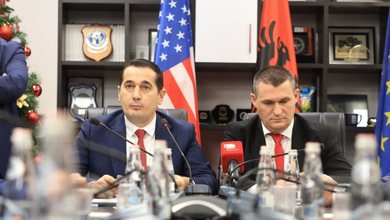
“Decrypted communications from platforms like Sky ECC and EncroChat show that Albanian criminal groups have reached a considerable level of sophistication,” says Fabian Zhilla, chief of staff to the head of SPAK.
“These communications reveal semi-hierarchical structures with a division of roles, medium- and long-term planning of criminal actions, as well as systematic use of technology to avoid prosecution,” he added.
According to Ruggero Scaturro, an expert on Albanian organized crime at the Global Initiative Against Transnational Organized Crime, the data obtained by Sky ECC confirm previous assessments on the structure and role of Albanian criminal groups in the cocaine market.
“They show that Albanian groups control certain segments of the supply chain, have the financial power to corrupt and penetrate legitimate trade chains, and have the ability to position themselves at the origin, acting as professional intermediaries,” he said.
"Also, their capacity to communicate and operate independently is clearly evident, although not in every part of the market," Scaturro added.
Cocaine trafficking does not necessarily require a physical presence at key trafficking points. Interceptions show that many Albanian actors operated and directed criminal activity while being located far from both the cocaine's origin areas and the drug's destinations.
Most of the key figures in trafficking have lived and operated abroad, often in hubs like Dubai, operating as a transnational network that more closely resembles a multinational company made up of specialized professionals. The data shows that Albanian traffickers do not operate with a single partner, but with multiple networks of cooperation. Another key element is their ability to be polyglots.
“The average Albanian trafficker speaks four to five languages, an important advantage in a global supply chain,” Scaturro said. “While cooperation among Albanians remains important, they are increasingly connecting with other international actors,” he added.
Tons of cocaine
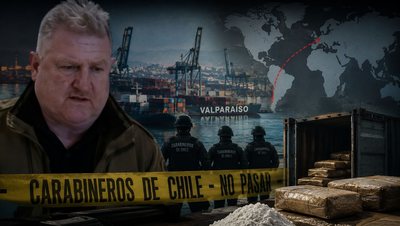
If a trophy were to be awarded for the illegal cocaine trafficking business among Albanian organized crime groups, the criminal organization known as the Çela-Çopja clan would undoubtedly win it – thanks to the record amounts of cocaine trafficked to Europe.
This criminal structure specializing in cocaine trafficking has two main figures: Ervis Çela, a 41-year-old originally from the village of Fatish in Peqin, who is the main cocaine broker in Latin America, and Franc Çopja, 36, from Elbasan, who is the financier and logistics manager in Europe.
This criminal structure operates throughout the entire cocaine trafficking value chain, from its financing and purchase in the deepest areas of Paraguay, otherwise known as "kitchens" or cocaine production laboratories, to the logistics of transport from the point of departure to European ports such as Antwerp and Hamburg.
Despite the seizure of a record amount of cocaine of 16 tons by German authorities in February 2021, according to Sky ECC data in SPAK's criminal file, this criminal organization managed to traffic 36.4 tons of cocaine to Europe in just a 6-month period, while also storing another 22 tons - ready to be trafficked - in Paraguay.
According to Altin Dumani, former head of SPAK, the Çela-Çopja clan is the largest Albanian cocaine trafficking organization in Europe by volume, but not the only one. In the last year alone, SPAK has announced the crackdown on 9 other criminal organizations accused of trafficking another 16.2 tons of cocaine from Latin America to Europe.
Fabian Zhilla says that the success of Albanian criminal groups is based on a combination of structural and functional factors, such as their presence in Latin America and partnerships with local drug cartels, as well as control of key segments of cocaine import and distribution in European Union countries.
Another important factor and characteristic of them is the ability of Albanian criminal groups to corrupt employees at ports of entry in Europe and to neutralize law enforcement structures at several levels - mainly in Latin America, the European Union and Albania.
Zhilla emphasizes that Albanian criminal groups traffic large quantities of cocaine and operate at strategic entry points via land, sea and air routes – such as in the Netherlands, Belgium, Spain, Germany, Italy, Greece, Great Britain, Montenegro and Albania, directly influencing the price of cocaine in Europe.
“This access and the significant quantities of cocaine have enabled them to influence the stability of supply, the quality of the product on the market and, consequently, the final price in local or regional markets in the countries where they are most active,” he said.
Connection with the Italian mafia
The expansion of Albanian criminal groups towards Latin America – excluding Ecuador, where the Italian mafia has not been present – is widely considered to be a process initially enabled by the Calabrian mafia, the 'Ndrangheta.
According to Ruggero Scaturro, Italy has had a historical role in shaping the Albanian-speaking criminal diaspora. Many of the Albanian traffickers – including Ervis Çela and Franc Çopjan – began their criminal activities precisely in Italy.
Scaturro points out that the links of Albanian criminal groups with the clans of the Puglia region are even earlier than those with the 'Ndrangheta, but the latter has played a particularly important role thanks to its international network. Beyond Latin America, the 'Ndrangheta has helped Albanian groups expand into West Africa, offering them access to the infrastructure and contacts it had built up there. At the same time, Albanians have also exploited the Calabrian diaspora in Germany, the Netherlands and Belgium to expand their criminal activity.
"The typical profile of the arrested Albanian trafficker is a man in his 40s, with at least 5 to 15 years of residence in Italy and strong ties in this country," Scaturro said.
Unlike in some other European countries, at least in Italy, Albanian criminal groups have been forced to establish relationships with local mafia groups for the retail distribution of cocaine. In Rome, especially, second-generation Albanian immigrants often operate as part of local criminal clans, engaging in a wide range of criminal activities – such as usury or blackmail – beyond drug trafficking.
According to Dr. Anna Sergi, professor of Sociology of Law at the University of Bologna in Italy and author of several books on the mafia and organized crime, Albanian criminal groups and Italian mafias have significantly deepened their cooperation over the last two decades.
Sergi emphasizes that Italian organizations have used their consolidated access to the European market and connections to ports to partner with Albanian groups, which aimed to expand their activity by carrying out “field work”.
“The relationship has evolved from a mentoring relationship to an integrated partnership, where Albanian groups now negotiate independently with sources in South America, while coordinating activity with Italian distributors,” said Sergi.
"There is no drug operation in Italy, linked to the 'Ndrangheta, that does not have a partnership with Albanian or Western Balkan groups," she added.
Despite the close cooperation, according to Sergi, there are fundamental differences between Albanian and Italian criminal groups.
“Albanian organized crime groups operate as decentralized networks, built on specific projects and with high adaptability, while Italian criminal organizations maintain hierarchical structures, closely linked to certain territories and with deep political penetration,” she said.
According to Sergi, Italian criminal groups – particularly the 'Ndrangheta – manage a wide spectrum of criminal activities, while Albanian groups focus mainly on specialized forms of narcotics trafficking.
“Both sides use encrypted communications, including the Sky ECC application, but Albanian networks display greater operational speed and geographical flexibility, while Italian groups, especially those from Calabria, remain more tied to traditional norms and practices of criminal functioning,” she added.
Supply chain
The expansion of the cocaine market in Europe has been driven by a significant increase in production and supply from Latin America, especially after 2016. Following the peace agreements with the FARC guerrillas in Colombia, coca cultivation has steadily increased, especially in Colombia, while remaining relatively stable in other countries such as Peru and Bolivia. This development has led to an overproduction of cocaine, also reflected in the fall in prices in the countries of origin.
In parallel with the increase in production, the search for new markets in Europe has led to a continuous increase in all indicators, both on the supply and demand sides within the European Union. For almost a decade, the main indicators of the flow of cocaine into Europe have shown a continuous increase, including a massive increase in seizures – which fell for the first time only last year, as well as a clear increase in consumption indicators.
Experts emphasize that Albanian criminal groups do not necessarily control the entire cocaine trafficking chain from start to finish, but provide specialized services and play various roles along it.
"Most European criminal groups operate only in certain segments of the chain – transportation, distribution or money laundering," said Fabian Zhilla.
"In the case of Albanian groups, a vertical integration is observed, which includes the provision of narcotics in Latin America, intercontinental transportation, mixing and distribution in Europe, and laundering of proceeds in Albania or other countries," he added.
In Latin America, there are cocaine brokers from Albania, or Albanian speakers, but also other European actors, who are present in key ports of origin, such as Ecuador or Brazil – the latter more often linked to Serbian criminal groups. In Colombia, the presence of Albanian drug traffickers is also continuous.
Albanian-speaking criminal networks also have a strong presence in the main ports of entry for cocaine into Europe. Traditionally, these have been Rotterdam, Antwerp and Hamburg.
This does not mean that they are always the owners of the cargo, but they have the capacity to be paid to ensure the exit of a container from the port, to organize the transport of smaller quantities of cocaine within Europe through smuggling vehicles with hidden spaces, as well as to guarantee the corruption of the right people.
At the other end of the supply chain, they also play a role in moving drugs from Colombia to Ecuador and further, from Ecuadorian ports to Europe, in containers from fruit companies – mainly bananas.
“Albanians are located at key points in the supply chain, acting as important nodes of international cocaine trafficking,” Brombacher said.
Dr. Anna Sergi explains that modern cocaine trafficking networks operate on the basis of complementary specialization. For example, Albanian organized crime groups deal mainly with transcontinental logistics and port operations, while Italian syndicates manage financing in Europe, distribution and part of the retail networks. She emphasizes that the expansion of cocaine supply over the last decade has exceeded the traditional distribution capacities of Italian criminal syndicates, creating space for other groups, including Albanians.
“Albanian groups possessed geographical advantages, such as Balkan ports and diaspora networks, lower exposure to law enforcement authorities, and high organizational flexibility,” she said.
“Rather than replacing Italian unions, they filled certain operational spaces, creating sustainable partnerships rather than competitive relationships,” Sergi added.
Researchers note that some of the leaders of Albanian organized crime began their criminal "careers" by collaborating with the 'Ndragetta and then gradually breaking away from it, due to the high exposure of the Calabrian clans to law enforcement authorities.
Another distinguishing feature of Albanian groups is the difficulty in securing collaborators with justice, as they operate in small clans, often with family ties, with 10–20 members at most.
Even when some members leave and form new groups, these remain small and interconnected cells, which makes them very difficult for investigators to penetrate and significantly slows down the process of securing evidence from within the criminal network.
'Wild capitalism'
According to the European Drug Agency, the cocaine market in Europe is worth more than 10 billion euros and annual consumption is estimated at between 200 and 400 tons. In 2023 alone, around 400 tons of cocaine were seized in Europe. Meanwhile, the cocaine market in the United Kingdom is estimated at 200 tons by local authorities.
Estimates of total consumption in Europe are mainly based on seized quantities, prevalence data and wastewater analysis data. However, according to the researchers, no single method provides a complete and reliable picture.
“What numbers can we refer to, that's the million-dollar question,” says Daniel Brombacher.
A “rule of thumb” in the fight against drugs suggests that authorities only seize 10–20 percent of the cocaine that flows into Europe, but even experts admit that this is not a scientific approach. Wastewater analyses provide strong signals of market growth, particularly in Western European cities, but they are limited and usually involve cities where the problem is already known. Meanwhile, prevalence data, based on interviews with the population, significantly underestimate real consumption, as users tend to be dishonest.
The distinguishing feature of the cocaine market, compared to other drugs, is its high level of profit. Brombacher emphasizes that what makes cocaine extremely profitable is not related to the cost of production – which is comparable to that of heroin – but to the very high level of risk along the entire trafficking chain.
"Every link in the criminal network faces the risk of seizure, arrest or violence, making cocaine an expensive and, consequently, very profitable commodity," he said.
However, in recent years the European market has seen a sharp decline in wholesale prices, especially in Western Europe. From levels of around 28-30 thousand euros per kilogram in the Netherlands and up to 40 thousand euros in other countries, prices have dropped to 18 thousand euros, and even 14 thousand euros per kilogram in Antwerp.
This decline suggests a massive supply and a reduction in the risk to traffickers, despite large seizures, indicating that organized crime has managed to adapt and outpace law enforcement efforts, through the use of new routes, more sophisticated concealment, and smaller shipments.
While retail prices remain relatively stable due to “historical prices” expected by consumers, the decline in wholesale costs has significantly increased profit margins for criminal networks. This boom in the cocaine market, according to Brombacher, has led to an increase in investment capital – like never before in the market.
"This cocaine boom has led to a situation where organized crime has more access to capital to invest in a cocaine trafficking ecosystem that is less dangerous, more organized and better protected," he said.
Brombacher underlined that organized crime is the purest and most brutal form of capitalism found on earth.
“It’s a wild capitalism, that doesn’t care at all about consumers and the consequences they experience,” he said. “Competition in the market is usually resolved either through domination or through violence,” Brombacher added, noting that “in that sense, it’s a kind of Hobbsian capitalism.”
Although the English philosopher Thomas Hobbes did not write about capitalism, Brombacher refers to his description of human nature as fundamentally selfish and the human condition, without authority, as savage.
Although in some cases there is cooperation in this market, such as the case of the Dubai Supercartel, where groups from the Western Balkans, Dutch, Italian and Irish groups cooperate together peacefully – this is more of the exception that confirms the rule.
“In the cocaine business, which is transnational and extends beyond national borders, with a very long supply chain and many actors, there is no such regulatory power,” Brombacher said. “This means that we are dealing with pure capitalism, where everyone tries to beat the other,” he added.
Money laundering
Italian authorities report that Albanian criminal networks remain among the most powerful in Europe, with consolidated branches in Italy, Greece, the Netherlands, Belgium and Central Europe, increasingly shifting from cannabis to cocaine and heroin trafficking, due to higher profits and lower operational risk.
According to experts, Albania's role in this picture is mainly related to laundering criminal proceeds, but not as a place where traffickers build bases or take refuge for a long time. Traffickers are aware that Albania is no longer a safe place to hide, but remains attractive for money laundering, which brings a long list of negative consequences for the local economy.
“One of the main consequences is the capture of state institutions through systemic corruption, which weakens the normal functioning of government and justice bodies,” said Fabian Zhilla.
"Likewise, the capital created by criminal activity, when enriched and integrated into the formal economy, causes a deformation of the market and the country's economy, creating advantages for criminal groups and undermining legitimate competition," he added.
From a social perspective, the impact of organized crime contributes to the normalization of a culture of impunity, where criminal acts are considered acceptable, especially in peripheral communities where these criminal structures have a strong presence.
"The image of the rule of law in the public is damaged, suffering an erosion of its moral legitimacy," stressed Zhilla.
Many of these criminal groups use the 'hawala' system to transfer illicit money, which is a trust-based system.
The traditional approach to anti-money laundering is based on monitoring transactions within the legal banking system – but when there are no transactions, there is nothing to monitor. This makes the 'hawala' system an ideal way to transfer and channel criminal proceeds, without passing them through formal channels.
According to Ruggero Scaturro, Sky ECC-based investigations, the creation of SPAK and international crackdowns on cocaine trafficking have brought a real shock to Albanian criminal groups, exposing and weakening networks that were previously almost unknown to the authorities. However, their impact is expected to be largely temporary.
“Albanian criminal structures do not suffer from a lack of ‘soldiers,’” Scaturro said. “After more than two decades of their involvement in the global cocaine chain, the level of sophistication they have achieved makes them difficult to replace and suggests that their presence in this market will continue in the future,” he added.
Even if some clans disintegrate, Scaturro emphasizes that their infrastructure remains functional and replacement occurs quickly, as Albanian groups operate as flexible networks, without rigid hierarchies, based on personal connections and specialized intermediary roles.
"As long as the demand for cocaine in Europe continues to grow, there will always be supply to meet it," he concluded. /BIRN/