


The evil advice that the late former Prime Minister Fatos Nano publicly stated that he received from the former infamous Sulo Gradeci is famous, when he asked him how he should behave with Albanians and received the answer: "Make your mother call you father." In addition to the vulgarity with which they evaluated the people to which these two individuals belonged, the evil extends to the conception they had of power and the state, as a means of violence and oppression, not as a construct of service, protection and prosperity.
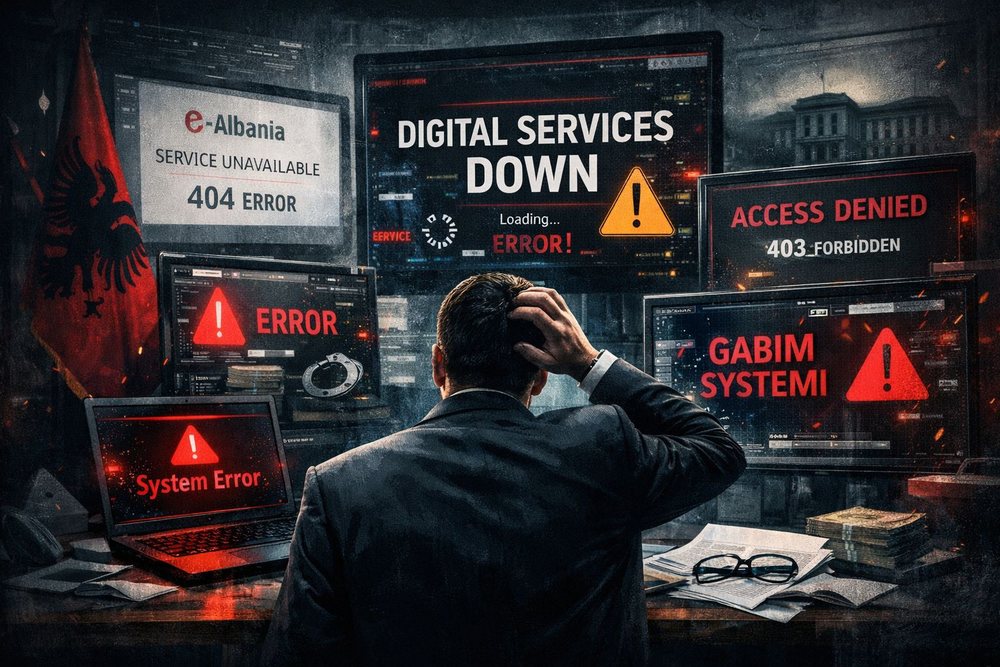
It seems that this advice has also been conveyed to the resurgent Prime Minister Rama and his court, as scandals of unheard-of proportions break out every day and every state service is degrading. Among the most recent is the malfunctioning of digital services. In July, there were massive complaints about the inability to submit balance sheets because the system was down, which state offices shamelessly justified, indignantly, with the culture of the Albanian people to leave things to the last minute. Meanwhile, since December, the media has reported almost every day on the problems in e-Albania, SelfCare and the complete collapse of the systems from which services are received, hindering, suspending and delaying the fulfillment of the needs of citizens and especially businesses.
This is a very serious problem, as it shows the irresponsibility of state structures to fulfill their obligations; the arrogant approach that does not care about clarifying and solving the problem that it itself caused; the massive waste of public money, as colossal funds have been used for these systems, but also the salaries of an entire administration that does not do its job in maintaining them.
On the other hand, the problem has become a financial, administrative and nerve-wracking cost for businesses that have to deal with this missing service every day. The silence from state offices continues: no statement on when it is expected to be fixed, no transparency about the period of the missing service and no reaction on administrative measures to ease the obstacles that have been created, such as changing the deadlines for submitting declarations — submission that cannot be carried out because the state itself has closed the digital gates.
The questions rightly arise:
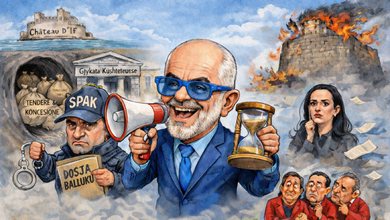
• Is the failure to provide digital services part of the criminal activity of the AKSHI, and now that perhaps funds are not moving so easily to the tender winners, does it not feel like they should provide the service?
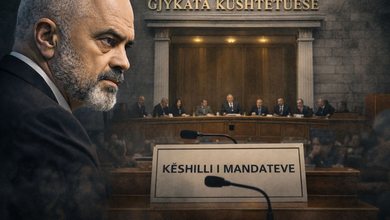
• Is the non-provision of digital services a form of pressure on special investigative bodies, to show them that their investigation into the National Anti-Corruption Agency and in general into state administration corruption is hindering the normal progress of the country, just as the investigation into the Deputy Prime Minister is hindering infrastructure projects (according to the arguments that the government itself has brought to the Constitutional Court)?
• Is the lack of digital services a deliberate chaos to carry out accelerated procurement procedures with staggering amounts of money with predetermined winners, so that they can be sold to us as saviors of the situation?
• Is the lack of digital services also the result of filling the administration with militants and patrons of the Renaissance, who cannot even conceive of profession and professionalism?
• Does the Prime Minister still think that the state's digital revolution can only be achieved with a pregnant Sun? May the day never come when the economy becomes cashless, because with this quality of service, it would be no wonder that we won't be able to buy even a piece of bread.
• Does the Supreme State Audit intend to follow a more flexible approach in its audits and pay attention to such aspects?
• Does the Economy Committee in the Albanian Parliament intend to consider — and why not even conduct a parliamentary investigation — this paralysis of digital services?
• Does the prosecution intend to launch any investigative process for the paralyzing of services (since there are already processes in place)?
We are not asking whether the relevant government ministers, who should have immediately come up with alternative action plans and decisions on how to deal with declaration deadlines, penalties, inspections, when their own government is unable to provide the services, are blushing. We are not asking them, because we know that they neither have answers nor do they care to speak in front of the prime minister, because they are essentially the most servile employees in this country.
While we ask the Prime Minister for an explanation: to solve this problem, should we, the citizens and businesses, turn to the "Iranian comrades" who stole our data and enabled the Renaissance government to spend colossal funds on the National Security Agency and systems that are now not functioning? Or will the Prime Minister come to us with some good news from a visit to the "Israeli brothers" and they will solve the problems of our systems at the behest of the fish?
That for security and protection of personal data, this has taken time.