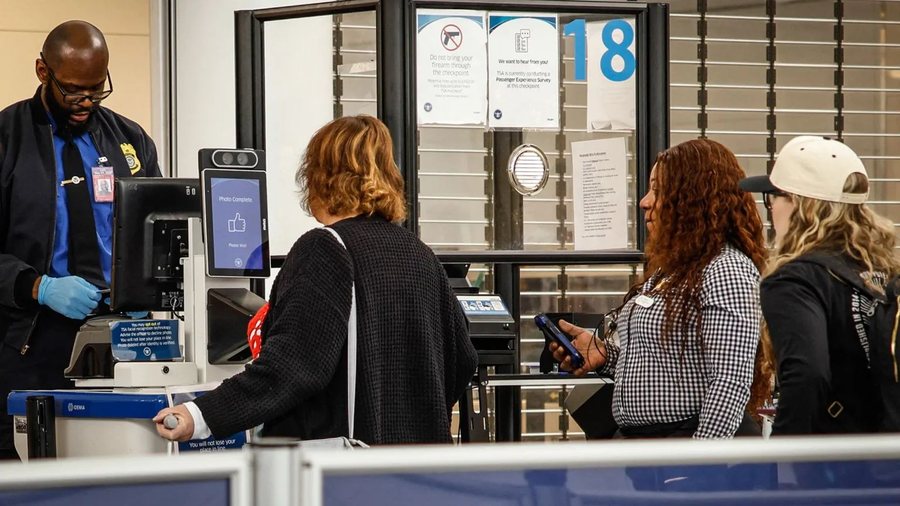
Tourists from dozens of countries around the world, including the United Kingdom, could be forced to declare their social media history for the past five years as a condition of entering the United States, according to a new proposal made public by US authorities.
This measure will affect citizens of countries that can currently travel to the US for up to 90 days without a visa, by completing the electronic form ESTA (Electronic System for Travel Authorization). Since Donald Trump returned to the White House in January, his administration has significantly tightened border policies, justifying this on national security grounds.
According to the proposed document, ESTA applicants would be required to provide information on their social media accounts for the past five years, without clarifying what specific data would be requested. It is also expected to collect phone numbers used in the past five years, email addresses for the past ten years, and more information on family members.
The document was filed by Customs and Border Protection (CBP) and the Department of Homeland Security (DHS), and according to US media it was published in the Federal Register, the official journal of the US government. The BBC has requested a comment from DHS, but has not yet received a response.
Currently, ESTA requires a relatively limited amount of information and a fee of $40. The system is accessible to citizens of about 40 countries, including the United Kingdom, Ireland, France, Australia and Japan, allowing multiple trips within two years.
The Trump administration has previously imposed similar requirements on applicants for student visas and H1B work visas, requiring their social media accounts to be public. A senior State Department official said the policy is based on the expectation of American citizens that the government will do everything it can to make the country safer. Officers have been instructed to identify people who may support terrorism or anti-Semitic violence.
Meanwhile, as part of efforts to tighten borders, the administration has also warned of a possible expansion of the travel ban to 19 countries in Africa, the Middle East and the Caribbean, following a shooting attack on two National Guard members in Washington, where the suspect is an Afghan national.
The proposal to collect tourist data is open for public consultation for 60 days. The Electronic Frontier Foundation, a digital rights group, has criticized the plan, warning that it could exacerbate civil liberties violations. Meanwhile, law firm Fragomen estimates that the measure could lead to delays in the approval of ESTA applications.
Experts say the Trump administration's new travel policies are having a negative impact on American tourism. The World Travel and Tourism Council said the U.S. is the only one of 184 economies it surveyed that is expected to see a decline in international visitor spending in 2025. Many Canadians have also boycotted travel to the U.S. in protest of Trump's tariffs, and October marked the tenth consecutive month of declines in Canadian travel.