Why war with Iran hurts China less than its rivals. But more than it admits
For the better part of a decade, China has repeated the same message to foreigners: unlike some unnamed countries that push forward unilateralism and protectionism, China is a force for stability and security.
At times, this has been a tough sell. But as the globe moves from Donald Trump's tariff madness to the fallout from his attacks on Iran, Chinese officials are making their case to an audience that needs very little convincing, and they know it.
Business executives and diplomats who have recently met with Chinese leaders report that they seem unusually confident.
This has led to extreme claims about the impact of the war with Iran on China's economic position. Immediately after the bombings, some of Trump's supporters claimed that, along with the overthrow of Nicolás Maduro in Venezuela, this was part of a plan to harm China by hitting its supposed allies and energy suppliers.
The idea that China would be among the biggest losers of the war is clearly wrong. But that does not mean that the opposite, that China would be the big winner, as some are now claiming, is necessarily correct.
The war will hurt the Chinese economy, not help it, although the damage will be less than that inflicted on many of its neighbors and rivals. The country's share of global exports, already extremely high, is likely to grow even further.
But the longer the war drags on, the more the costs will increase. Officials do not welcome the deepening chaos in the Middle East.
The economic consequences for the Asian giant fall into three categories: energy, exports, and escalation risks. Each of these contains a mix of shocks and opportunities.
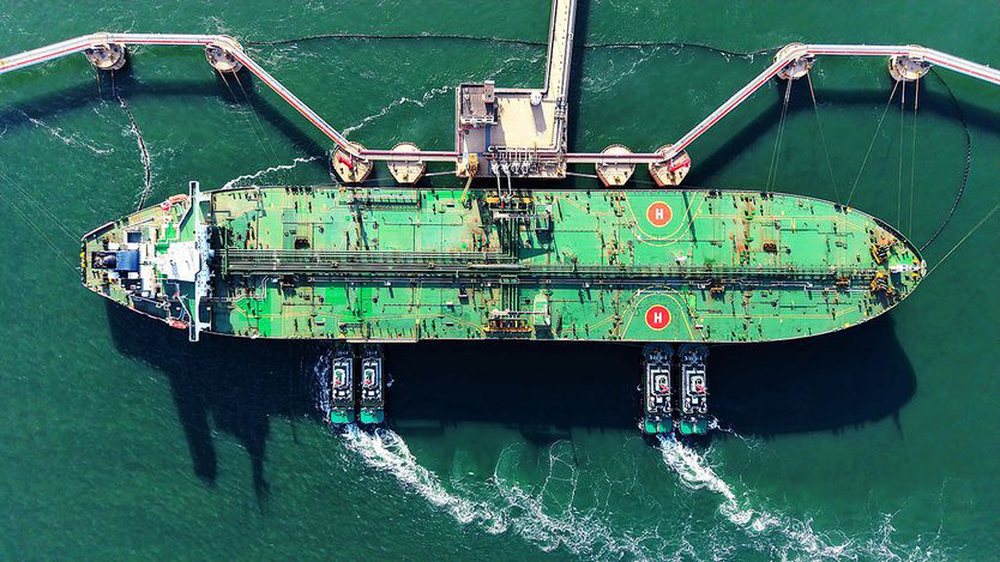
The most direct consequence of the war has been a tightening of oil supplies. But unlike other Asian oil importers, China has more buffers.
About a third of its crude oil passes through the Strait of Hormuz, compared with more than 70% for both South Korea and Japan.
Furthermore, oil and natural gas make up a smaller portion of China's overall energy mix, due to its reliance on coal, nuclear power, and rapidly expanding renewables.
China also has alternatives to petrochemicals, with large companies that can convert coal into chemical products.
And if shortages worsen, China has oil reserves estimated to cover about four months of seaborne imports. Advisers in Beijing say the government is, for now, reluctant to use these reserves, saving them for truly worst-case scenarios.
The outage is affecting costs. On March 23, the government raised fuel prices by 13%, causing concern among ordinary Chinese citizens.
On the one hand, this situation is somewhat positive, as the increase in fuel and commodity costs will help the government achieve one of its economic objectives for the year: bringing inflation into positive territory.
Producer prices have fallen on an annualized basis for 41 straight months, the longest period of deflation since 2012-16. A broader measure, the GDP deflator, has fallen for 11 consecutive quarters. The war may have interrupted both of these dismal sequences.
Surveys of producers already show a sharp rise in raw material prices. Expensive oil is a painful way out of deflation, as it would be much better if the reason was strong demand rather than higher costs.
However, the price hike will at least re-familiarize Chinese companies and consumers with the idea that prices can rise, helping to prevent the “deflationary mindset” that condemned Japan to years of stagnation.
Another question is how the war in Iran will weigh on exports. Last year, China posted a record trade surplus of $1.2 trillion, generating about a third of its economic growth.
As consumers around the world feel the brunt of rising energy prices, their spending on other goods will fall, and the ripple effect will hit Chinese factories. Economic advisers in Beijing are talking up their preference for a stable global trading order.
As the world's largest exporter, China has a vested interest in keeping international waters open and cross-border trade predictable.
However, the current crisis could ultimately increase global demand for the "new trinity" of Chinese products: electric cars, lithium-ion batteries, and solar panels.
China is the dominant producer of all three, accounting for at least 70% of global capacity in these sectors. Each of these will become more attractive to people and businesses elsewhere if oil prices remain high in the months ahead.
Chinese manufacturers will also benefit if some of their target markets are distracted.
Throughout 2025, it seemed as if European countries were gradually moving towards more protective measures against the wave of Chinese imports hitting their shores. Now, as one diplomat puts it, confronting the Chinese manufacturing giant has slipped lower on the list of priorities.
If the war gets much uglier or lasts much longer, the global economic damage will become increasingly severe. For China, this will create a dilemma that it has faced for the past five years: when do things get bad enough to justify a sensational stimulus program?
According to economic advisers, Xi Jinping has come to see the stimulus, and the accompanying increase in debt, as an economic weakness and even a moral failure.
According to him, it is much better to let businesses and consumers fend for themselves than to rely on the government for financial bailouts.
However, officials are wondering whether current policy parameters will allow China to achieve its growth target of 4.5-5% for 2026, the lowest since 1991.
The economy appears to have started the year well, with manufacturing and exports both in good shape. But the property market has yet to bottom out and consumer confidence remains weak, leaving China to rely on a continued export boom.
If the war with Iran dampens this boom by raising transportation costs and damaging the confidence of trading partners, China has options. It could lower interest rates more quickly and spend more public money.
As Larry Hu, an economist at Macquarie, an investment bank, puts it, global disruptions determine how China achieves its growth target, not whether it achieves it: weak exports prompt more stimulus; strong exports, less.
Falling trade could even force a more decisive rescue of the real estate market, boosting household wealth and confidence.
Growth through stimulus would be better for the global economy than China's export-led expansion. It would also be better for Chinese families, who would be able to enjoy more of the fruits of their labor.
Strong domestic demand in the world's second-largest economy would indeed be a source of stability and security for others. But for Xi, determined to transform his country into an unrivaled technological powerhouse rather than an overly consumerist economy, this would be an unwelcome shift in strategy.
It would be ironic if Trump's reckless war, which has thrown world markets out of balance, ends up making the Chinese economy more balanced.