America's war on Iran has changed the Middle East – for the worse. Talks of a ceasefire leave the region less secure than when the war began, writes The Economist
It was a vague stop to an ambiguous war. Donald Trump initially threatened to escalate US bombing to the point of destroying Iran's "entire civilization."
Then, less than two hours before this offensive was to begin, he announced that America, Israel and Iran would suspend hostilities for two weeks and that Iran would allow commercial shipping through the Strait of Hormuz to resume. It was then said that the ceasefire had not been reached, then that peace would be discussed again…
It is too early to know whether there will be a ceasefire. If negotiations lead to a deal and Iran agrees to stop threatening its neighbors in exchange for relief from U.S. sanctions, both sides could benefit. If the talks fail and the war resumes, both sides will be worse off.
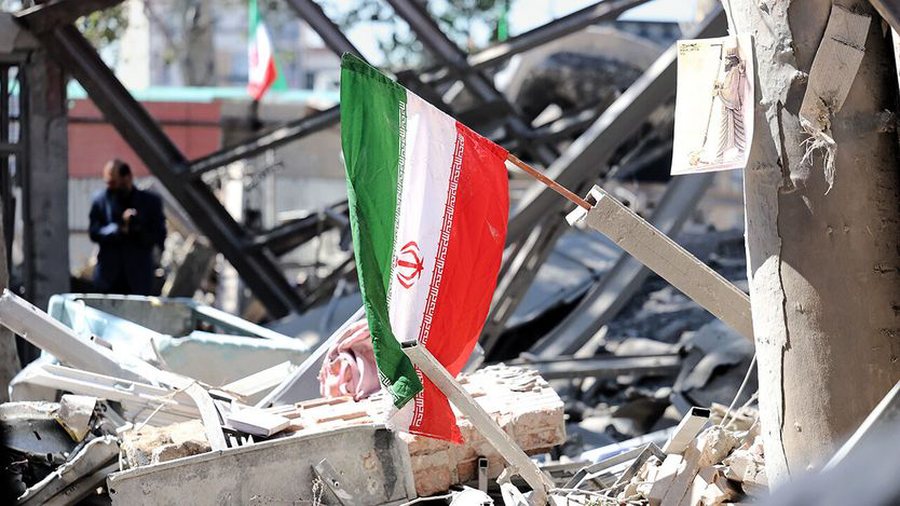
For now, it is difficult to see any winners. The impact on the global economy has been significant and will continue. Iran has suffered severe damage not only to its military facilities, but also to its civilian and commercial infrastructure.
The Gulf states have lost revenue, suffered damage to energy facilities, and suffered a reputation for security and stability. Israel's popularity in America and beyond has suffered another blow. America has depleted its ammunition reserves and put its armed forces under strain.
Meanwhile, none of the objectives that Donald Trump and Israeli Prime Minister Binyamin Netanyahu had set for the war appear to have been achieved. The Iranian regime has lost a large part of its military power and many of its top leaders.
The ceasefire agreement could be a sign that the pragmatists are gaining ground. But the Islamic Republic remains in power, maintains a stockpile of enriched uranium and still has the ability to launch drones and missiles across the region.
Worse, it has shown for the first time the power of a 'weapon', the ability to close the strait, to which America has no means of countering. The region and the world will pay the price of this conflict for years to come.
Israelis overwhelmingly supported the war when it began, seeing Iran as an existential threat. Now many question whether it was worth it. Despite tens of thousands of Israeli and American strikes, Iran is still capable of launching dozens of missiles and drones every day toward Israel and the Gulf states.
Israel's estimate at the start of the war that it had "neutralized" over three-quarters of Iran's missile launchers seems exaggerated. Half is a more plausible estimate, and even that includes equipment that can be relatively easily restored to service.
The regime's survival and the preservation of enriched uranium are other disappointments. Even worse for Netanyahu, Trump is expected to begin direct negotiations with Iranian leaders. Israel was aware of the ceasefire talks, but was not part of them.
The Israeli air force was preparing to attack Iran's energy grid when Trump called Netanyahu to ask him to stop the operation.
On a tactical and military level, Israel can claim significant achievements. Iran has lost a large part of its air force and navy. Its air defense system has been massively destroyed. The arms industry has suffered major damage. Israel has not lost a single fighter jet during the thousands of missions it has flown over Iran.
Domestically, missile defense systems intercepted the vast majority of the more than 600 missiles launched by Iran. Only about 20 Israelis were killed, far fewer than military plans had predicted for a war of this scale.
From Netanyahu's perspective, the war represented a strategic victory in one key respect: the unprecedented cooperation between Israel and America. The two countries waged war together against a common enemy, coordinating objectives, and American and Israeli pilots flew joint missions.
However, the way the ceasefire was reached, between America and Iran, brokered by Pakistan and with Israel excluded, made clear the nature of the relationship: that of a superpower and a client state. This could deepen in the coming weeks.
Israel will not be part of the negotiations where America and Iran will try to reach a permanent agreement. Israel's future security will depend on Trump's decisions.
Even worse for Netanyahu, he could be transformed from partner to scapegoat. He helped convince Trump to go to war. On April 7, the New York Times reported that many senior American officials, including the vice president, the secretary of state, and the director of the CIA, had expressed reservations about Netanyahu’s plans before the war began.
These leaks could indicate that many in the Trump administration want to distance themselves from the Israeli leader. They are aware that Israel has become increasingly unpopular with American voters.
A recent Pew poll showed that 60% of Americans have a negative opinion of Israel, a seven percentage point increase compared to last year.
Iran has warned that if Israel continues to strike Hezbollah, it will resume attacks on Israel. Trump may be forced to make a decision on this very soon. If he forces Israel to suspend the campaign in Lebanon, it could signal the beginning of a rift.
Netanyahu would be willing to risk the ceasefire, but above all he wants to avoid any open clash with the president, who has spoken of a visit to Israel in two weeks as the guest of honor on Independence Day.
Elections are due to be held within the next six months, and the prime minister's friendship with the president is a major electoral asset in Israel, one of the few countries where Trump is popular.
To win the election, expected to be held in October, Netanyahu will seek to convince Israelis that he and Trump remain partners and that Israel has won its wars in Iran and Lebanon.
However, Trump seems determined to end the war, even though the Iranian regime remains in power and retains the ability to strike Israel with missiles and drones.
It could even be that he retains the nuclear material, although US officials insist that this will not happen. Even a political master as skilled as Netanyahu will have a hard time turning this into a triumph.
From many to one
Even Iran's rulers are trying to portray the war as a victory. And indeed, it seems to have strengthened their grip. Soldiers and civil servants stayed at their posts, defying calls to defect.
Emergency crews cleared the rubble. There were fewer power and water outages than usual. Despite the bank raids, salaries were paid.
The focus of popular anger shifted from the regime’s massacre of protesters in January to the excesses of America and Israel. Early enthusiasm for foreign intervention faded along with hopes of the Islamic Republic’s collapse and as bombing expanded from military targets to steel plants, refineries and bridges.
Many monarchists lost faith that Reza Pahlavi, the son of the last Shah, would return, and left Iran International, the opposition broadcaster that supported American and Israeli strikes as a means of recovery.
"We woke up to the realization that Israel was not on our side," says a former Iranian supporter of foreign intervention.
However, the ceasefire threatens to rekindle old divisions. The hardliners, known as paydar, have attacked the pragmatists, or amalgarayan, led by Mohammad Baqer Qalibaf, the speaker of parliament, and other military veterans, for negotiating.
"Instead of a ceasefire, let's kill this rabid dog!" said Kayhan, the Paydar spokesman.
The accepted idea within the regime that Ayatollah Ali Khamenei, the supreme leader killed in an Israeli airstrike on the first day of the war, should be succeeded by his son, Mojtaba, is also fading. Some question his ability, as rumors are widespread that he himself has suffered serious injuries.
Others cite his father's alleged opposition to dynastic succession. The Islamic Revolutionary Guard Corps, the main force defending the regime, could quickly lose its wartime unity and splinter into factions again.
The infrastructure attacks have further weakened an already fragile economy. Its dire state was one of the causes of the mass protests that erupted in December. Many Iranians are unable to afford enough food. Many more are hoping to emigrate.
The destruction of bridges, roads, railways, telecommunications networks, airports and, according to one industrialist, half the passenger aircraft fleet, could have the effect of weakening the center's control over the provinces.
The same could happen with the destruction of security service bases across the country. Kurds and other minorities could become more dissatisfied.
Some analysts see Iran's continued attacks on Gulf states as a reflection of a regime fragmentation. With leaders holed up in bunkers and the cell phone network hacked by Israeli spies, communication is difficult.
The Revolutionary Guard has given field commanders freedom of action to launch attacks on their own initiative.
Some may be unaware of the ceasefire or have chosen to ignore it.
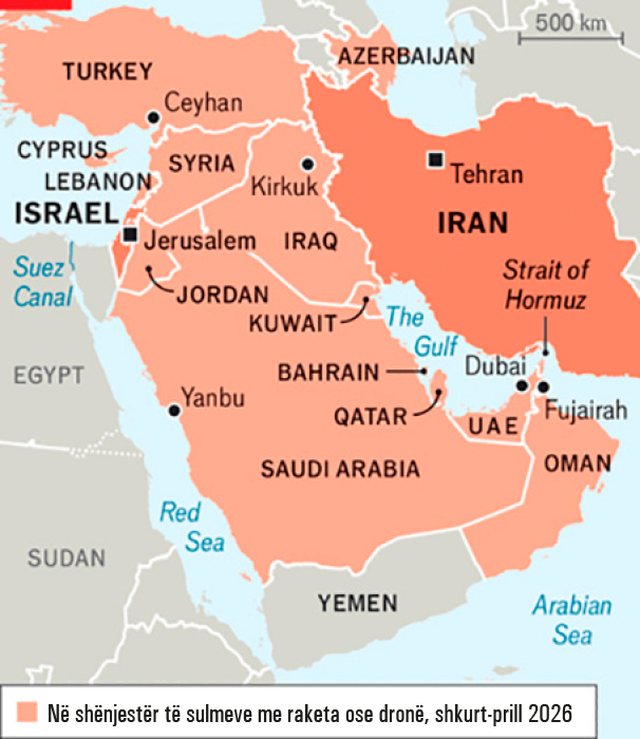
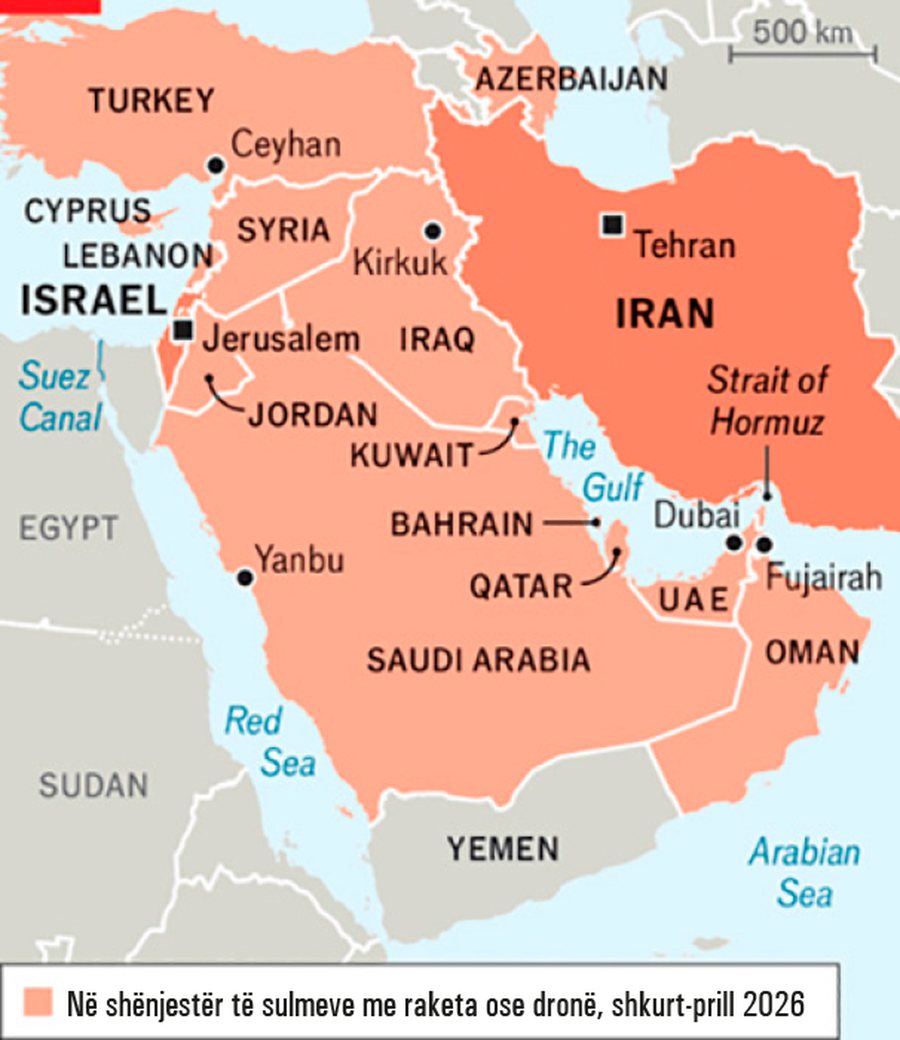
On April 8, after the ceasefire had theoretically taken effect, Iran launched more than 50 drones and missiles at the United Arab Emirates, one of the largest barrages of the war.
It also struck a vital pipeline in Saudi Arabia that carries 7 million barrels of oil a day to the Red Sea, bypassing the Strait of Hormuz. In Kuwait, it targeted power plants and water desalination plants.
However, there have also been signs that the regime is becoming less harsh. The most visible is the acceptance of the ceasefire, however poorly implemented it has been.
Moreover, on its first day, authorities released a political prisoner, Maryam Akbari Monfared, after 17 years in prison. State television, in a highly unusual move, has aired interviews with uncovered women.
Qalibaf and a circle of pragmatic Revolutionary Guard generals appear to occupy the highest positions within the government. A leadership less beholden to Khamenei's anti-colonial rhetoric, in turn, may find it easier to repair relations with the West.
Western countries remain the preferred study and travel destinations for the children of Qalibafi and other high-ranking figures. Mojtaba Khamenei is also said to own luxury properties in London.
The new leadership is unlikely to undertake the mass release of political prisoners, as the opposition demands, much less abandon the religious foundations of the Islamic Republic. But it may see strategic and fiscal value in being recognized as the guardian, perhaps even the toll collector, of the Strait of Hormuz.
There is no rush to a solution – America, inevitable
A few years ago, there was much talk in the Middle East of a new multipolar era. Now America is at the center of developments, for better or worse, and its rivals are on the periphery.
However, one of America's closest allies is increasingly viewed with suspicion. Outside the UAE, many Arab officials consider Israel a destabilizing factor in the region.
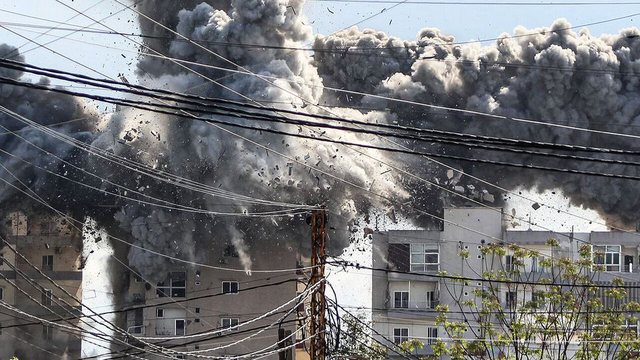
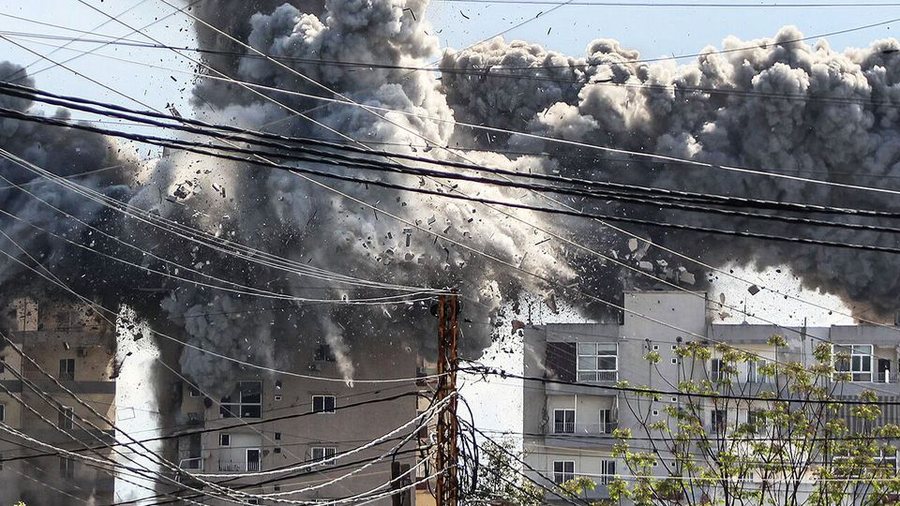
They believe he dragged Trump into the war by misinforming him about how easy it would be to overthrow the Iranian regime. They also think the heavy bombing of Lebanon on April 8 was an attempt to sabotage the ceasefire.
All of this leaves the Gulf states in a difficult situation. Before the war, the region had enjoyed decades of relative peace. It considered itself a trading hub untouched by the Middle East's many conflicts.
America would keep it safe, while the region built closer ties with Russia and China; for some, relations with Israel also offered the promise of a strong ally against Iran. The war has overturned all of these assumptions at once.
For nearly half a century, the conflict between America and Iran has defined the Middle East. It was a confrontation that both sides preferred to play out at a distance. They clashed in Iraq, first in the 1980s and then in the 2000s, but only indirectly.
They created spheres of influence and their allies waged wars in Lebanon, Yemen, and the occupied Palestinian territories. A direct war seemed unthinkable, because the consequences seemed too great.
Trump, always prone to breaking the rules, has made the unthinkable a reality. The consequences of this will be irreversible, no matter how much the president thinks he can bend reality to his will.
Perhaps the talks in Pakistan will succeed, in which case America, Israel, and the Gulf states may no longer be bound by a common threat. Or perhaps they will fail, and the shadow of war will remain.
America will have to decide whether to stay in a region it has long tried to abandon, or to walk away, leaving its allies behind. Either way, the Middle East will grapple with the consequences of Trump’s “little excursion” for years to come. /The Economist/