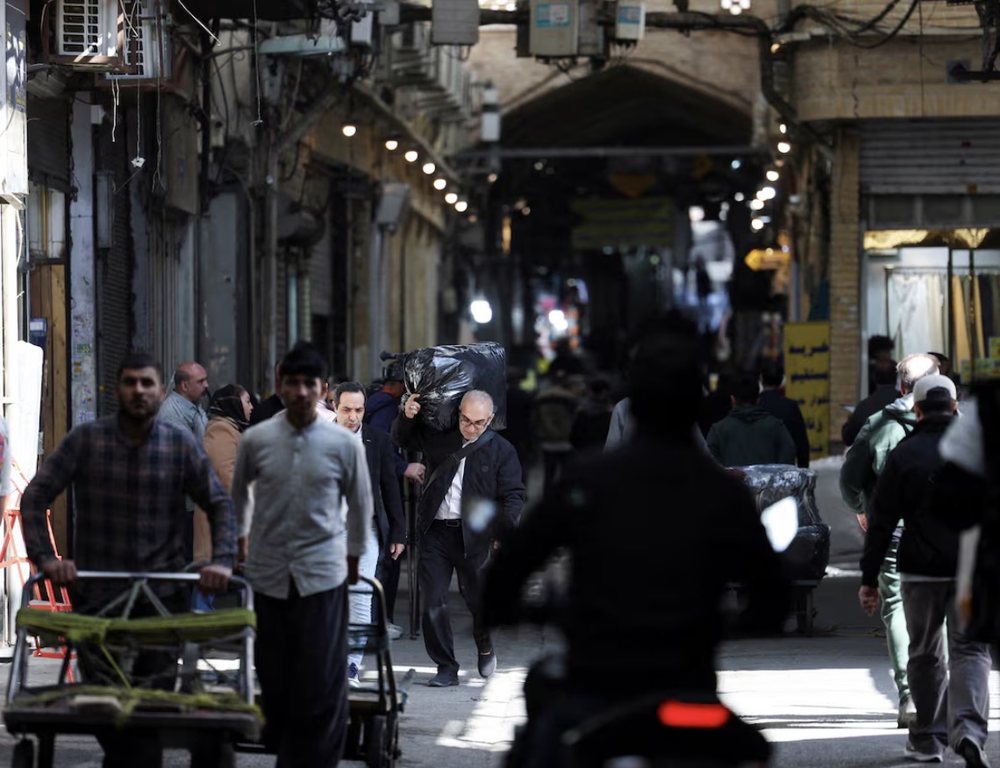
After nearly three weeks of war in Iran, the usually bustling alleys of Tehran's Grand Bazaar have been hit hard: many shops have closed and prices have risen sharply, further worsening the lives of citizens who have been facing the consequences of economic sanctions for years.
The period leading up to the Persian New Year and Eid al-Fitr holiday usually marks the height of commercial activity, with merchants finalizing deals and families buying gifts. However, this year, while there are still people strolling the bazaars, the number of shoppers is noticeably lower.
"How can we afford to buy anything?" says Nisrin, 40, who searched the few open stores to buy clothes for her children. She recalls with nostalgia the previous years, when families freely shopped for the holidays, a reality that today seems unattainable even for the middle class.
With a monthly salary of around $130 from her job at a dental clinic, Nisrin used to be able to afford a few purchases for her family, in addition to food and basic necessities. But, she says, “the war changed everything.”
Under intense bombing by Israel and the United States, which has caused numerous casualties, including senior state figures, Iranian authorities have not published new economic data since the attacks began on February 28.
Although some businesses and state institutions continue to operate, traders and citizens report an immediate economic impact. They point out that prices have increased even more than the 36% inflation rate that characterized most of 2025.
Businesses in difficulty
Tehran's Grand Bazaar, one of the country's main commercial and economic centers, includes a vast network of shops and warehouses, divided into sectors such as clothing, food, spices, carpets and electronics. The war has not only had an economic impact, but has also caused physical damage. Several buildings have been hit by airstrikes, while merchants warn of the risk of collapse in certain areas.
Pouria Rahbar-Yektashenais, owner of a clothing store for 14 years, says his business was just beginning to recover from a long economic crisis before the war began.
“Everything collapsed,” he says, adding that he was forced to close the shop for two weeks for fear of attacks. Although he has reopened it, the situation remains dire: many shops are still closed and the streets are almost empty.
The war is further deepening the economic crisis in Iran, directly affecting the daily lives of citizens and the functioning of one of the country's most important commercial centers.