Extreme heat is pushing global agri-food systems to the brink of collapse, threatening the livelihoods and health of more than a billion people, according to a new report from the UN's food and weather agencies.
The United Nations Food and Agriculture Organization (FAO) and the World Meteorological Organization (WMO) said heat waves are becoming more frequent, intense and prolonged, damaging crops, livestock, fisheries and forests.
"Extreme heat is rewriting the script for what farmers, fishers and foresters can grow and when. In some cases, it is even dictating whether they can still work," said Kaveh Zahedi, head of the FAO's climate change office.
"Essentially, this report shows us that we face a very uncertain future," he told Reuters.
The latest climate data shows that global warming is accelerating, with 2025 ranking among the three hottest years ever recorded, causing more frequent and severe weather extremes.
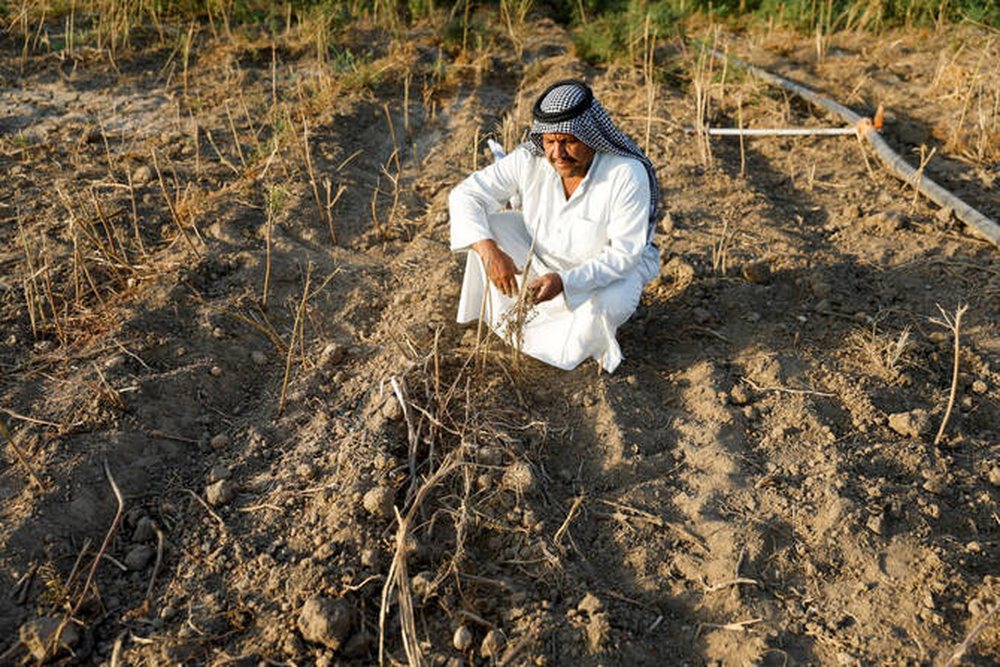
Acting as a risk multiplier, extreme heat intensifies droughts, forest fires, and pest outbreaks and significantly reduces crop yields once critical temperature thresholds are exceeded.
The report said higher temperatures are reducing the safety margin that plants, animals and humans rely on to function, with yields for most major crops falling once temperatures exceed about 30 degrees Celsius (86 degrees Fahrenheit).
Zahedi cited Morocco, where six years of drought were followed by record heat waves. “That led to a drop in grain yields of over 40 percent. It destroyed olive and citrus crops. Essentially, those crops failed,” he said.
Marine heatwaves are also becoming more frequent, reducing oxygen levels in the water and threatening fish stocks. In 2024, 91 percent of the world's oceans experienced at least one marine heatwave, the report said.
The risks increase significantly as warming accelerates. The intensity of extreme heat events is expected to roughly double with 2 degrees Celsius of warming and quadruple with 3 degrees, compared with 1.5 degrees, the report said.
Zahedi said that every one-degree increase in average global temperatures reduces yields of the world's four major crops - corn, rice, soybeans and wheat - by about 6 percent.
The FAO and WMO said the partial responses were insufficient and called for better risk governance and early weather warning systems to help farmers and fishermen take preventive action.
“If you can put data in the hands of farmers, they can adapt when they plant, they can adapt what they plant, they can adapt when they harvest,” Zahedi said.
But the report said adaptation alone is not enough, arguing that the only sustainable solution to the growing threat of extreme heat is ambitious and coordinated action to curb climate change.