


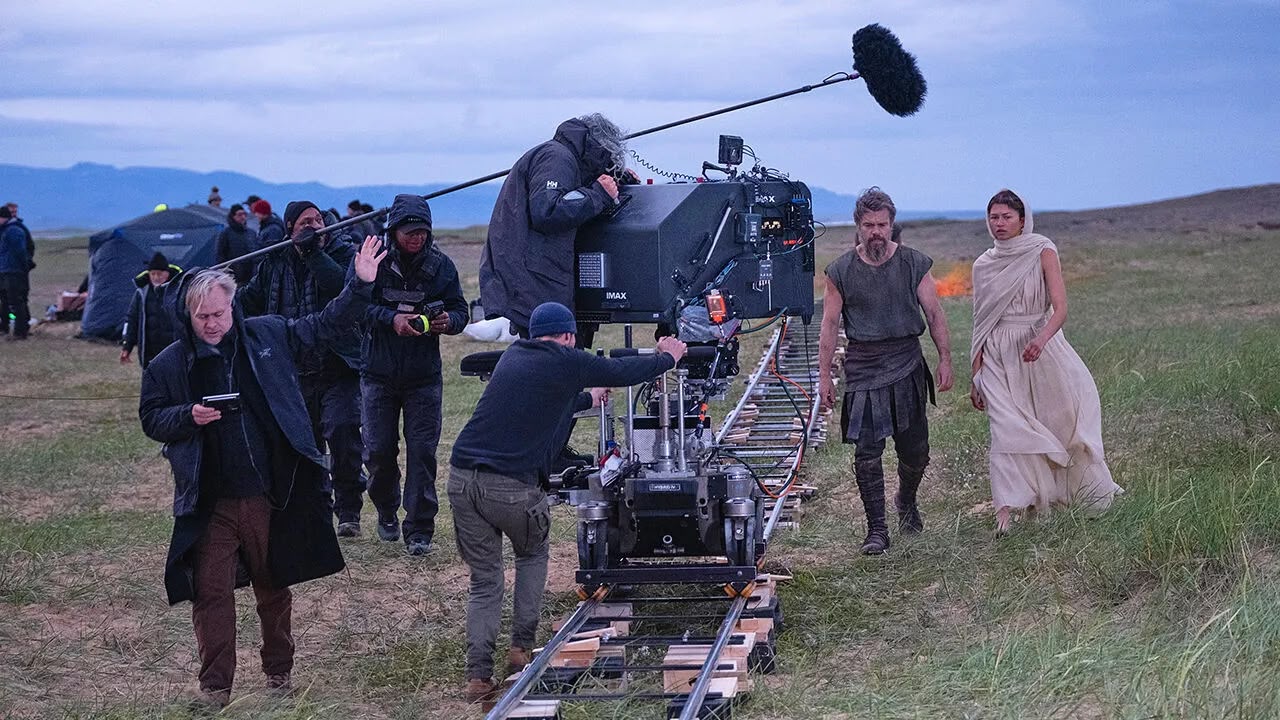
Christopher Nolan's highly anticipated film "The Odyssey" is not just sparking controversy as a Hollywood blockbuster. For the prestigious magazine The Economist, it is a reflection of the way the 21st-century West reads ancient myths - and not necessarily a faithful retelling of Homer.
In its analysis titled "A very silly adaptation of 'The Odyssey'", the magazine argues that the controversies that erupted before the premiere show that today's audience is more focused on identity and cultural debates than on the story itself.
Even before the film was released in theaters, social media was abuzz with criticism of Nolan's artistic choices. Everything was discussed: from the actress playing Helen, the color of the feather on Odysseus' helmet, the soldiers' armor that some compared to Batman, to the use of modern English, where Telemachus addresses his father as "Dad." One comment on YouTube even went viral: "Even if I saw him on a plane, I would still leave."
According to The Economist, these debates are not just about film. They reflect a contemporary tendency to judge every work of art by standards of identity politics, historical accuracy or cultural representation, shifting attention away from the artistic message.
The magazine points out that each generation rewrites Homer according to its own concerns. Just as James Joyce relocated “The Odyssey” to 20th-century Dublin, Nolan recreates the myth for today’s audience. The problem, according to the analysis, is that modern audiences seem more interested in verifying whether the helmet is historically accurate or whether the characters use the “right” accent than in discussing the work’s universal themes: war, homecoming, identity, and human nature.
Ironically, the controversy itself confirms the magazine's main idea: the film may be less a story about Odysseus and more a story about us. About how Western societies have turned culture into a battlefield, where even a 2,800-year-old poem cannot escape the debates of the time.
However, unlike The Economist, a large part of international criticism has praised the film as one of Nolan's most accomplished works, praising the way he transforms Odysseus' journey into a modern reflection on the trauma of war, guilt, and the search for identity.