


Some blame Tehran. Others blame Washington. But nearly all residents of Iran's southern coast agree on one thing: the resumption of airstrikes between the United States and Iran has hit them hard, leaving them without electricity, without fuel and without the means to make a living.
On the coasts of Khuzestan and Bushehr provinces along the Persian Gulf, as well as on the Makran coast in Hormozgan province, on the edge of the Sea of Oman, life has always been connected to the sea.
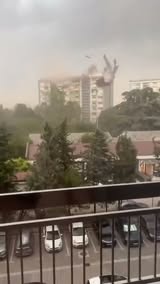
"Many boats have sunk, they have been hit by missiles," says a resident of southern Iran in a video shared on social media.
"Many boats were burned... Forget the money, think about how many lives were lost."
Iranian authorities say bombings have killed about 50 people, including civilians, since the US launched attacks on southern Iran in late June.
Over the past nine days, attacks have become daily.
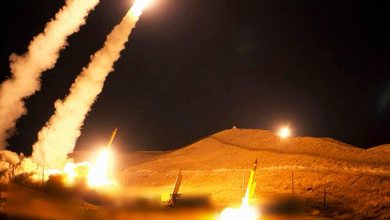
The United States says the main goal is to systematically weaken Iran's naval and military capabilities in the Strait of Hormuz area - a vital corridor for global energy transport, which Iran has blocked in response to the war.
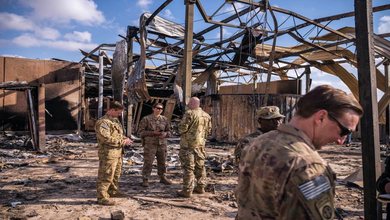
Washington insists that the attacks are targeting military targets that it says are being used to threaten navigation in the Strait.
But residents say the consequences are felt much deeper in everyday life.
Attacks on power plants and transmission substations along the coast have knocked out cooling systems in a region where temperatures in July often exceed 40 degrees Celsius.
In the port city of Bandar Abbas, a resident said he was forced to stay in his car with his family after their home was left without electricity.
"We have no electricity. At night, when we want to sleep, we only hear the war and explosions... What have we done to deserve this? Sitting in the car with the whole family at noon, instead of resting at home? At 41 degrees, without electricity, it's just boiling with heat," he said.
In the oil-rich province of Khuzestan, residents say there are constant power outages, making the extreme heat wave even more difficult.
"They are cutting off the electricity in this heat," said one resident, referring to the cities of Abadan, Khorramshahr and the rest of the province. "It is unbearable."
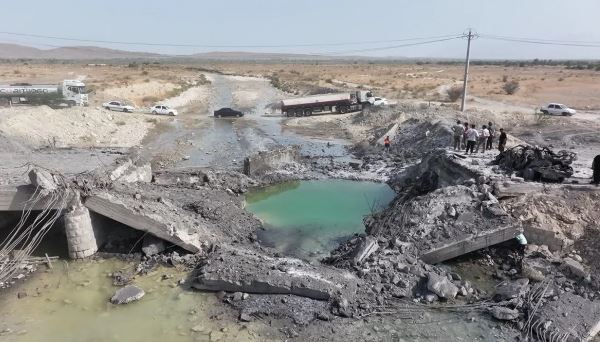
Damaged roads and bridges have further worsened the crisis, blocking access to and from coastal cities.
On social media, drivers are urging people to avoid car trips.
Long lines for fuel have become part of everyday life, while power outages have also affected communication networks, leaving many families, for hours, unable to find out if their relatives in the affected areas are safe.
Although American attacks have been carried out in various parts of Iran, the main focus has been the southern coast, where thousands of ships have been stranded in the Persian Gulf due to the war.
Both sides blame each other for the failure of a memorandum of understanding, signed last month, which halted the fighting, to open a 60-day period of talks to resolve the conflict that erupted on February 28.
The situation has become so dire that last week tens of thousands of Iranians signed an online petition urging hardline leaders to visit the country's south and see conditions for themselves, rather than making decisions from afar that they say endanger the lives of ordinary citizens.
"Such an action could bring more sensitivity, more effective support, and more realistic decision-making at the national level," the petition states.
Others, disappointed by the return of war, say that Washington also bears responsibility for the resumption of fighting.
One resident described the situation as a bombing campaign "that doesn't let us sleep."
The conflict has also hit tourism hard.
Although historical monuments in Khuzestan and Qeshm Island have not been directly damaged, coastal areas have been turned into security zones, emptying guesthouses and putting tour guides out of work, just before the season when the region usually welcomes more visitors.
In Qeshm and Sirik, the burned boats have taken with them not only the fishermen's livelihood, but also part of the maritime heritage of southern Iran.
But amid the destruction, residents also speak of the solidarity of people in other parts of Iran, who have opened their homes to families displaced from the hardest-hit areas.
For many Gulf residents, it is this sense of solidarity – as much as the hope for an end to the war – that helps them carry on.
"The first thing we check is if we are still alive, if our neighbor is alive, and if we still have friends and family nearby," said a resident of southern Iran./REL