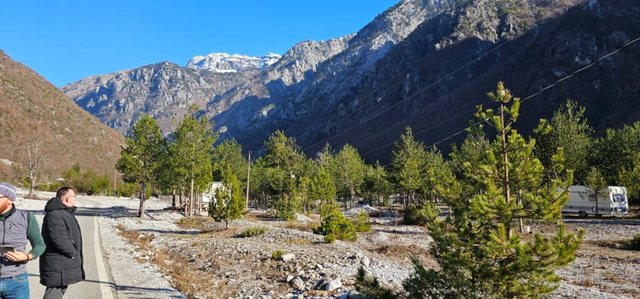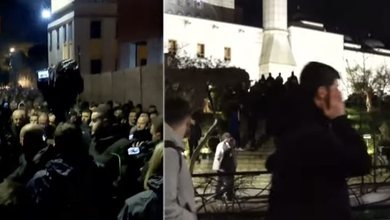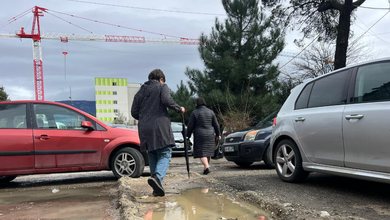



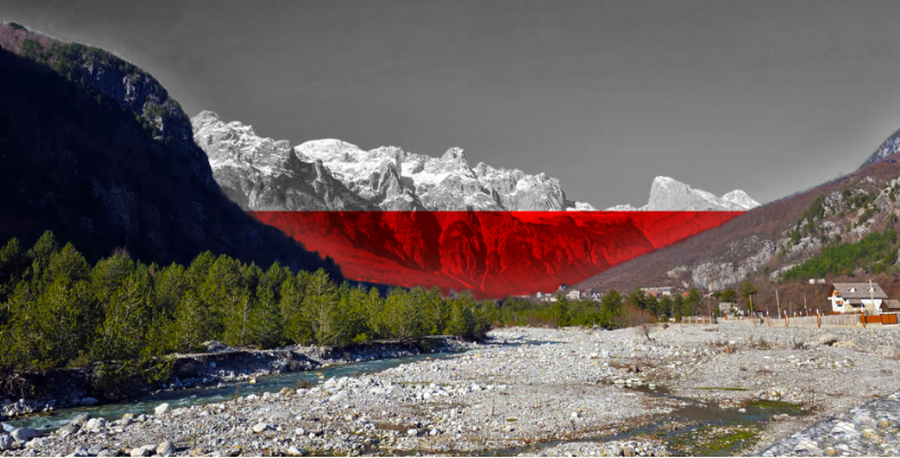
In July 2025, the Fadromas entered Theth and within a few days, several buildings collapsed in the heart of the Albanian Alps, in an action that the authorities described as a "restoration of legality."
Just a year ago, during the campaign for the June 30 parliamentary elections, Prime Minister Edi Rama urged residents to return to their tourist village, invest and turn their lands into development opportunities. The promise was that ancestral properties would be provided with ownership documents and that the “Mountain Package” would be the means of restoring and improving the well-being of the alpine areas.
"We will erase all fines for illegal construction in this area. You have built without a permit because you have not had the opportunity to obtain the land certificate that belongs to you," Rama responded to the concerns of the residents of Theth, announcing plans for the adoption of the law.
"They told us to invest. Go back, build! And we built more easily than any other year because it was the elections," says Kristian Gurra, 27.
Kristian has been running a family business in Theth for over ten years. It started with a small bar, and now has a restaurant and 16 rooms for tourists, supporting his family and some seasonal workers. The last investment, intended for winter tourism, was financed with a bank loan of around 100 thousand euros, but collapsed during the July action.
"Today I pay the loan every month and I also have a fine. I left my house in Shkodra as collateral, because I don't have a mortgage here," he says.
His case is typical of northern Albania, where land is passed down from generation to generation without title deeds, a historic problem that institutions have never solved. The “Mountains Package,” approved in March 2025, aims to circumvent this impasse, giving residents the opportunity to build and develop their property even in the absence of clear title deeds.
But the demolition drive, undertaken immediately after the law was passed, hit exactly what this "package" claims to support: residents' investments in their inherited properties.
Meanwhile, data shows that the legal architecture favors large tourism and energy investments, far from the promised family model, not excluding the "Alpine Alps" Park, a key territory for cross-border nature protection initiatives, part of the Dinaric Alps and the European Green Belt.
The Albanian Alps constitute an inseparable ecosystem with the Prokletije Park in Montenegro, but the protection standards are significantly different in terms of the activities allowed within them. Furthermore, the law also paves the way for the alienation of forests, pastures and meadows, allowing the change of land use from natural to urban or industrial, which not only weakens the protection of natural resources, but also undermines the ecological function of the territory itself.
Experts warn that the Albanian law's approach risks irreversible consequences for the Alpine ecosystem and contradicts the principles of sustainable development, while the centralization of decision-making at the central level paves the way for benefits to go to non-resident entities and not to local communities.
Mountain Package
In the public presentation, the "Mountain Package" appeared as an instrument to help the inhabitants of mountainous areas, who for decades have lived and invested in land without property titles. The solution to this problem was linked to the development of agro-tourism structures that are environmentally friendly, as well as maintaining communities in the territory, at a time when many mountainous areas in Albania have been emptied as a result of emigration.
The adopted law provides for a series of mechanisms that, ostensibly, aim to provide residents of mountainous areas with legal security and development opportunities. It allows individuals known as non-owner possessors, upon meeting certain criteria, to purchase state-owned land for the symbolic price of 1 euro, benefit from exemptions from certain taxes for a period of 10 years, and have simplified access to construction permits.
But in the meantime, the law has clearly included investors, as registered natural or legal persons, who are given the right to carry out investment projects, in agreement with the non-owner possessor.
In addition, the adopted law has created every legal space for large tourism and energy investments, as it determines that the competent authority for approving the development and construction permit will be the National Council for Territory and Water (KKTU).
According to the law “On territorial planning and development”, the KKTU, an institution headed by the prime minister, is the authority responsible for decision-making only for complex developments. This department approves development permits for strategic projects in the territory, from large tourist resorts to energy and infrastructure structures. The legislation also specifies that the KKTU can only approve construction permits for high-rise buildings above 6 floors.
These competencies have nothing to do with the nature of agritourism or family guesthouses.
"Agritourism, by definition, presupposes small initiatives, developed by families and directly linked to the rural economy. It is a model of rural tourism closely linked to agriculture and village life, where tourist services support and complement existing agricultural activity, without replacing or deforming the traditional function of the territory," says Doriana Musai, professor of architecture and urban planning.
"Meanwhile, these investments, which are considered strategic, come with investors and companies that favor high-cost investments. In short, agritourism is used as a legitimizing narrative of central policy, while the real result is intensive tourism, disconnected from the social and economic structure of the area," she adds.
Even for tourism experts, "the large resort model is not in line with the principles of local development and community involvement."
"It can bring investment and jobs, but it risks focusing the benefits on investors and not on local residents," says Ardiola Alikaj, a senior tourism expert in Albania.
In parallel, experts criticize the bypassing of municipalities in decision-making for developments in their territory, powers they enjoy in the current law for structures under 6 floors, including agritourism.
"The autonomy of local authorities and their territorial plans are being violated," says Erjon Muharremaj, professor and expert in Public International Law, Environmental Law, and EU Integration Processes.
According to Musai, "when the approval of projects is done from the top down, that is, from the central level, in an executive form towards the local level, the principle of local development and subsidiarity is violated."
“The National Council for Territory and Water, as a government body, should guarantee national planning coherence, and not replace local authorities in decisions that directly affect communities and the local landscape,” she argues.
Alps, development area
The “Mountain Package” does not apply to the entire mountainous territory, but only to those areas that are declared “priority development areas”, which are selected through a special procedure that starts at the local level and is finalized at the central level. The municipality collects applications from residents or identifies territories with “economic potential” and proposes them as areas to be developed.
The municipality's report is then sent to the minister responsible for local government, who decides whether the proposal meets the criteria to proceed. The final decision is made by the Council of Ministers, which officially declares the area, paving the way for it after the projects are approved.
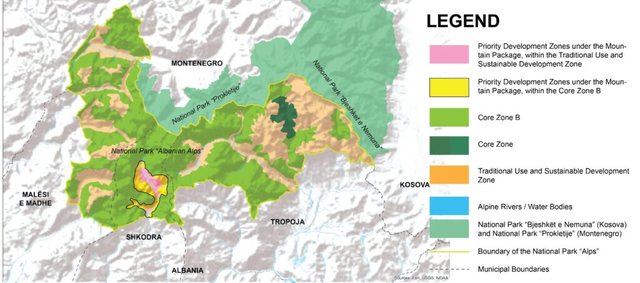
The entire process has now been finalized for the Municipality of Shkodra, in whose territory 5 priority development areas have been approved, including the villages of Theth and Nderlysaj, which are located within the "Alps of Albania" national park, on the border with Montenegro.
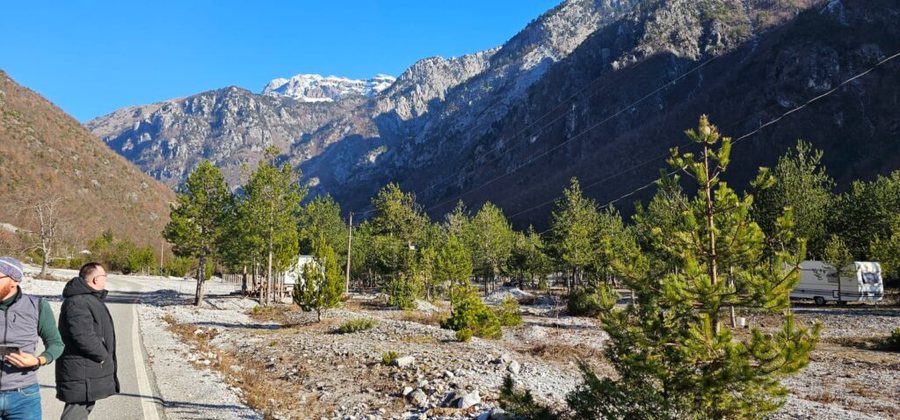
The interest in building in the priority areas has been extremely high, according to data from the Directorate of Planning and Territorial Development of the Municipality of Shkodra. Following a request for information, this directorate announced that by December 9, 2025, 642 applications had been submitted for the 5 typologies allowed by the system established for this purpose: Agrotourism, green energy, livestock, social projects and the “other” typology, which leaves open any type of investment request. The majority was related to agrotourism (434), the “other” category had 136 applications, social projects 35, livestock 29 and green energy, i.e. the construction of solar and wind parks, 14 applications.
However, while initial interest comes mainly from local residents for agritourism projects, the legal architecture itself orients the process towards much larger developments, requiring capital and central approval. This contrast becomes even more stark when these developments are targeted at protected areas, within one of the most sensitive ecosystems in the Balkans.
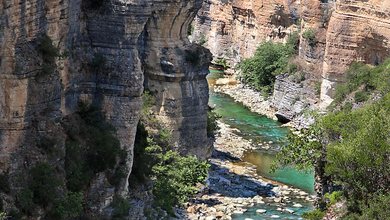
The Albanian Alps and the Prokletije in Montenegro constitute one of the most important ecosystems in the region, known for their extraordinary biological diversity and fragile habitats. In addition to their national protection status, individual territories enjoy international recognition. The Alps are part of the EMERALD network (Areas of Special Interest for Conservation in Europe), Thethi is recognized as an Important Bird and Biodiversity Area (IBA) and a Key Biodiversity Area (KBA), while the Gashi River, a strict nature reserve until 2022 and today part of the Alpine Park, is part of the UNESCO World Natural Heritage.
The data of the National Agency for Protected Areas show a high number of habitats according to the Natura 2000 list, of importance for conservation. In Theth and surrounding areas alone, about 20 habitat types have been identified, of which 4 are priority. Also, in the Vermoshi and Lëpushë – Budaç valleys, about 25 habitat types have been identified, of which 4 are priority, in the Valbona Valley about 26 types, of which 4 are priority, while in the Gashi River – Dobërdoll valley, about 14 habitat types, of which 2 are priority and require specific conservation measures. The park also includes a rich flora with about 1,500 plant species, 40% of which are endemic to Albania, making them particularly sensitive to changes and possible developments. Beech, alder, white fir and arnen are some of the flora types found in the area.
Equally rich is the fauna. The water bodies and surrounding areas are home to rare and endangered species of fish, amphibians and reptiles; around 155 species of birds and over 60 mammals, including the Balkan lynx, bear, wolf, roe deer, otter, vulture, mountain eagle and wild turkey. A large part of them appear in the Annexes of the Habitats Directive, the Birds Directive, in the IUCN and Albanian red lists, making this area critical for the conservation of biodiversity. Even on the Montenegrin side of the Prokletije, over 2,000 plant species have been identified, 60 of which are protected, and 161 bird species. Meanwhile, camera traps, last year documented the presence of the lynx, one of the most endangered species in the Balkans.
This mountain massif functions as a single ecological node within the Dinaric Alps and the European Green Belt, which makes its protection a regional and European priority.
"Every intervention in Albania has an impact on Montenegro and vice versa," says biologist and citizen activist Vuk Iković, recalling that the area also includes the well-known cross-border trail "Peaks of the Balkans."
But, although the ecological importance of the Balkan Alps is widely documented at the national and international level, this did not prevent the Municipality of Shkodra and the Albanian government from including them in priority development areas.
At the same time, changes to the directive that defines the procedure for declaring these areas indicate a clear departure from environmental protection standards. The first directive, from June 2025, required the collection and analysis of socio-economic, environmental and geographical data. But just four months later, a new directive abolished all these criteria, reducing the process to a procedure based solely on the “economic, industrial or tourist potential of the area”.
According to Professor Erjon Muharremaj, this rapid change and the transition from a 70-paragraph document to a guideline with only 30 paragraphs raises serious questions.
"To repeal such an important act after only four months would have required a radical change in circumstances. But even if there were reason, the instruction should have been amended, not repealed completely," he says.
"Subsequent legislation usually becomes more detailed. In fact, the opposite has happened, which is generally not an indicator of the will to improve legislation, but there are other reasons," the expert adds.
Another worrying element of the law is related to the change in the status of natural resources. For the first time, the "Mountain Package" paves the way for the alienation of categories that have been untouchable until now: forests, pastures and meadows.
Article 8 of the law stipulates that these assets are no longer considered inalienable public property, allowing them to be subject to ownership transfer and development procedures. This means that forest, pasture or meadow areas can lose their natural status and easily be transformed into urban, tourist or industrial areas, avoiding any territorial planning document, which has also passed environmental filters.
"When areas or projects are declared 'strategic' they often bypass Local General Plans and Protected Area Management Plans, as the goal is to accelerate economic development, simplify administrative procedures and centralize decision-making," says Musai.
"This creates a parallel decision-making system, where long-term planning loses its weight and is reduced to a formality, where it is no longer the plan that drives development, but the opposite," she further explains.
According to Muharremaj, these developments cannot be understood without also looking at the 2024 amendments to the Law “On Protected Areas”, which significantly weaken the protection of the highest natural categories. The amendments allow urban developments and five-star tourist structures within national parks, even in the central subzone, which theoretically should be a strictly protected area.
"These are the catastrophic consequences of the changes of 2024," he says.
He also criticizes the Constitutional Court's 2025 decision, which rejected the request of environmental organizations to repeal the changes.
"This regressive decision allows the executive free rein to approve development or construction permits in protected areas," the professor says.
Serious consequences
The combination of priority development areas with a weakening environmental protection framework calls into question the ecological future of the Alps. Developments permitted within the park, without public consultations, without Strategic Environmental Assessments and without verification of compliance with planning and management documents, create a real risk of habitat fragmentation, land use change and the loss of natural values that make this territory unique in the Balkans.
The situation becomes even more worrying when considering that about 72% of the area declared for development overlaps with the Central B subzone of the "Alps of Albania" National Park, directly endangering the ecological integrity of the park and the preservation of flora and fauna species.
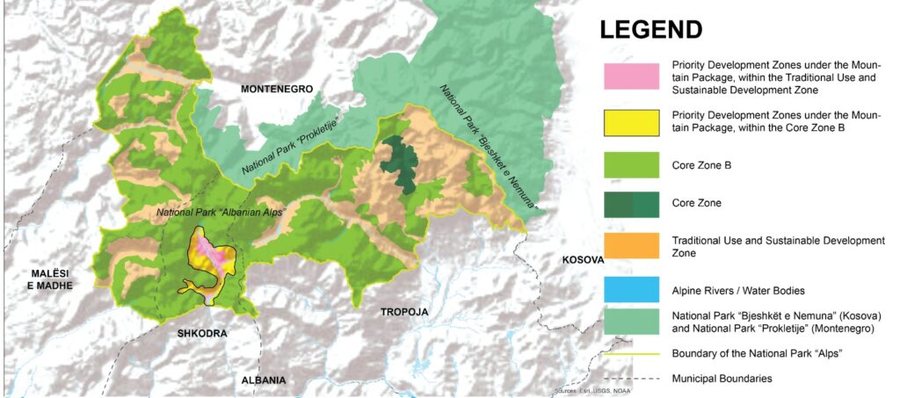
The potential negative impacts are not limited to the administrative boundaries of the park, but affect biodiversity, species and habitats of EU interest, aquatic ecosystems and transboundary ecological corridors, as well as the objectives of international initiatives such as the Dinaric Alps and the European Green Belt.
In this context, any uncontrolled development within the Albanian Alps National Park could compromise its ecological function and its role as a key node for biodiversity conservation in the region.
On the Montenegrin side, the Prokletije National Park is administered with strict criteria: construction is limited and every project is subject to strong environmental and cross-border filters. But in Albania, the new law paves the way for major tourism and energy developments, without any visible coordination process with the Montenegrin authorities, despite the fact that it is the same ecosystem.
"We have absolutely no information," says the mayor of Guci, Sanel Balić.
"Everything that happens along the border should be known to the Montenegrin government and the municipalities bordering this area. Whatever is built there could also affect us," he stressed.
Even Marinela Đuretić, director of the Public Enterprise of National Parks of Montenegro, was not aware that Prokletije on the Albanian side could be under pressure from investors. She believes this is a complex issue that requires involvement at the state level.
The Ministry of Ecology, Sustainable Development and Northern Development did not respond to questions about whether it is aware of Albania's plans or whether it plans to contact its counterparts in Tirana.
Unlike the Montenegrin authorities, Marija Lekić from the Center for Bird Protection and Research (CZIP) is aware of new legal developments in the neighboring country. Although the scale of the projects is unknown, Lekić points out that there could be deforestation, road construction and the installation of transmission lines, activities that fall under the Espoo Convention.
She emphasizes that Albania, as a party since 1991, is obliged to timely notify neighboring countries of projects that may have cross-border impacts.
In Albania, the Ministry of Environment and the National Agency for Protected Areas did not respond to a request for comment, leaving unclear how national parks and ecological corridors will be protected from intensive development.
Meanwhile, the National Environment Agency confirmed that it is not part of the process of determining priority development areas. In a written response, the NEA said that its role begins only later, at the Environmental Impact Assessment stage for individual projects.
Integration and cross-border projects, in question
The double standard of protection for the Dinaric Alps endangers not only nature, but also cross-border cooperation and access to European funds for joint projects. The Director of Montenegro's Parks emphasizes that the EU does not support policies that allow construction in protected areas.
The European Commission's Progress Report on Albania also raised concerns, assessing that the "Mountain Package" law "may have significant impacts on local land use and environmental management."
Based on personal experience and this assessment of the European Commission, according to Professor Muharremaj, "the lack of will to implement environmental standards will be a serious obstacle on the path to membership in the European Union."
Residents of Theth, like Kristian Gurra, view this reality with uncertainty.
"It's always something to be afraid of... we no longer understand what's happening. The residents are stunned. There is a need for investment, but not in a climate where everything is unpredictable," he says.
This sense of uncertainty on the ground coincides with warnings from experts on both sides of the border, who fear possible negative impacts on the environment of the Balkan Alps and call for immediate response.
"Official Podgorica must react," says biologist and civic activist Vuk Iković.
For senior tourism expert Ardiola Alikaj, "to avoid the scenario of irreversible consequences, a cautious approach is needed, which places the carrying capacity of the Alpine area at the center, the real involvement of local communities, and more distributed and sustainable tourism models."
"With standard resorts, local traditions and cultures are suppressed, disappeared or deformed, becoming tools of tourism rather than generators of a sustainable model," concludes Musai./Citizen.al/