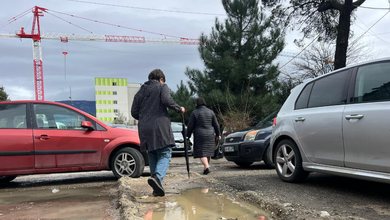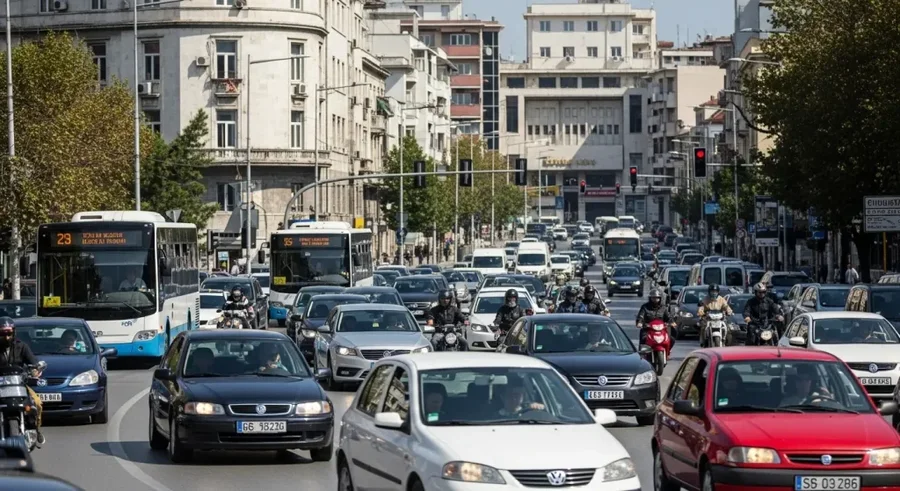
Tirana has been experiencing a state of constant traffic congestion for months. What was once considered a rush-hour problem has now become a daily norm, even on weekends. Citizens lose an average of 1–2 hours per day in traffic, with direct costs to the household economy, productivity and quality of life. Stress, pollution and waste of time have become part of the urban routine in almost every neighborhood of the capital.
In this reality, the institutional response seems disconnected from the scale of the problem. This weekend, the Tirana Municipal Police published on social media an intervention to remove a vehicle parked near garbage bins with a cart, presenting it as an example of respecting the rules and caring for the city.
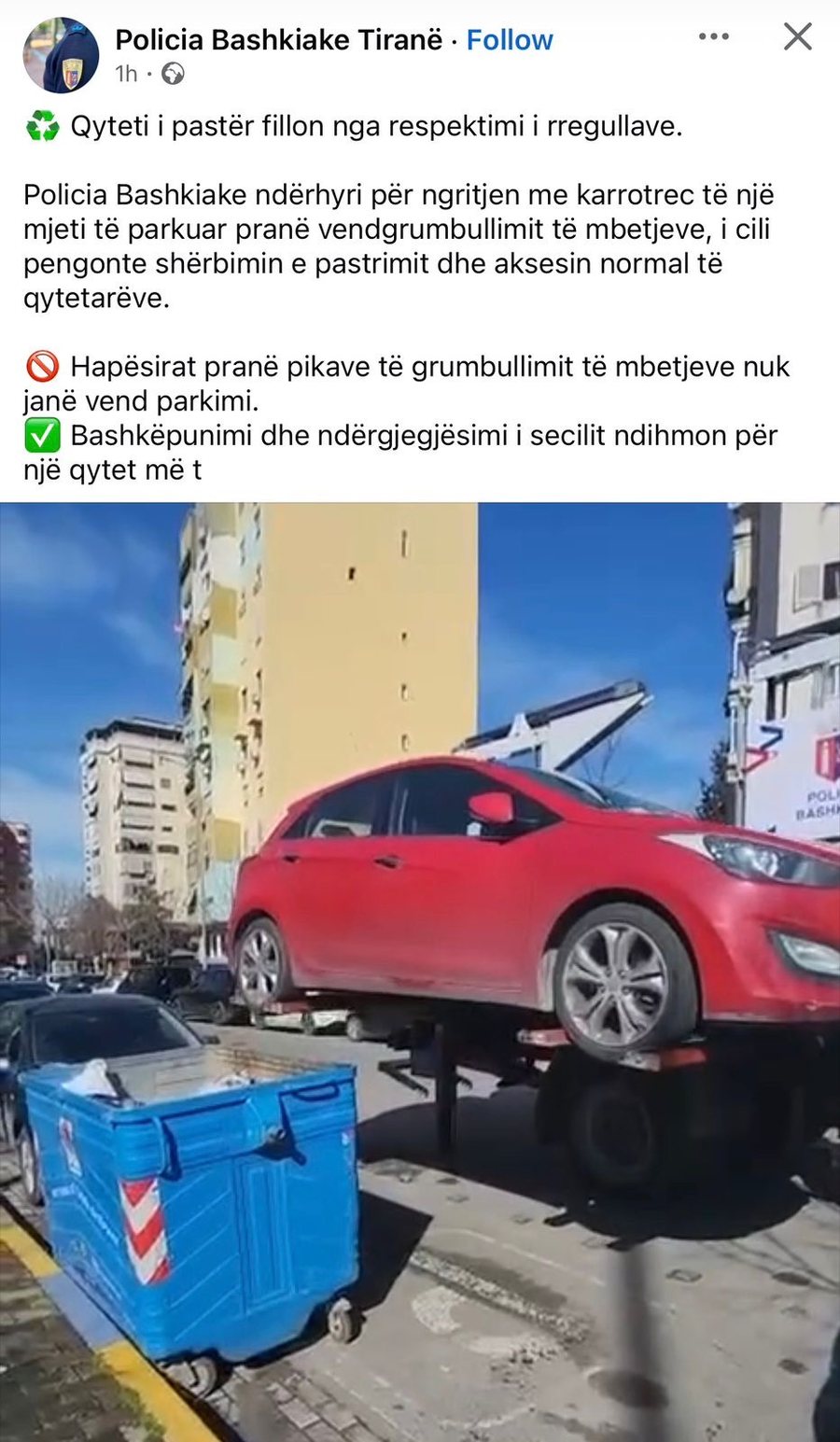
Without a doubt, enforcing the rules is a must, not an option. Parking next to garbage cans hinders cleaning services and creates problems for residents. But the crux of the debate is not whether a car should have been removed or not – the job has been done. The question is: does this constitute an “achievement” in a city that is facing traffic paralysis, a lack of parking spaces, and abandoned cars occupying sidewalks and secondary roads every day?
Just a few months ago, in the summer, an initiative was introduced to identify and remove abandoned vehicles from public spaces. In many areas of Tirana, depreciated vehicles have been occupying parking spaces and common areas for years, significantly worsening the situation. Today, this initiative seems abandoned, without transparency on concrete results and without periodic reporting on the number of vehicles identified and removed.
Meanwhile, the traffic problem has a much broader dimension than individual parking lots. The increase in the number of vehicles, the lack of functional alternative roundabouts, the numerous uncoordinated infrastructure works and the lack of an integrated strategy for urban mobility have created a system that operates at the limits of capacity. Any small incident – a poorly parked car, a minor accident, a construction site – is enough to block entire areas for hours.
This situation is taking place in an unusual institutional context: the Municipality of Tirana has been without a mayor for more than a year. The lack of political direction has significantly affected the strategic management of the city. Day-to-day administration can continue, but major decision-making, long-term priorities, and inter-institutional coordination require clear leadership and political responsibility.
From an economic point of view, the cost of heavy traffic is underestimated. Lost working hours, increased fuel consumption, pollution and the impact on public health translate into millions of euros in hidden costs every year. A city that aims to be the economic engine of the country cannot function with infrastructure and management in a permanent state of emergency.
With the local elections next spring looming, the debate over Tirana is expected to intensify. But citizens do not need symbolic posts or sporadic communication on social media. They are demanding a concrete plan for traffic management, transparency on initiatives taken, a return to control over public space, and a clear strategy for parking, public transport, and urban discipline.
Removing a car is the fulfillment of a duty. Restoring the functionality of the city is the real challenge. And this requires more than a cart and a post on Facebook./Ekofin.al/