


How democracies are using autocratic tools to silence journalism. As control over governments fades, corruption flourishes, writes The Economist
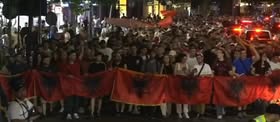
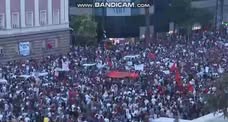
In November 2024, the roof of a railway station in Serbia collapsed, killing 16 people. The most likely cause of the shoddy construction was corruption. Large protests erupted and independent journalists reported on them.
Some of them were then beaten by thugs while the police watched. Half were beaten by the police themselves.
There were at least 91 physical attacks on journalists in Serbia in 2025, according to the country’s Association of Independent Journalists. Attackers are rarely punished, which “encourages new crimes against journalists,” says Jelena Petkovic, a local media safety specialist.
Serbia has all the hallmarks of a democracy. It does not imprison journalists for what they write. However, it makes their work and lives difficult in dozens of ways, except when they support the government.
KRIK, an investigative media outlet that often exposes corruption in the Serbian government, has been hit with more than 30 lawsuits in recent years, 17 of which are still active, says editor Stevan Dojcinovic.
He must spend up to five days a month in court. The official media accuse him of working for the CIA and for Jewish billionaire George Soros. Fake photos of him with a gang boss have been circulated, as well as real intimate photos intended to embarrass him. “It has had a very serious and huge impact,” he says.
Meanwhile, all terrestrial broadcasters are state-controlled or owned by friends of the right-wing populist president, Aleksandar Vučić, so they broadcast what he wants. Zoran Kusovac, a media consultant, says a friend divorced her TV editor husband in part because she was tired of Vučić's late-night phone calls.
Worldwide, media freedom is in decline. In an index compiled by the monitoring organization Reporters Without Borders (RSF), the global score has fallen since 2014 from 67 out of 100 (where America ranks today) to less than 55 in 2025 (as bad as Serbia).
"For the first time in the history of the Index, conditions for practicing journalism are 'difficult' or 'very serious' in over half of the world's countries and satisfactory in less than one in four," says RSF.
Others find the same trend. Data from V-Dem, a research project based in Sweden, shows that the global average has deteriorated since 2004 from 0.66 (on a scale of 0 to 1) to 0.49, roughly the difference between Mexico and nationalist India today.
No news worthy of publication
The biggest decline is happening not in dictatorships, where good journalism has long been almost impossible, but in countries that still claim to be democratic. The governments of these countries usually do not try to completely stifle criticism.
Instead, they distort the incentives for news gathering so that ordinary people hear a lot of praise for the ruling party and only occasionally critical voices. The goal is to keep the powerful in power and reduce scrutiny over how they abuse it.
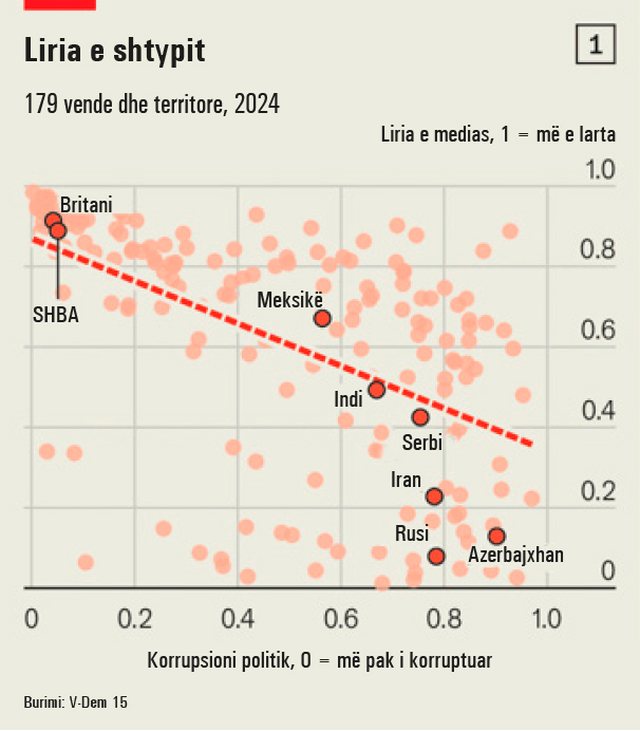
An analysis by The Economist found strong links between media repression and corruption. Analyzing 80 years of data from around 180 countries collected by V-Dem, it found that a decline in media freedom in a country was a strong indicator that corruption in that country would subsequently worsen (see chart 1).
This remained true even after adjusting for past and current levels of corruption, changes in income, and global trends.
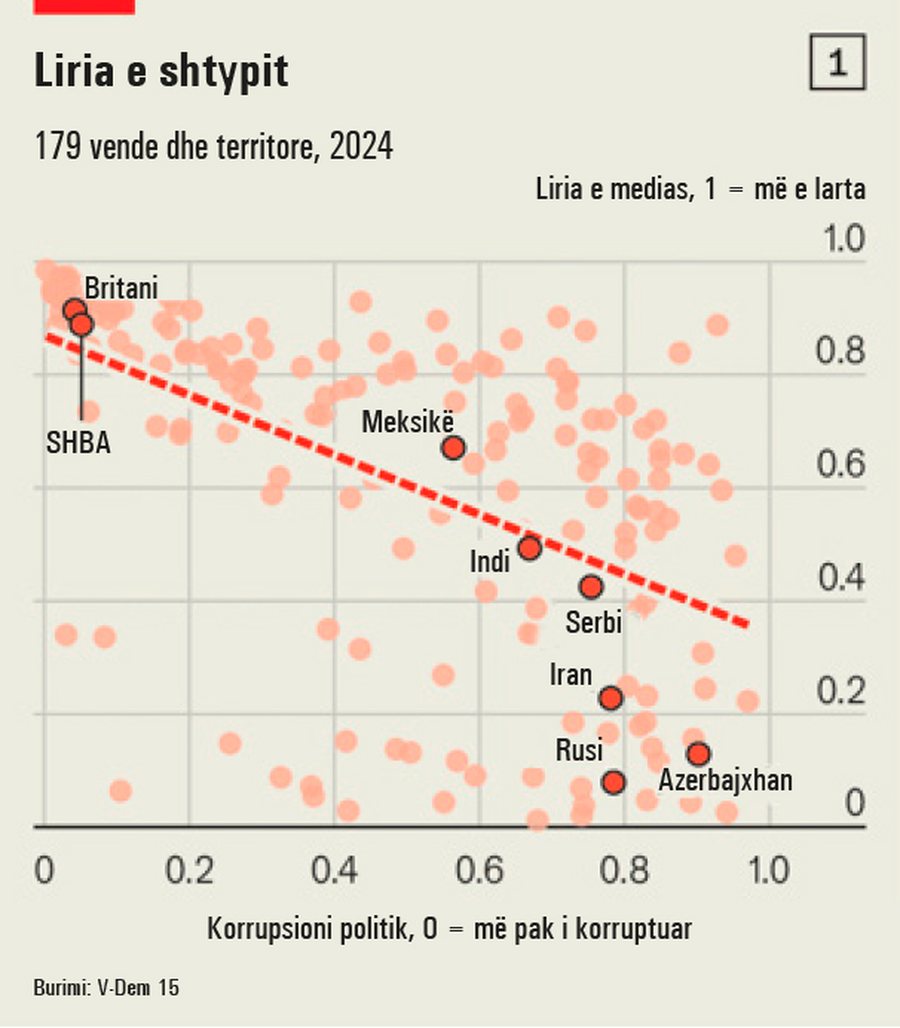
This is more than just a case of bad things happening at the same time. The analysis is time-based: it tests whether a change in one variable reliably predicts a future change in another. In statistical parlance, this is called “Granger causality,” and ample evidence has been found to support it.
In the absence of an investigative press, it is easier for officials to embezzle funds unnoticed or make favorable deals without opposition.
The statistical relationship is significant: all else being equal, a country where press freedom falls from Canada to Indonesia is predicted to experience an increase in corruption equivalent to Ireland falling to Latvia.
With fear and favoritism
And there seems to be a vicious circle: the rise in corruption is also an indicator that the media will subsequently become less free, perhaps because when those in power have much to hide, they have more reason to silence inquisitive journalists.
"If we report on corruption, our journalists are publicly exposed with personal data," says Wahyu Dhyatmika, CEO of Tempo, a weekly magazine in Indonesia.
One was sent a severed pig's head; others have received dozens of unwanted food orders, a reminder that the powerful figures they report on know exactly where to find them.
These vicious circles magnify the damage, meaning that the full cost of bad policies is felt only gradually. Institutions have inertia: The Economist’s model shows that it takes, on average, about four years after a media crackdown for only half the expected increase in corruption to emerge.
A leader may silence the press today, but voters may not notice the subsequent increase in corruption until after the next election.
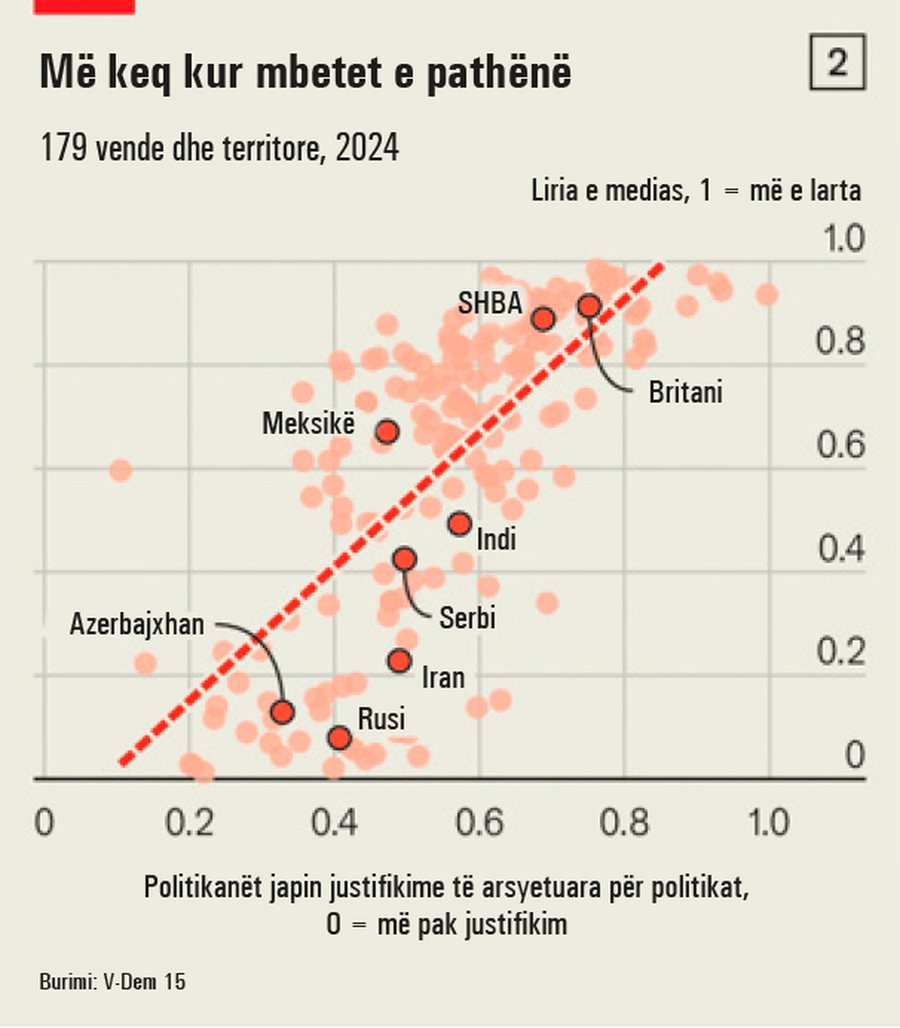
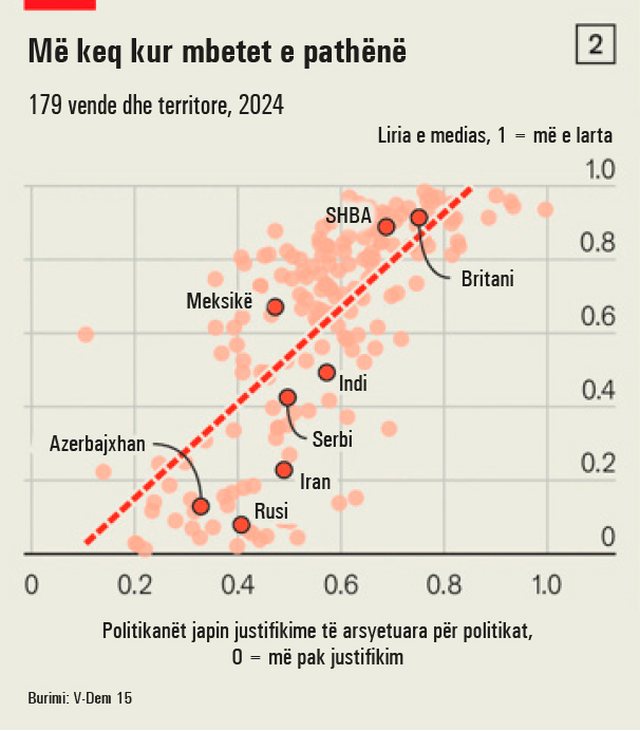
Another dynamic is that as media freedom declines, elites are less likely to provide reasoned justifications for their policies (see chart 2). And this, too, tends to precede an increase in corruption.
This fits with the rise of populism around the world, a movement that relies more on emotion than reason. Populist leaders typically seek to weaken institutional control over their power, including the media; and this opens the door to corruption and abuse.
Taken together, statistical analysis shows that populist politics, corruption, and the suppression of critical media not only occur together, but reinforce each other. Governments that silence the press today will govern worse tomorrow.
Many countries are on this dangerous path. “A big change we’ve seen in recent years is the adoption by supposedly democratic countries of many techniques that we’ve traditionally seen in authoritarian regimes,” says Jodie Ginsberg, director of the Committee to Protect Journalists, a monitoring organization.
These techniques usually stop short of imprisoning or killing reporters. Instead, they are usually divided into three main categories: rhetorical, legal, and economic.
The rhetorical trick is to claim that critical journalists pose a threat to the nation. Autocratic regimes have long done this; now many elected leaders do the same.
Vučić describes unfavourable reporting as “pure terrorism.” Argentina’s President Javier Miel promotes the phrase “We don’t hate journalists enough.”
Supporters of India's ruling party call critical reporters "press prostitutes."
Even the USA
Donald Trump recently wrote that it was "seditious, perhaps even treasonous" for the New York Times to publish "false" reports to "slander and humiliate the President of the United States."
He added: “They are the real Enemies of the People, and we have to do something about it.” The White House publishes a list of “media offenders,” naming individual reporters it accuses of lies, professional misconduct, or “left-wing madness.”
Such unprecedented rhetoric from a US president exacerbates an already hostile climate for reporters. Americans' trust in the news media is at an all-time low, according to Gallup.
Only 8% of Republicans in America believe the media reports fairly or accurately, down from 33% in 2007, the year the iPhone was introduced, ushering in an era of provocations for anger.
Trump's demonization of journalists weakens the taboo for other politicians to do the same, Ginsberg says. "Trump's playbook is being picked up by global leaders everywhere," agrees Thibaut Bruttin, head of RSF.
Aggressive language from the highest levels can incite digital mobs to attack reporters. Female journalists bear the brunt: a global study by UNESCO found that 75% had suffered online abuse and 42% had experienced harassment or threats of physical violence.
When victims were asked who had instigated the abuse, the most common answer, after anonymous perpetrators, was “political actors.”
ROUTES
In almost every democracy, freedom of expression is guaranteed by law. So it should be difficult for governments to use criminal law as a tool against journalists.
But they are finding side routes. One is the use of civil law. Recent years in Europe have seen a surge in abusive lawsuits by oligarchs, with the aim of bankrupting problematic journalists or paralyzing the media.
A 2023 report counted more than 800 cases, adding that this only “scratches the surface of the problem.” Trump has embraced this tactic, suing ABC, BBC, CNN, the New York Times and others, sometimes seeking billions of dollars in damages.
Another method is to target media companies with laws that are not directly related to journalism. In September, the Turkish government seized control of Can Holding, a conglomerate that includes television stations, accusing it of tax evasion and money laundering.
In Tanzania, where President Samia Suluhu Hassan took power in 2021 promising liberal reforms, journalists have been arrested for “treason” while covering an openly rigged election in October.
By charging journalists with common crimes, governments can spread the idea that they cannot be trusted. They can also scare others into self-censorship. “The part that is always hard to measure is the stories that don’t get written, or the questions that don’t get asked because people are afraid,” says Ginsberg.
Digital technology has changed the meaning of journalism, allowing anyone with a phone to share shocking footage to a potentially global audience.
Repressive regimes rightly see this as a threat and have responded with blanket internet laws that can be used against critics. Some ban the distribution of “fake news,” which in some countries means any statement the government denies.
A new law in Zambia criminalizes the “unauthorized disclosure” of “critical information,” defined as anything that “relates to public safety, public health, economic stability, or national security.”
An index from the US-based Freedom House shows that internet freedom has declined globally for 15 consecutive years. This is not just a matter of autocrats shutting down the internet during protests (as in Iran in January) or elections (as in Uganda in the same month).
Over the past year, half of the 18 countries previously considered digitally free (out of 72 assessed) became less free.
Globalisht, përkeqësimi më i qëndrueshëm gjatë 15 viteve të fundit ishte në matjen nëse burimet online të informacionit manipulohen nga qeveria ose aktorë të tjerë të fuqishëm.
Shumë përdorin IA për të krijuar histori të rreme pro-qeveritare në faqe të rreme që duken si media të njohura lajmesh.
Kategoria e fundit e presionit, ajo ekonomike, është veçanërisht e fuqishme sepse qeveritë kanë shumë para dhe kompanitë mediatike zakonisht jo. Në 160 nga 180 vende të anketuara nga RSF, mediat mund të arrijnë stabilitet financiar “me vështirësi” ose “aspak”.
Në Indonezi, cilësia e gazetarisë është përkeqësuar në pesë ose gjashtë vitet e fundit “kryesisht për shkak të presionit financiar”, thotë Dhyatmika nga Tempo. Reklamat qeveritare shkojnë te mediat që e lavdërojnë pushtetin.
Reklamuesit e mëdhenj privatë shmangin mediat kritike, nga frika se mos zemërojnë politikanët. Ata nuk e “shohin Tempo si markë të sigurt sepse bëjmë gazetari investigative”.
Kur donatorët ose OJQ-të mbështesin mediat e pavarura, qeveritë miratojnë ligje kundër “agjentëve të huaj” për t’i kufizuar ato, një taktikë e përsosur nga Vladimir Putin. Një tjetër metodë është që oligarkët të blejnë dhe zbusin mediat kritike.
Teknikat
Kur disa nga këto teknika të mbylljes së gojës së shtypit kombinohen, efekti mund të jetë dërrmues. Në Indi, demokracinë më të madhe në botë, gazetarët në teori janë të lirë të raportojnë çfarë të duan. Por ata që përpiqen të zbulojnë abuzime nga Partia Bharatiya Janata përballen me një stuhi presionesh.
Abhinandan Sekhri, drejtues i Newslaundry, një media digjitale në Delhi, thotë se ka marrë njoftime zyrtare se ai ose kompania e tij dyshohet për evazion fiskal rreth 80 herë në katër vitet e fundit.
Mediat pro-qeveritare padisin Newslaundry për “shpifje” dhe “shkelje të së drejtës së autorit” kur ajo kritikon anshmërinë e tyre. Zyrtarët e taksave bastisin zyrat e saj. Policia paraqitet për të marrë në pyetje zotin Sekhri: një herë për gjashtë orë; një herë tjetër për 13.
Zoti Sekhri nuk frikësohet lehtë. Ai thotë se mund të vazhdojë të bëjë punën sepse nuk ka asgjë të dyshimtë në jetën e tij, nuk ka grua apo fëmijë për t’u shqetësuar, është hindu dhe vjen nga një familje e privilegjuar, ndaj njeh avokatë që do ta përfaqësojnë pa pagesë.
Megjithatë, mbrojtja e vetes është e lodhshme. Dhe shumica e gazetarëve janë shumë më të cenueshëm ndaj presionit se ai.
Ata më të rrezikuarit “nuk janë ata të profilit të lartë në Delhi”, thotë Sekhri; janë ata “që zbulojnë aktivitete të dyshimta të ndonjë guru lokal në një fshat të vogël”. Disa guru mund të jenë hakmarrës. Jagendra Singh, i cili shkroi për lidhjet e pretenduara midis një politikani në Uttar Pradesh dhe “mafias së rërës”, që vjedh kamionë me rërë nga toka publike dhe ua shet kompanive të çimentos, vdiq nga plagë nga djegiet pas një vizite nga policia. Policia tha se ishte vetëvrasje.
Gazetaria e pavarur mbijeton në Indi, në media online si Wire dhe Caravan, si dhe në rrjetet sociale dhe YouTube. Por çdo reporter përballet me një zgjedhje: midis një jete me sakrifica financiare dhe rrezik duke thënë të vërtetën, ose një jete me siguri financiare dhe fizike duke lavdëruar qeverinë.
Pothuajse të gjithë të intervistuarit për këtë artikull vunë re ndryshimin e qëndrimit ndaj lirisë së shtypit në Shtëpinë e Bardhë. Ekosistemi mediatik i brendshëm amerikan është mjaftueshëm i sofistikuar dhe pluralist për ta përballuar, por politika amerikane ndikon edhe te vendet ku gazetaria është më e brishtë.
Orkhan Mammad, redaktor i Meydan TV, një media e pavarur nga Azerbajxhani, thotë se presidenti Ilham Aliyev dikur lironte të burgosur politikë për shkak të presionit nga Amerika.
Por këtë vit presioni ka pushuar, ankohet Mammad; familja e Trump ka lidhje biznesi me elitën azerbajxhanase dhe Aliyev e ka mbështetur atë për çmimin “Nobel” për paqen.
Demokracia vdes në errësirë
“Pasi Trump u rikthye në pushtet në vitin 2025, Aliyev mbylli gjithçka. Rreth 100 gazetarë u arratisën ose janë në burg. Kuptuam se nuk mund të punonim më me askënd brenda vendit.
Ishte shumë e rrezikshme për ta.” Taktikat e Aliyev janë “të tmerrshme”, thotë ai. “Sa herë që arrestohet dikush, duhet të dorëzojë telefonin dhe kompjuterin. Qeveria më pas publikon foto personale të gjetura në to.”
Amerika dikur financonte qindra media të pavarura në vende me liri civile të brishta. Trump e ka ngrirë këtë financim, duke dobësuar Meydan dhe shumë media të tjera. “Duhet të gjejmë mënyra si të paguajmë tarifat ligjore të kolegëve tanë, ushqimin, nevojat bazë në burg”, thotë Mammad.
Në gusht, një burrë që Meydan e kishte punësuar për të çuar furnizime te gazetarët e burgosur u arrestua për “kontrabandë parash”.
Jeta është bërë aq e vështirë për gazetarët e pavarur në disa vende sa shumë prej tyre, si Mammad, punojnë nga jashtë. Në një konferencë të gazetarëve të tillë në mërgim në Kuala Lumpur, atmosfera ishte e zymtë.
Pjesëmarrësit shqetësoheshin për vështirësinë e raportimit në distancë. Informacioni është i vështirë për t’u mbledhur; telefonat mund të mos jenë të sigurt.
Që nga skandali i spyware Pegasus në vitin 2021, kur u zbulua se pajisjet e shumë reporterëve ishin përgjuar me softuer izraelit, është bërë e vështirë të bindësh sinjalizuesit kudo që të flasin me gazetarët.
“Një burim u shpreh: ‘Tani e di pse gruaja ime humbi punën në qeveri’”, kujton Nelson Rauda, një gazetar nga El Salvador, telefoni i të cilit u hakua.
Edhe mërgimi nuk është gjithmonë i sigurt. Disa regjime i heshtin kritikët edhe nga larg. Irani punësoi një atentator në Nju Jork për të tentuar të vriste Masih Alinejad, një gazetare iraniane që mbron të drejtat e grave.
Belarus hijacked a passenger plane to capture Raman Pratasevich, a dissident editor, in 2021. Since then, says Mammad, all journalists in exile have worried that their flights might be diverted. As for Pratasevich, after two years in detention, he now praises the corrupt dictatorship that kidnapped him. /The Economist/