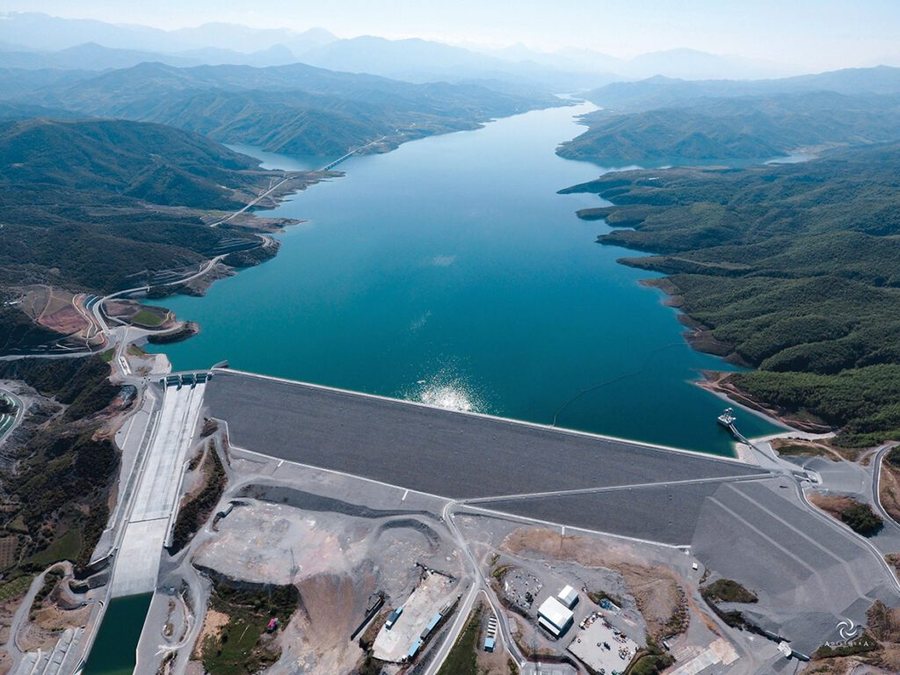
Energy, over 90% of which comes from hydro, is a market that experiences numerous fluctuations.
In years with rainfall, producers see good days, while traders, who mediate imports, "suffer." The biggest fluctuations are for large producers, both state-owned and private.
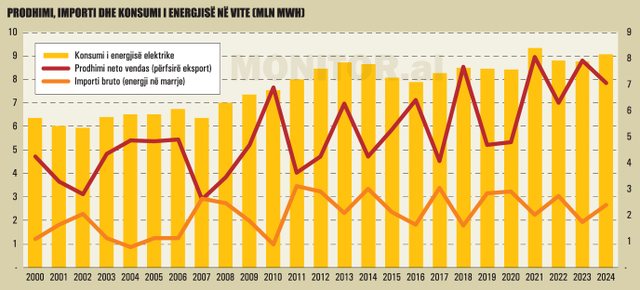
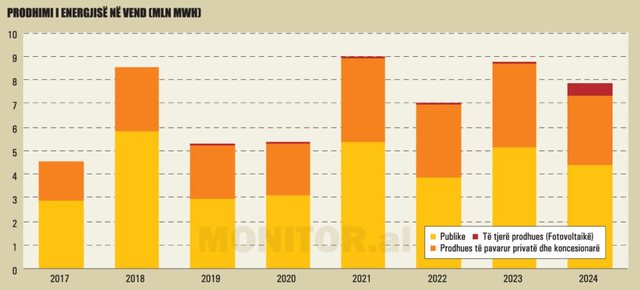
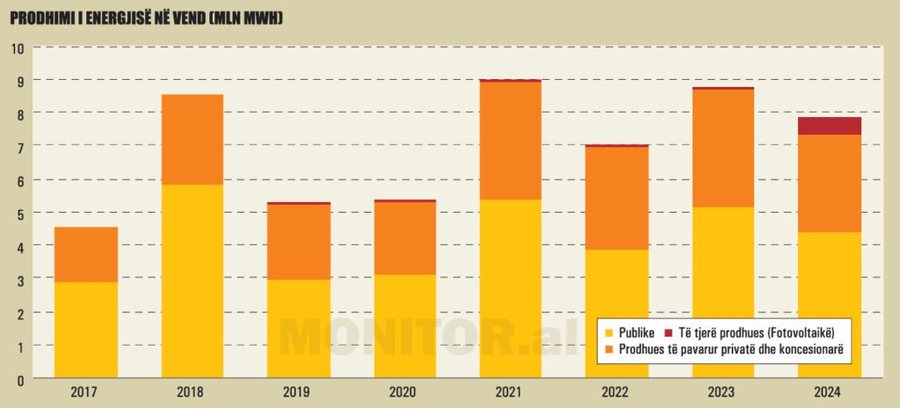
In 2024, according to INSTAT, available electricity increased by 3.7%. Net domestic electricity production in 2024 reached 7,837 GWh from 8,796 GWh of energy produced in 2023, marking a 10.9% decrease in production.
Gross electricity imports (energy in receipt) reached 2,669 GWh from 1,922 GWh a year earlier, thus marking an increase of 38.9%.
The decline in domestic production has negatively affected the performance of state-owned energy companies, while the increase in imports has had positive effects for traders.
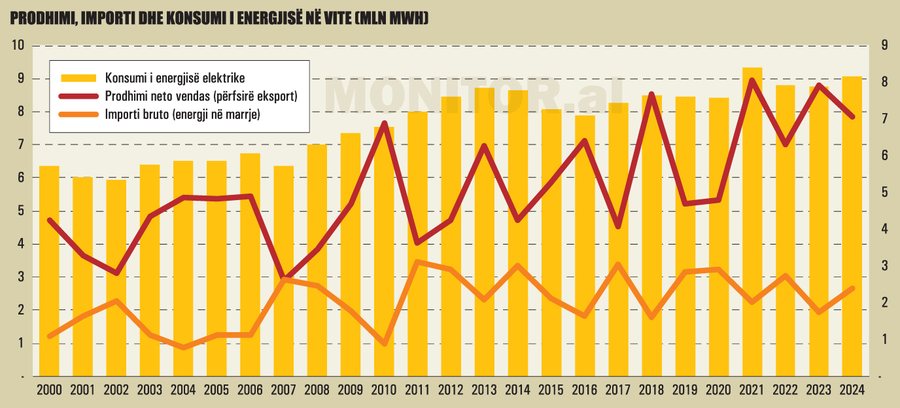
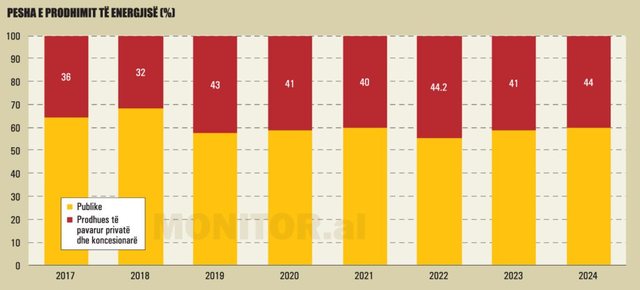
According to INSTAT, public hydropower plants, in 2024, produced 4,085 GWh from 5,123 GWh in 2023, thus marking a decrease of 20.3%. Private and concessionary hydropower plants produced 3,245 GWh from 3,582 GWh a year earlier, marking a decrease of 9.4%.
Of the three state-owned energy operators, the distributor "OSHEE Group", the producer KESH and the transmitter OST, only KESH had a negative financial result in 2024.
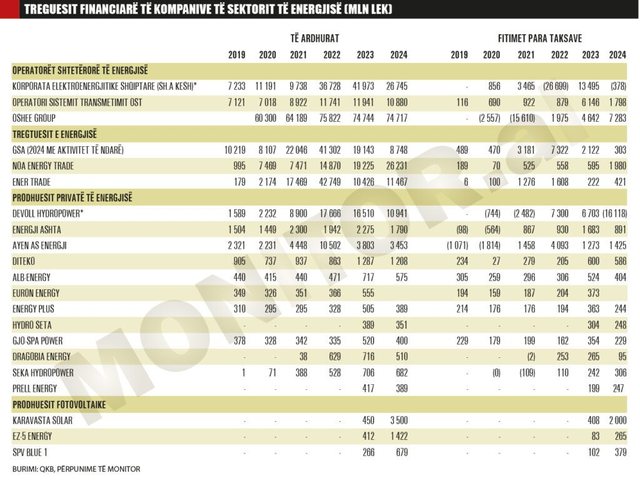
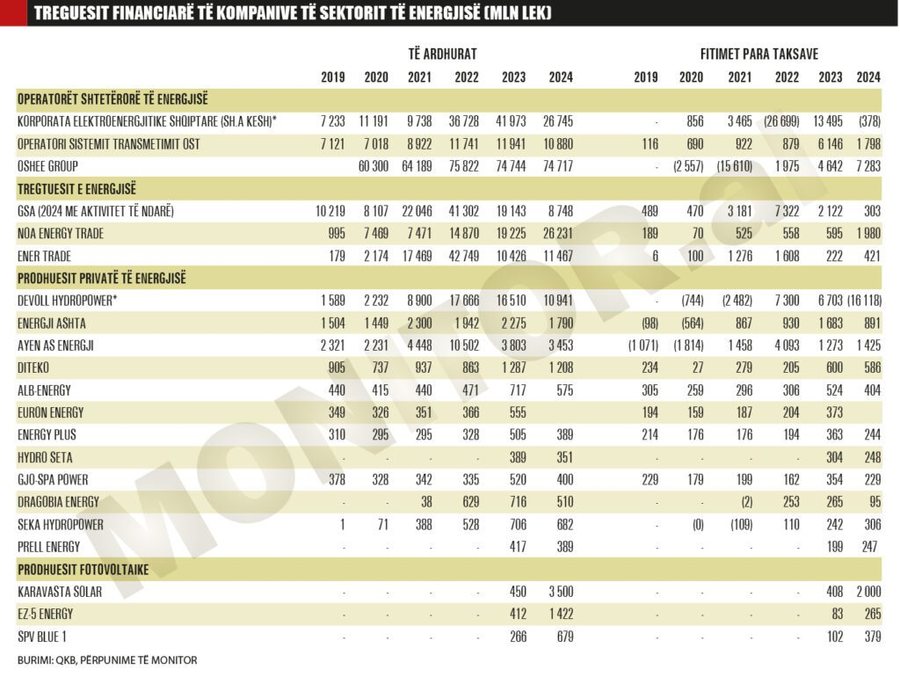
"OSHEE Group" reported revenues of 74 billion lek, while profits increased by 60%, to 7.3 billion lek, entering the top 10 in the country for profits.
The Transmission System Operator (TSO) is another state-owned energy company on the list of losers. Revenues were flat at nearly 11 billion lek and profits fell by 70% to 1.8 billion lek.
According to the company's official statements, in 2024, the energy input into the transmission system was 9.9 TWh, where the transmitted energy was 9.7 TWh, while losses were 0.2 TWh.
Most of this energy has come as a result of production from hydropower sources, which are also the dominant segment in the country, but the share of photovoltaics has also increased from year to year.
"About 88% of the energy injected into the transmission system from domestic production was from hydropower sources and 5% from photovoltaic sources, while 7% came from sources in the distribution network, with total production in the transmission system resulting in 7.2 TWh."
The load on the transmission system was 7.6 TWh, of which 96% was covered by domestic production and 4% import, through interconnection lines", - estimated from OST data.
Such dynamics in the sector have marked a positive result for the company in its financial balance sheet.
Specifically, the OST recorded a net profit of around 1.76 billion lek. Total revenues from operating activities for 2024 in the company's balance sheet resulted in 9.55 billion lek, with around 67% of them being revenues from electricity transmission.
According to the company, total operating expenses for 2024 were 7.65 billion lek, of which about 33% are related to transmission costs.
The Albanian Electric Power Corporation (KESH) had revenues of 27 billion lek, a 36% decline. The state-owned energy producer has declared losses of 380 million lek, down from profits of 13.4 billion lek the previous year.
Erald Elezi, Administrator of the "Albanian Electric Power Corporation", says that from a hydrological point of view, 2024 was a year below the multi-year average, so hydrologically it was a relatively dry year in precipitation and consequently with flows below multi-year indicators.
"Meanwhile, to cover the Public Service Obligation of 5.6 TWh, it was achieved that 73% of energy was provided from domestic production, 12% from energy stored by Private Energy Producers (PPE) and 15% from imports.
Specifically, during 2024, 828 GWh were imported, with a total cost of 105.6 million euros and a favorable average price of 127.5 €/MWh. It is evident that the Corporation has carefully optimized import cost management scenarios combined with the most efficient use of the cascade, responding to energy demand.
Energy traders increase profits, the market is concentrating in a few hands
In recent years, energy trading has been attracting businesses, as if you have the right knowledge and capital you can grow very quickly, while the number of employees required is minimal (companies have a maximum of 4 or 5 employees).
Although it is an unstable business, depending on the needs of state operators to purchase imported energy, the simple model and the lack of need for many investments (except for the bank guarantee) encouraged new entrants, which bore fruit especially in 2022, when it was a golden year for traders, with strong growth in revenue and profits.
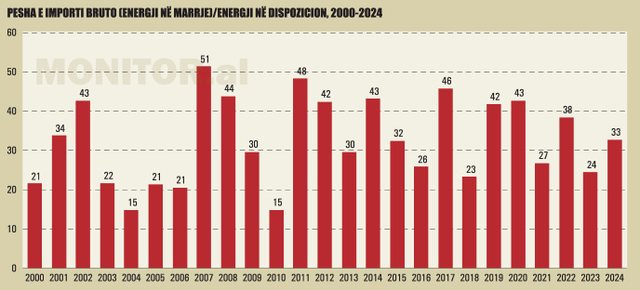
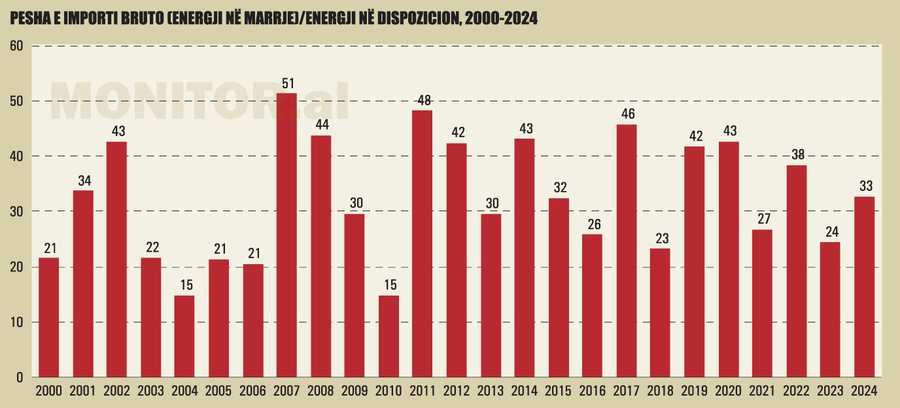
Profits fell in 2023, due to a better hydro year, which reduced the need for imports, and increased again in 2024, when the share of energy imports reached 32.7%, from 24.4% in 2023.
In total, including Value Added Tax, energy imports in 2024 were around 100 million euros, up from 70 million euros in 2023, according to data from the Albanian Electric Power Corporation (KESH), and over 500 million euros spent in 2022.
The last two years have seen a concentration of the market in a few operators. The list of profits from this segment includes 3 companies out of 6 a few years ago.
“Noa Energy Trade” ranks for the second consecutive year as the largest in this segment. In 2024, the company reported an annual turnover of 26.2 billion lek, with an expansion of 36.4% on an annual basis. Profits also almost quadrupled to almost 2 billion lek. The rate was 7.5%.
"Ener Trade", part of the "Gjonaj" group, in 2024 became the second largest energy trader in the country, while last year it was the first.
Revenues were 11.5 billion lek, up 10% compared to 2023, after a sharp contraction of 76% the previous year, which was affected by lower energy prices. Profits almost doubled, to 421 million lek.
GSA was the third largest energy trading operator. In 2024, the company generated 7 billion lek from energy trading, down from 8.3 billion the previous year.
In 2023, the company had total revenues of 19.1 billion lek from energy and ferrochrome trading, with 54% coming from energy trading.
In 2024, GSA's total revenues fell to 8.7 billion lekë, as a result of the separation of the ferrochrome activity into another company, "GSA Ferrokrom". In line with the separation of the activity, profits were reduced to 303 million lekë, from 2.1 billion lekë the previous year.
"Ayen Energy Trading" re-entered the "Monitor 200" list, after a 129% increase in revenue, to 3.6 billion lek, but remains outside of the profits that still resulted in 120 million lek in 2024, after losses of 36 million lek the previous year.
Small HPPs, profit rate over 50%
Investments made in the construction of private hydropower plants, both large and small, are yielding satisfactory returns. Historically, small hydropower plants have been ranked among the most profitable in the “Monitor 200”.
From 2022, large HPPs such as "Devolli Hydropower" or "Ashta" will also be included in the list, as they have completed their investments and are performing full activity, but their activity is more volatile due to high depreciation rates.
In contrast, the young ones have more stable activity, adapting more easily to the vagaries of the weather. Their profit rates are also high, reaching 50-60%.
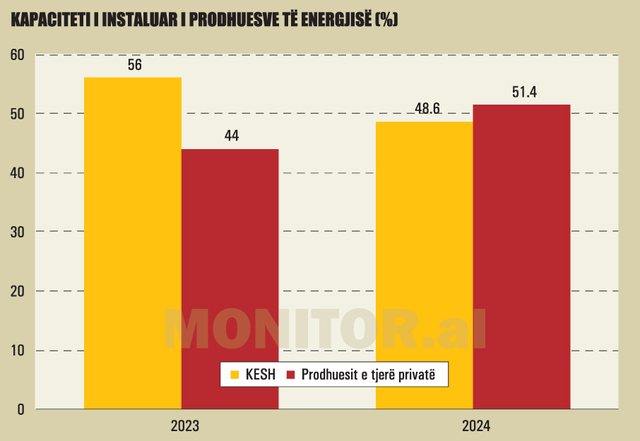
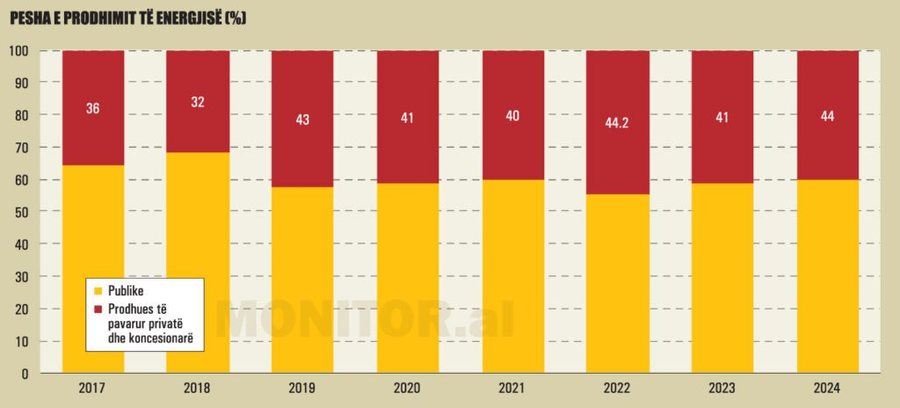
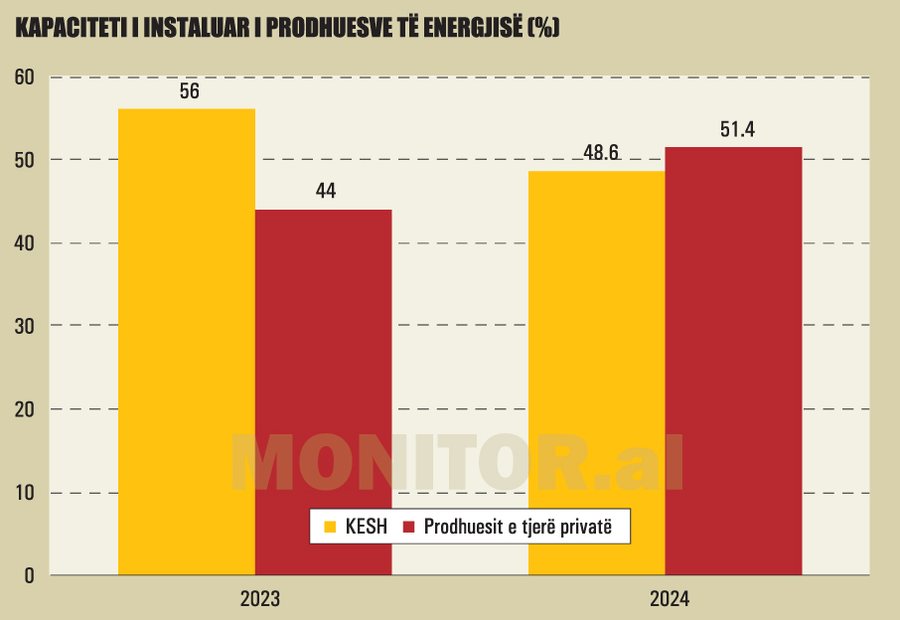
According to INSTAT, the share of energy produced by private and concessionary hydropower plants increased by 3 percentage points compared to the previous year, reaching 44%, due to the faster increase in production by public hydropower plants.
According to the Energy Regulatory Authority (ERE), the total electricity generation capacity installed in our country until December 31, 2024 is around 3,213 MW.
This capacity has had an increase of around 537 MW compared to 2023. The increase in installed capacity during the year is mainly due to the increase in renewable sources of photovoltaic electricity.
The electricity production capacity of the public company KESH sh.a. is 1,563 MW and constitutes about 48.6% of the installed capacity in our country, up from 56% in 2023.
For the first time in 2024, other electricity producers have surpassed the state and have a capacity of 1,650 MW and account for about 51.4% of this capacity.
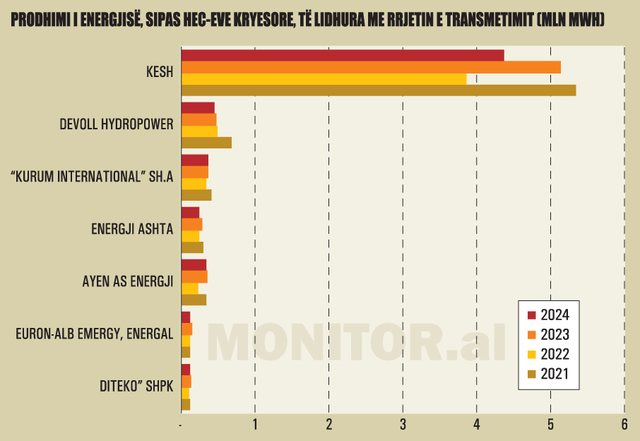
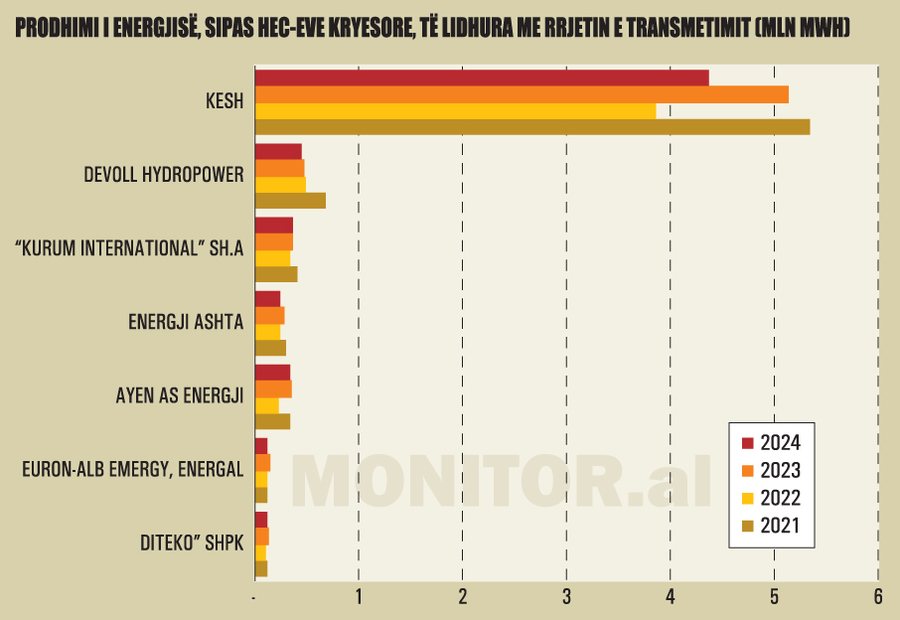
The largest energy producers in 2024 were KESH with 4.4 million MWH (down 15%), followed by "Devolli Hydropower" with 450 thousand MWH (-6.4%), "Kurum International" (362 thousand), "Energji Ashta" (243 thousand) and "Ayen As Energji" (342 thousand).
Small private concession hydropower plants continue to show high and stable profit rates. According to market operators, this sector remains among the most profitable in Albanian energy, as with the completion of the initial investment, operating and maintenance costs are minimal.
In addition to small operators, large companies that have entered the production phase are also reporting profits, benefiting from stable contracts and competitive prices in the regional energy market, although 2024 has marked strong fluctuations and was not so good for the big ones.
"Devoll Hydropower" is the largest private energy producer in the country through two hydropower plants, the Banja HPP (installed renewable energy capacity 72 MW) and the Moglica HPP (installed renewable energy capacity 197 MW).
In 2024, its gross revenues fell by 34%, to 10.9 billion lek (6.8 billion lek from the main activity of electricity sales and about 4.1 billion lek were profits from market activities, net, representing revenues from energy trading activities and initial activities that materialized on the date of the agreement with the customer).
The company reported a loss of 16 billion lek, after profits of 6 billion lek the previous year.
According to the balance sheet, the loss came from the item “Loss from depreciation of tangible fixed assets” of 19 billion euros. If we were to remove this item, the company would have a profit of 3 billion lek before taxes, half of what it was a year ago.
According to the activity report, in 2024, DHP's gross revenues shrank due to lower energy prices and reduced production due to unfavorable hydrology.
Total electricity production during 2024 was 449,681 MWh, a reduction of more than 30% compared to 2021, which was the last year with relatively normal hydrology, due to unfavorable hydrology.
Rigela Gegprifti, Statkraft's General Director for Albania, claims that during 2024, the hydrology in the Devoll River catchment continued to be unfavorable, with a significant reduction in flows to the reservoirs, compared to historical flows, similar to recent years.
Kjo ka sjellë ulje të konsiderueshme të sasisë së prodhuar të energjisë. Ajo shton se luhatja e çmimit të energjisë elektrike mbetet një nga sfidat kryesore të tregut.
“Kurum International” është prodhuesi i dytë më i madh privat i energjisë, pas Devollit, por të ardhurat e tij raportohen së bashku me aktivitetin e prodhimit të çelikut. Sipas ERE, në 2024-n prodhoi 362 mijë MWH, me tkurrje të lehtë prej 1.4%.
“Energjia Ashta”, me fuqi të instaluar 48.2 MW, kishte qarkullim vjetor prej 1.8 miliardë lekësh, me rënie 21%, në 2024-n. Gjatë vitit 2024, prodhimi total ishte 243,982 MWh, sipas raportit vjetor, me tkurrje 15% (sipas ERE). Fitimet ranë me 47%, në 891 milionë lekë. Norma e fitimit ishte 50%.
Kapaciteti i kombinuar i të dy hidrocentraleve (Ashta 1 dhe Ashta 2) është 53 megavat (MW); 242 milionë kilovat orë prodhohen në vit.
“Ayen as Energy” raportoi të ardhura 3.4 miliardë lekë, me rënie 9.2% në raport me vitin e mëparshëm. Fitimet u rritën me 11%, në 1.4 miliardë lekë, me një normë prej 41%.
Kompania turke po zbaton kontratën e vitit 2011 për projektimin, ndërtimin, vënien në punë, administrimin, mirëmbajtjen e hidrocentraleve Gojan, Gjegjan, Peshqesh, Ura e Fanit dhe Fangut, me kapacitet të kombinuar prej 109.7 MW.
“Ayen as Energy” ndërtoi dhe vuri në punë në fund të vitit 2017 HEC-in e Fangut, me kapacitet 74,6 MW. HEC-i i Fangut, për nga kapaciteti i prodhimit, renditet i pesti pas HEC-eve të Fierzës, të Komanit dhe të të Vaut të Dejës, të cilët janë në pronësi shtetërore dhe Moglicës.
Ky është HEC-i i dytë në vend, i ndërtuar nga kompania turke “Ayen” pas atij të Peshqeshit, me kapacitet 23 MW, i cili nisi prodhimin pak vite më parë.
Sipas raportit të aktivitetit, në vitin 2024, “Ayen as Energy” prodhoi energji totale prej 342 mijë MWh, me rënie të lehtë prej 3% nga viti i mëparshëm. Nuk raportohen investime të reja në vitin 2024.
“Euron Energy”, që shfrytëzon me koncesion dy HEC-e, HEC Bele 1, me fuqi 5 MW, dhe HEC Topojan 2, me fuqi 5,8 MW, gjeneroi të ardhura 555 milionë lekë dhe fitime 373 milionë lekë, me një normë prej 67%.
“Diteko”, që ka me koncesion HEC Gjoricë, me fuqi 4.18 MW, raportoi të ardhura prej 1.2 miliardë lekësh dhe fitime 586 milionë lekë, me normë 49%.
“Alb-Energy” ka gjeneruar nga aktiviteti i saj 575 milionë lekë të ardhura, nga shitja e energjisë elektrike nga HEC Bele 1 dhe Topojan 2, në Kukës, dhe fitime prej 407 milionë lekësh.
Norma e fitimit ishte 70% në vitin 2024. Kompania është pjesë e “Alb-Building”, një prej sipërmarrjeve më të mëdha të ndërtimit në vend.
“Seka Hydropower”, që zotëron koncesionin e centralit hidrolektrik “Seke” dhe “Zais” raporti të ardhura prej 682 milionë lekësh dhe fitime prej 307 milionë lekë, me një normë prej 45%.
“GJO-SPA POWER”, që shfrytëzon me koncesion HEC Llapaj, me fuqi 13,62 MW, kishte të ardhura prej 400 milionë lekësh dhe fitime 229 milionë lekë, me normë fitimi 57%.
“Erdat Lura” që ka ndërtuar me koncesion dhe që menaxhon hidrocentralet Lura 1, 2 dhe 3, deklaroi në vitin 2024 të ardhura prej 410 milionë lekësh dhe fitim 221 milionë lekë, me një normë prej 54%.
“Dragobia Energy”, në pronësi të “Gener 2”, që ka ndërtuar HEC-in mbi lumin Valbonë, në vitin e tretë të aktivitetit, raportoi 716 milionë lekë të ardhura. Megjithatë, fitimet ranë ndjeshëm me 64%, në 95 milionë lekë, duke dalë nga lista e më të mëdhenjve sipas fitimeve.
Dielli po ngroh prodhuesit, me norma fitimi deri në 50%
Gjatë viteve të fundit, energjia diellore ka tërhequr gjithnjë e më shumë interes dhe investime, duke dhënë tashmë rezultatet e para të dukshme.
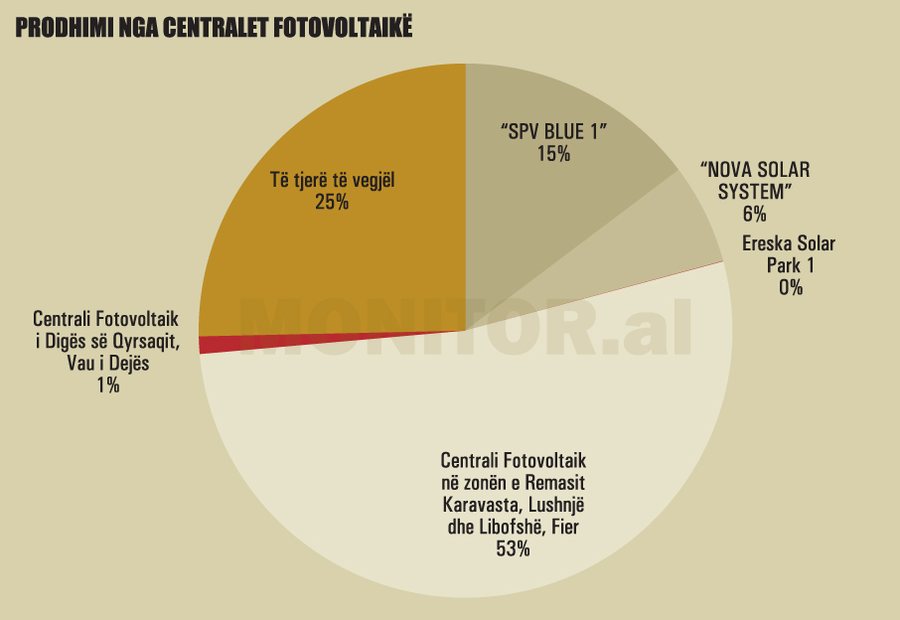
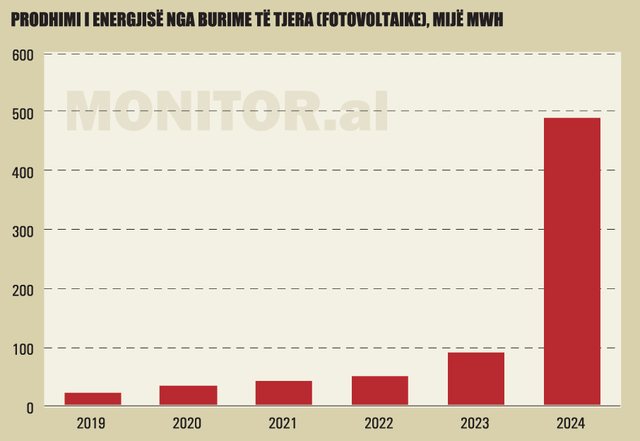
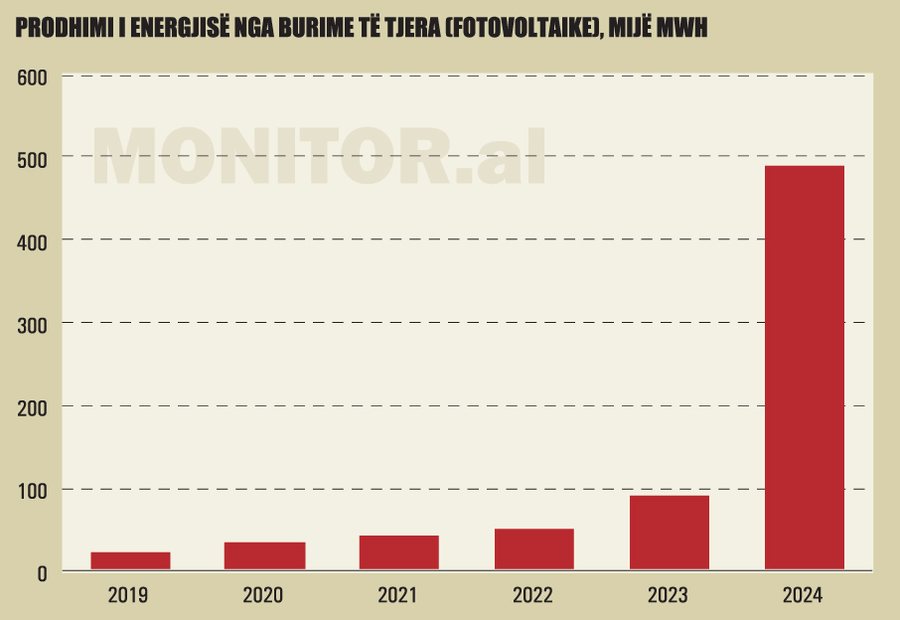
Për herë të parë në vitin 2024, ajo arriti të bëhet pjesë e rëndësishme e prodhimit kombëtar të energjisë elektrike, duke zënë 6,5% të totalit, sipas të dhënave të INSTAT.
Prodhimi arriti në gati 500 GWh, nga vetëm 90 GWh një vit më parë, që përfaqëson një rritje më shumë se pesëfish.
Enti Rregullator i Energjisë (ERE) thekson në raportin vjetor se gjatë vitit 2024, një pjesë të rëndësishme ka filluar ta zërë edhe prodhimi nga impiantet fotovoltaike.
Rritja e kapacitetit gjenerues nga këto impiante kontribuon në diversifikimin e burimeve të prodhimit të energjisë elektrike në vendin tonë. Kapaciteti i instaluar i impianteve fotovoltaike për vitin 2024 arrin në 449 MW, ndërsa prodhimi i realizuar prej tyre është 489.4 GWh.
Sipas ERE-s, nga 26 impiante, që kanë hyrë në prodhim, me një kapacitet të instaluar prej 269.95 MW gjatë vitit 2024, 95% e tij ishte nga energjia diellore dhe pjesa tjetër, nga uji.
Nxitja e këtij sektori filloi në vitin 2017 me miratimin e kuadrit të parë ligjor për burimet e rinovueshme, por zhvillimi mori hov të vërtetë gjatë krizës energjetike të viteve 2021 – 2022.
Deri më sot, Enti Rregullator i Energjisë ka dhënë 65 licenca për prodhimin e energjisë fotovoltaike, duke nisur nga projekti i parë i zbatuar disa vite më parë nga Ujësjellësi i Korçës.
Shumica e projekteve të realizuara janë impiante të vogla, me kapacitet deri në 2 MW, ndërsa më i madhi është ai i Karavastasë, i ndërtuar nga kompania “Voltalia”, e cila fitoi ankandin e qeverisë dhe nisi prodhimin në vitin 2024.
Përveç tij, disa projekte private të orientuara drejt tregut të lirë po zhvillohen në rajone të ndryshme të vendit, ndonëse një pjesë e madhe e nismave mbetet ende në proces miratimi institucional, pa nisur zbatimin në terren.
Gjatë vitit 2025, deri në fund të korrikut, ERE ka licencuar 13 subjekte të reja (një prej tyre me kusht), me kapacitet total prej 125 MW.
Prej tyre, 11 impiante kanë fuqi deri në 2 MW. Projekti më i madh i licencuar së fundmi është “Sunny Side Energy”, me kapacitet 100 MW, që do të ndërtohet në zonën e Darëzezës, në Fier.
Investimi i grupit “Kastrati”, miratuar në tetor 2024, parashikon që energjia e prodhuar të shitet në tregun e lirë.
Ashtu si në listën e të ardhurave, edhe në atë të fitimeve, ka hyrje të reja nga sektori i energjisë diellore.
Ky investim po rezulton me leverdi, teksa sipërmarrjet e para që kanë hyrë në prodhim po deklarojnë norma fitimi edhe mbi 50%. Ky aktivitet po tërheq investime së fundmi kryesisht nga sektori ndërtues.
Segmenti ka shumë hapësirë për zgjerim, teksa prodhimi i energjisë nga hidro vijon të zërë më shumë se 90% të totalit.
“Karavasta Solar”, që është pjesë e shoqërisë franceze të energjisë së rinovueshme “Voltalia” dhe ka nën menaxhim impiantin e Karavastasë me kapacitet 140 MW, po rritet me shpejtësi, që nga viti 2023, kur filloi prodhimin e energjisë.
Të ardhurat e shoqërisë ishin rreth 3.5 miliardë lekë në vitin 2024, sipas të dhënave nga kompania. Fitimi ishte rreth 2 miliardë lekë, po sipas Tatimeve (bilanci zyrtar nuk është dorëzuar ende), me një normë prej rreth 57%.
“Voltalia” fitoi ankandin e parë të qeverisë për Karavastanë, ku ofroi një çmim 24,89 euro për megavat.
Sipas marrëveshjes, 70 megavat janë të ndara për prodhim dhe shitje në treg të lirë dhe 70 megavat me çmim të rregulluar. Çmimi i rregulluar zgjat për 15 vjet dhe do të blihet nga Operatori i Shpërndarjes së Energjisë.
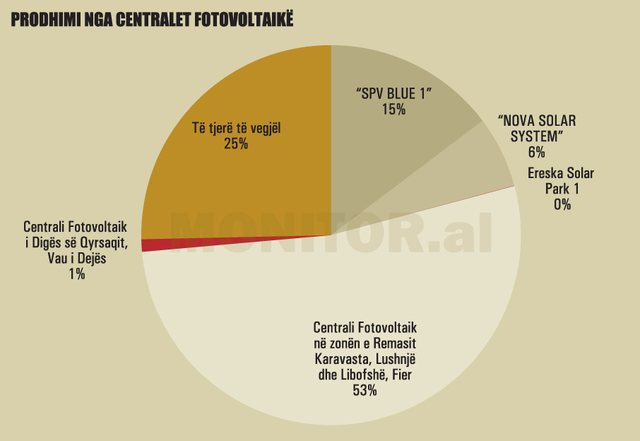
Impianti i Karavastasë prodhoi vitin e shkuar 258.3 GWH dhe përbënte 3.2% të prodhimit neto vendas dhe më shumë se gjysmën e gjithë energjisë nga dielli, sipas ERE.
Një tjetër projekt i “Voltalia” është Parku Fotovoltaik i Spitallës, që do të ketë kapacitet të instaluar 100 MW, nga të cilat 70 MW do të blihen nga Operatori i Shpërndarjes së Energjisë Elektrike, nëpërmjet një kontrate për blerjen e energjisë me çmim të paracaktuar dhe 30 MW do të tregtohen në treg të lirë.
Por ky projekt nuk ka avancuar me ritmet e pritshme. Ndryshe nga Karavastaja, për ankandin e Spitallës, gara u mbyll me çmim 29.89 euro/MWh, për 70% të kapacitetit të fiksuar për 15 vjet, ndërsa pjesa tjetër do të shitet në treg të lirë.
“SPV Blue 1”, një subjekt i regjistruar në vitin 2021, pikërisht në periudhën kur kriza e energjisë po dukej në horizont, mori lejen për ndërtimin e një impianti fotovoltaik me kapacitet të instaluar prej 50 MW, të pagëzuar me emrin “Blue 1”.
Ndërtimi i parkut solar nisi në korrik 2022, në kulmin e krizës që kishte përfshirë tregjet globale dhe kishte tronditur sistemet energjetike të vendeve të BE-së.
Pas gati dy vitesh punime, impianti u komisionua në maj 2024, duke i dhënë kompanisë mundësinë të niste zyrtarisht prodhimin e energjisë elektrike. Kompania ka deklaruar të ardhura prej 680 milionë lekësh në 2024-n dhe deklaroi fitime 380 milionë lekë, me një normë gati 56%.
Sipas të dhënave nga Enti Rregullator i Energjisë, prodhimi i energjisë nga dielli nga ky operator ishte rreth 72 mijë MWH, ose rreth 15% e totalit të energjisë së diellit.
Energjia e përfituar nga impianti shitet në tregun e lirë duke e bërë “Blue 1” një nga projektet e para që funksionon jashtë skemave mbështetëse, teksa është një nga më të mëdhenjtë në kapacitet pas Karavastasë që ka hyrë gjithashtu në prodhim në fund të vitit 2023.
The plant is located in Sheq Marinas, Fier, on an area of 78 hectares. The company is 51% owned by “Blessed Investment”, a company that operates mainly in the field of real estate development, while 49% of the shares are owned by “Matrix Konstruksion”, which operates mainly in the field of construction and infrastructure.
The construction of "Blue 1" a few years ago marked the growing trend of construction groups to diversify their investments towards the renewable energy sector, something that still continues.
EZ5 Energy, which offers a complete solar energy cycle solution, is a new entrant to the list of the most profitable. The company reported a rapid increase in revenue, by 245%, to 1.4 billion lek.
Profits also more than quadrupled to 265 million lekë. The rate was 19%. According to official sources, the company, founded in 2019, began its activity as a solar energy trader in the Albanian free market. In 2021, the company built its 10 MW photovoltaic park in Fier, contributing to the transition to clean energy.
Today, “EZ5 Energy” operates one of the most modern solar panel structure factories in the region, in Vrrina, Durrës, with a production capacity of up to 3 MW of support structures per day.
The company uses high-performance Magnelis® coated steel and follows certified international standards. The company has over 50 employees, over 144+ MWp of installed capacity and produces around 20,000 MWh of clean energy each year.
"Nova Solar System" was the third largest producer of solar energy in the country, with an installed capacity of 50 MW. In 2024, it produced almost 30 thousand MW, according to the ERE.
Revenues according to the balance sheet were almost 200 million lek and profits almost 100 million lek, with a rate of 50%, but the company is not yet part of the "Monitor 200", according to profits. /Monitor.al/