


The museums of Durrës, which were inaugurated last week, have not yet taken their full form.
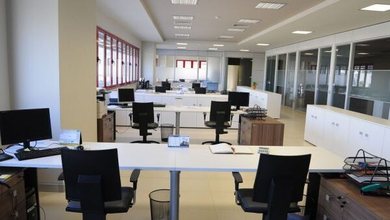
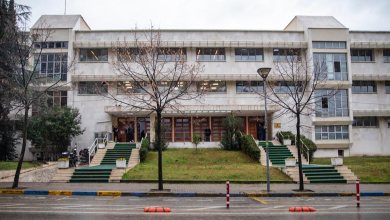
After the closure due to the November 2019 earthquake and delays in the restoration of the Archaeological and Ethnographic Museums, the city is preparing to welcome summer season tourists to the two most important historical and cultural heritage institutions.
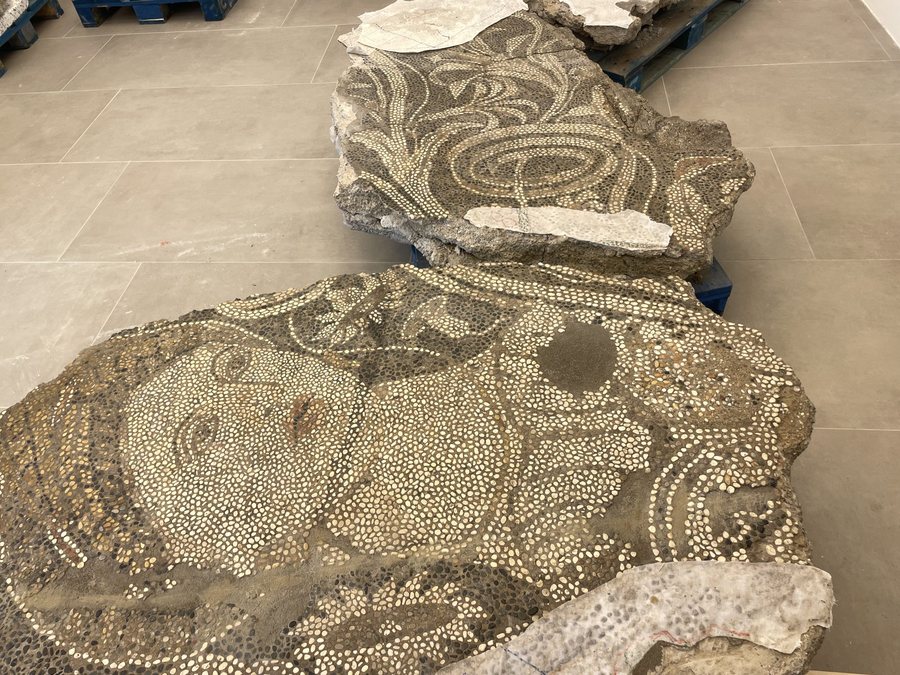
In one of the Archaeological Museum's premises, somewhat out of sight of visitors, the installation of the mosaic known as the "Beauty of Durrës" has begun, over 2,300 years old, the placement of which was not part of the museum's initial project, which was funded by the European Union's EU4CULTURE program.
The "Beauty of Durrës" stayed for 45 years in the capital's National History Museum and was moved a few weeks ago to the coastal city by the same team of specialists that transferred it to Tirana in 1981.
For the famous mosaic, which has arrived in 14 pieces, a space was found at the exit gate of the Durrës museum, without respecting the museum's chronological line.
The story of the discovery of the mosaic, still not finally installed in the museum, dates back to 1916, when during World War I, Austrian engineering forces found signs of colorful glue that gave life to the figures on the floor of a shelter in the center of Durrës, very close to the place where the "Aleksandër Moisiu" theater was later built.
Notes published by Austrian archaeologist Prashniker enabled the final discovery of the mosaic by prominent archaeologist Vangjel Toçi in 1959.
Flooded several times by water, the "Beauty of Durrës", whose total surface area reaches 14 square meters, has an elliptical shape that contains the central figure of a woman, surrounded by floral motifs.
The Archaeological Museum will need a few more weeks to complete the symbolic element known by the name of the city of Durrës, at the same time the earliest mosaic discovered in our country.
Very close to the city's historic center, another cultural heritage institution has just opened its doors.
The Ethnographic Museum of Durrës, built as a civic residence in the mid-19th century and built on the city's medieval fortification walls, has presented for the first time 125 works by the same number of Italian authors.
The works, for the most part, are paintings that authors from the neighboring country donated to Durrës in 2006, just a few months after the passing of master Ibrahim Kodra.
In the absence of a gallery, paintings of different sizes were never presented all together, but only in a very limited number.
Only 20 years after the death of the master from Ishmi, the works presented together for the first time also lack a catalogue of paintings with artistic biographies of the painters and the corresponding works.
Visitors have no information about the foreign artists who appreciated and honored the work of the author from Ishmi, near Durrës.
Just like the missing catalog, a gallery named "Ibrahim Kodra" is also missing in Durrës, a request formulated for the municipality by artists from the neighboring country, where the great Albanian painter developed all of his highly successful activity, without ever severing ties with his homeland.
The newly restored museums of Durrës have every opportunity to fill the gaps and give it the true dimensions of the continuity of artistic life in the 3,000-year-old city. /BIRN/