

In addition to the capital, the reduction in public transportation has continued today in the districts as well.
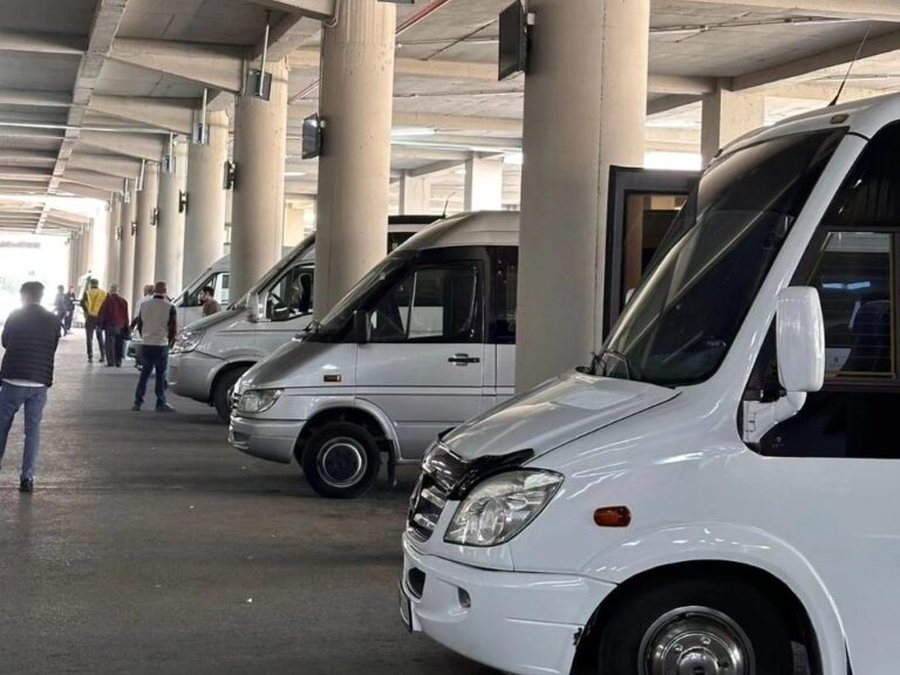
The Chairman of the Urban and Interurban Transport Association, Dashnor Memaj, told Monitor that today the number of buses in the main districts where urban and interurban public transport operates has reached up to 60%.
Specifically, according to him, in the city of Durrës the number of buses providing public service has been reduced by 50%, in the city of Vlora by 60%, in Berat by 60%, in Lushnje by 50% and in Peshkopi by 40%.
Regarding the intercity transport service via van lines, Memaj says that they continue with reduced schedules. According to him, this service has long been in a difficult financial situation due to the decline in the number of passengers, a phenomenon that has been significantly accentuated after the Covid-19 pandemic. The number of passengers has decreased by up to 50% over the years.
The Chairman of the Urban and Interurban Transport Association, Memaj, emphasizes that the increase in the price of oil has made it even more difficult to maintain service in the districts. He says that many operators in the districts are under pressure to suspend service, pending the reaction of state institutions to provide oil compensation.
"Operators, not only in the districts, but also in Tirana, are finding it difficult to continue their service normally without compensation from the state, as the price of oil has increased and the number of passengers has dropped by up to 50%," Memaj claimed.
Since the early hours of the morning, the movement of citizens by public transport has been blocked almost throughout the country.
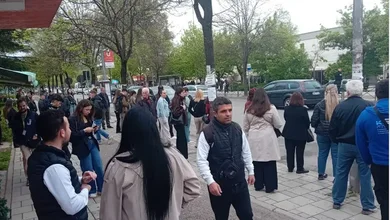
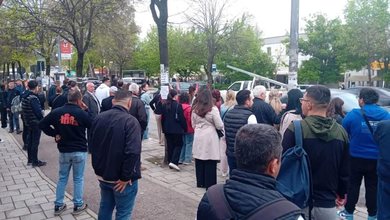
In Tirana, in the early hours of the morning, out of about 200 buses for about 50 transport lines, only 115 of them have been operating. The lack of public transport vehicles created long queues and waiting at stations, where according to citizens today the waiting time to receive this service has been twice as long. In districts, according to Public Transport associations, today the number of reduced vehicles has reached up to 60%.
In total, around 450 regular public transport lines operate throughout the country, a service provided by 250 operators.
Both the National Association of Urban Transport and the Association of Urban and Interurban Transport have sent several letters to the Ministry of Economy, the Ministry of Finance and Municipalities regarding the financial difficulties created after the increase in oil prices.
They also requested, in the meeting held on April 1 with the Minister of Economy, to implement a similar scheme from 2022, where due to the price crisis, operators were compensated for 6 months for oil at 100 lek per liter.
In the absence of a response from the institutions to provide compensation, operators officially have their "hands tied" to increase ticket prices, in order to mitigate costs from the increase in oil prices. Both for public transport in Tirana and in the districts, ticket prices are approved by government instruction.
But citizens claim that in the districts since the start of the war, some operators have started applying prices up to 20% higher./Monitor.al/