


Armand Lilo's towers, traps for residents who pay exorbitant prices for apartments without construction quality
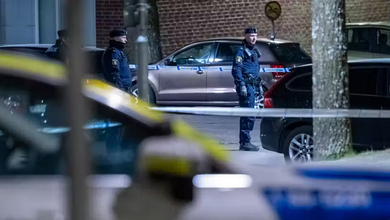
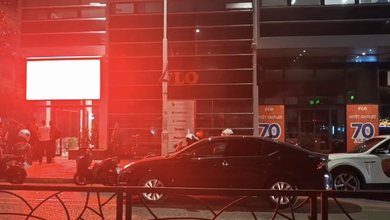
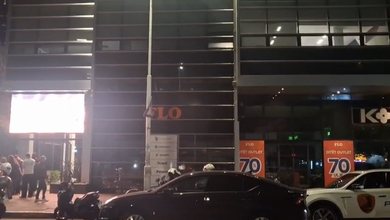
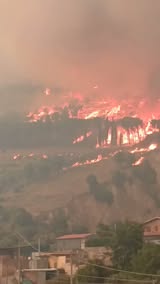
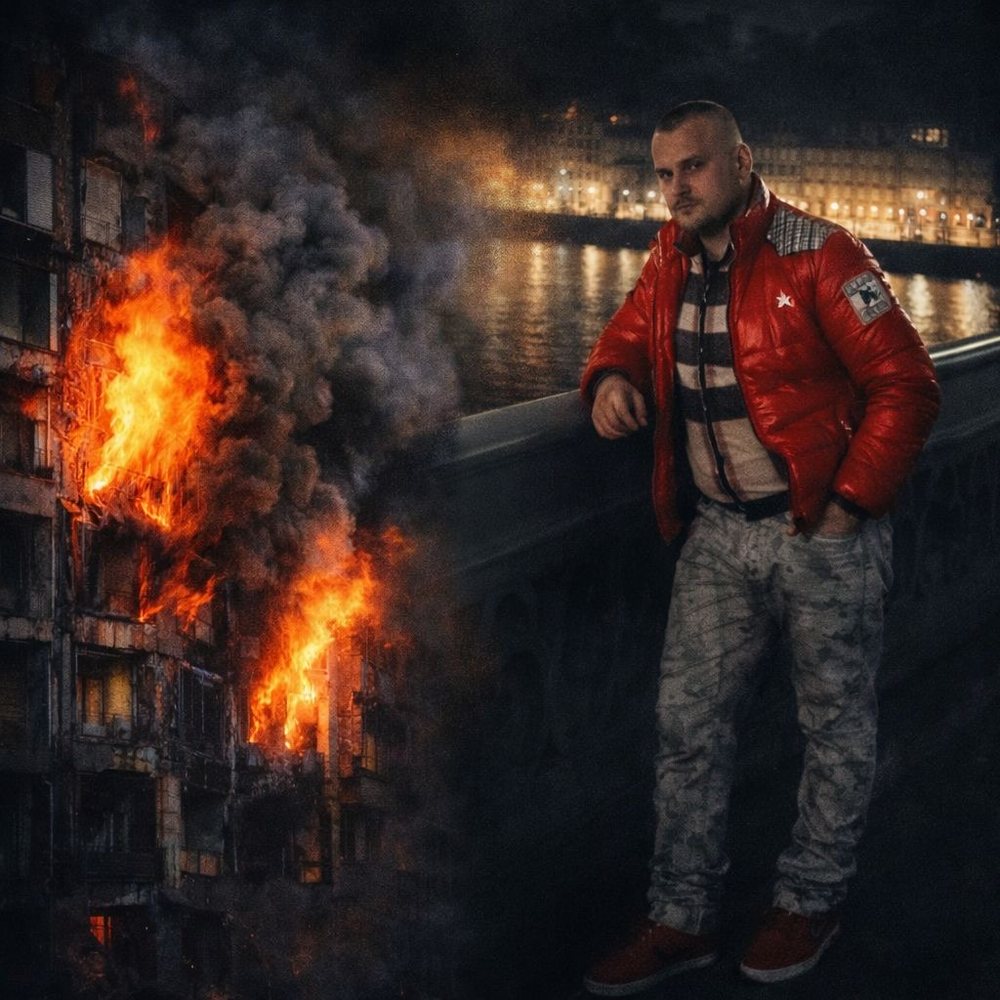
Another residential complex, completed just a few months ago, caught fire today in Tirana, seriously endangering the lives of residents. It is a building in the area known as "Farmacia 10", opposite the QSUT.
According to preliminary information, the fire started on the first floor of the complex and then spread rapidly to the facade of the building. This development raises strong questions about the quality of work in new construction in the capital, especially when the spread of flames follows a trajectory typical of materials that are unstable to fire.
In this specific case, the building in question was built by the company ARLIS NDËRTIM, on 5 Maji Street, Administrative Unit No. 4. During the application of the ventilated facade, it is suspected that, in order to reduce costs, the use of stone wool, a standard and fire-resistant material, was avoided, being replaced with “PU Foam” filling foam.
This material, although more economical and with an insulating function, is known for its flammable composition, based on petroleum derivatives. It is precisely this technical choice that is suspected of having favored the rapid spread of flames on the facade, turning a localized incident into a widespread risk for the entire structure.
The current case is not isolated. About four years ago, another complex in the capital, Square 21, was engulfed in flames on the upper floors. That building was also built by the same company, creating a disturbing pattern of recurrence that requires in-depth institutional verification.
Such incidents highlight not only the problems of building standards, but also the lack of effective controls by state institutions over the implementation of permits and technical specifications. This becomes even more problematic when compared to the high prices per square meter at which these apartments are traded in the Tirana real estate market.
The company ARLIS NDËRTIM is owned by businessman Armand Lilo, also known for his family ties to Fatmir Xhafaj. In recent years, the company has been ranked among the main beneficiaries of construction permits from the Municipality of Tirana, consolidating itself as one of the main actors in the construction sector in the capital.
However, the scale of the activity has not always been accompanied by rigorous compliance with standards and the law. In addition to repeated cases of fires, the company has also faced accusations of violating building permits, an issue that has drawn the attention of SPAK.
One of the most discussed cases is that of The Eyes of Tirana tower, at the beginning of Kavajës Street, where 8 floors (7 above ground and 1 underground) were allegedly added without permission, in violation of the approved project. This case became the subject of public and political debate, and was put under investigation by the relevant authorities.
The problems do not stop only with the construction as a final product. Safety at the construction site has also been called into question. A serious incident was recorded at the Corner Residence tower, on “Gjergj Fishta” Boulevard, where the fall of a metal scaffolding from a building under construction injured two passersby. Among them was Imelda Shkëmbi, the wife of former footballer Bledi Shkëmbi, who suffered serious facial injuries and severe fractures.
Despite this chain of incidents and suspicions, the company's activity does not seem to have been curbed. On the contrary, Armand Lilo continues to benefit from major development projects. The latest project envisages the construction of a five-tower complex near the Artificial Lake dam, an area of high urban and environmental sensitivity. The complex, known as "Tirana Lake", is expected to be one of the most massive interventions in recent years in that area.
In this context, today's fire case is not simply an isolated incident, but a symptom of a deeper problem: the broken balance between rapid urban development, economic interests, and citizen safety.
In this context, today's fire case is not simply an isolated incident, but a symptom of a deeper problem, the broken balance between rapid urban development, economic interests, and citizen safety.
In a city where towers are being erected at a record pace and permits are multiplying faster than inspections, it seems that safety standards are treated as an unnecessary luxury, not a minimum obligation. Meanwhile, buildings that are sold at staggering prices, in the first real test, that of fire, risk becoming traps for the residents who pay their hair to buy them.