


According to experts, the recent legal changes for the uncompetitive award of tourist ports are deepening the balance of laws made by the "Rama" government, which favor a small number of businessmen to the detriment of the public interest.
The Assembly approved on Thursday, with 76 votes from the socialist majority, a legal initiative supported by the government, which foresees the granting of concessions for tourist ports without competition in favor of companies that have obtained strategic investor status.
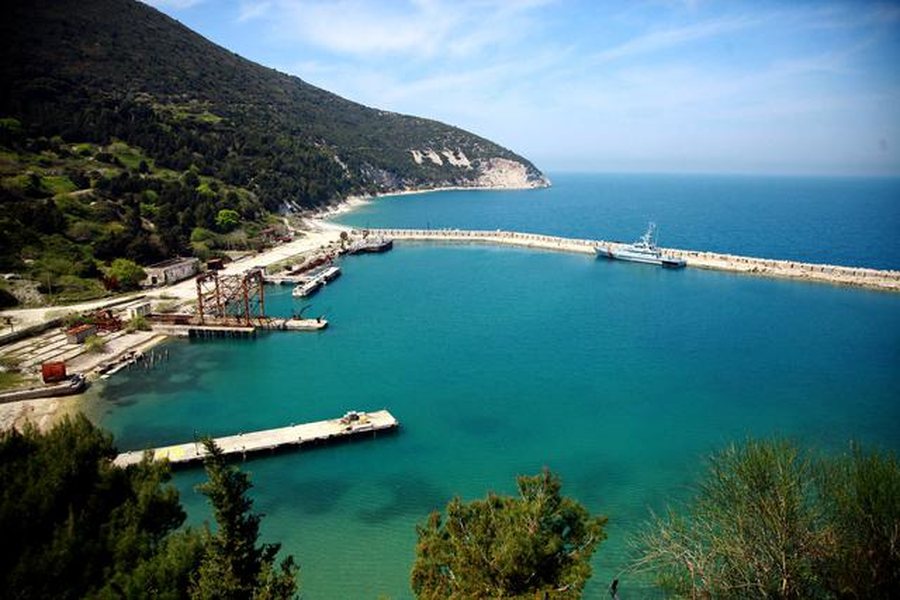
In fact, the change to the law was presented to have only one purpose: to fulfill a request received by the government from the company represented by the US president's son-in-law, Jared Kushner, for the anticipated investment on Sazan Island.
The SP's founding MP, Zamira Sinaj, used Sazan as an example to justify the modification of the law on "Tourist Ports", while claiming that this would serve all strategic investors who had foreseen the construction of a port in their projects.
The opposition opposed the initiative as "a tailor-made law" to favor 2-3 businessmen in the use of public property - a practice that contradicts the European integration process.
MP Jorida Tabaku said she had denounced the initiative to the European Commission as an intervention that "contradicts the Stabilization and Association Agreement and violates several key chapters of European legislation."
"The law on tourist ports is another custom law, one of dozens of such that have passed the Assembly, protecting special interests and not the public interest," said Tabaku, considering this as part of a repeated practice of the Rama government.
Tabaku told BIRN that this was one of dozens of clientelist laws of the socialist majority with the impact of distorting competition and misusing public property. According to the MP's groupings, these legal initiatives have set up mechanisms to favor small groups of individuals or companies close to the government.
Among the interventions approved over the last decade, Tabaku mentions the law on strategic investments or the establishment of the Albanian Investment Corporation, special laws for the Durrës Yacht Port or the National Theater, which was later overturned by the Constitutional Court, as well as laws on gambling, protected areas or technological parks, TEDA.
“The consequences on the economy are extraordinary and are being felt in most sectors,” Tabaku told BIRN.
'Customized' laws are considered one of the most obvious forms of state capture, through which public decision-making is dictated by the private interests of a small number of people.
According to economic expert Zef Preçi, the law that provides for the awarding of tourist ports without competition in favor of strategic investors is another example of state capture in favor of government clients.
"Through this amendment, through a dubious legal procedure, several million euros were removed from the budget that could have been brought in by the competition provided for in domestic legislation, while the influential power of money accumulated in a few hands over government decision-making and state lawmaking becomes clear," Preçi told BIRN.
Interfering with a permanent law in favor of a temporary law is also contrary to legislative technique, Preçi further emphasizes.
"The beneficiaries are the government's old and new clients," he said, adding that the citizen continues to remain lost, as he sees a significant portion of the country's assets passing into the hands of domestic capital or "foreign friends of the prime minister."
Neritan Sejamini, a political analyst, also emphasizes that these practices of granting public properties with favorable laws are harming the economy and free competition.
“There is nothing strategic about the so-called strategic investments that the government supports,” Sejamini said. “Strategic investors are the government’s regular clients, they are all Albanians, they are the same ones who get public contracts in other fields, who get construction permits and who benefit from monopolies and concessions from the government,” he added.
On the other hand, Sejamini estimates that their investments have no strategic importance, as they are all in sectors with little added value in the economy. On the contrary, according to him, there is no investment in production, infrastructure, energy, advanced manufacturing industries or important digital infrastructure.
Sejamini defines the strategic investment model as a way to privatize state property and grant favors to 'government clients'.
"What is most scandalous is that often the privileges that the government extends to these people are greater than the investments themselves," he stressed.
Zef Preçi emphasizes that custom laws distort public decision-making and put it at the service of narrow private interests.
"On the other hand, they reduce state budget revenues and create premises for the distortion of markets for the same goods or services offered by the beneficiary economic operators," he concluded. /BIRN/