

Rama denies it, but reports describe construction as one of the sectors most exposed to money of dubious origin.
While Prime Minister Edi Rama calls the connection between construction and money laundering "scum", international reports and Albanian institutions list the sector as one of the most exposed to money of dubious origin.
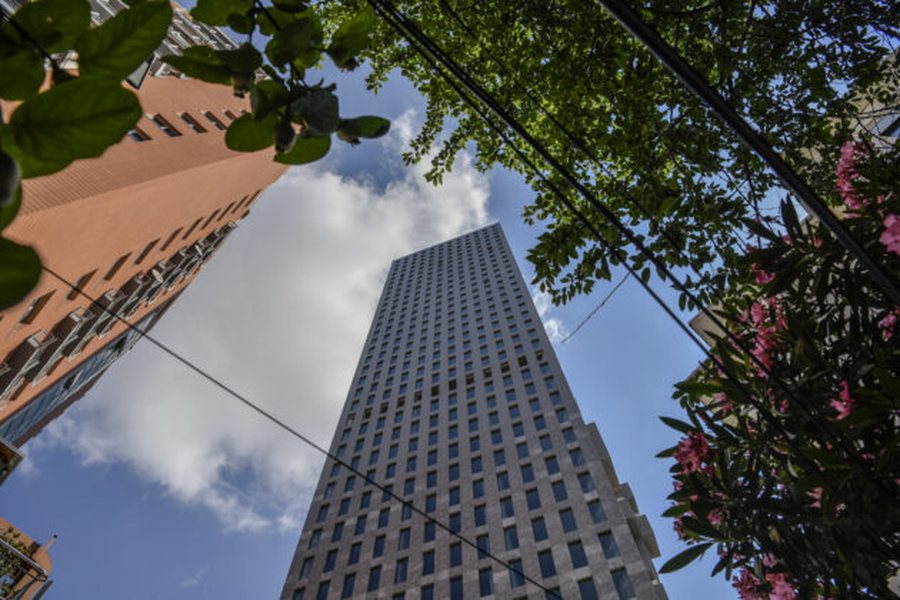
In recent years, the construction sector has become one of the main engines of development of the Albanian economy, reflected in the significant increase in tower blocks in the capital.
However, beyond the rapid urban transformation and increased investment, this sector has long been associated with question marks over the source of capital financing this construction boom.
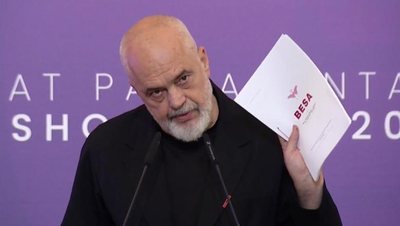
However, Prime Minister Edi Rama strongly rejected the accusations linking the construction sector to money laundering, describing them as "fantasy" and a deliberate attempt to smear the country and the construction industry.
"The extraordinary mudslinging that is being done to this industry to mudsling Albania, in fact, some who act as investigators when they expose images of Tirana, which is a European city, on screens, when you look at those images, they cover them with the sludge of fantasies of accusations, this is where Europe's money is laundered. Europe's money was laundered in Albania, in Tirana," Rama declared during a meeting with construction entrepreneurs in Tirana.
But beyond political rhetoric, a number of international and domestic reports speak of the use of real estate and construction projects as channels for integrating money of dubious origin into the economy.
Aries
In the International Narcotics Control Strategy Report 2025, the US State Department emphasized that “criminals launder proceeds through real estate purchases, construction projects… and business development.”
DASH links this phenomenon to drug trafficking, human trafficking, corruption, and tax evasion, while underlining that the cash-based economy and weaknesses in law enforcement create favorable terrain for money laundering.
SPAK
Similarly, SPAK's annual report for 2025 highlights a consolidated pattern of money laundering through formally legal businesses.
“Recurring features… include the use of entities… such as construction entities… to circulate and recycle funds,” the report said.
According to SPAK, the final phase of this scheme is investment in real estate, which aims to integrate criminal proceeds into the economy.
Financial Intelligence Agency
Albanian institutions that monitor financial flows also raise similar concerns. The Financial Intelligence Agency has identified high-value property investments with unclear sources of funds, as well as international transfers undocumented, as indicators of suspicious activity.
The institution emphasizes that these signals are often related to attempts to mask the real origin of money and integrate it into the formal economy through sectors with high capital turnover, such as real estate and construction.
Friedrich Ebert
These findings are also reinforced by independent studies. An analysis published by the Friedrich Ebert Foundation in 2025 sheds light on the scale of the phenomenon in the construction sector. According to the study, during the years 2015–2024, building permits with a market value of around 16.2 billion euros were issued, but only 7.1 billion euros were identified as being financed from legal sources, such as bank loans and foreign direct investment.
The difference of over 9 billion euros remains without a clear source. Although the study authors acknowledge that part of this value may be related to other factors, such as savings or unsold areas, they emphasize that this gap constitutes a serious indicator of the presence of illegal sources in the sector.
cONcluSiON
There is no evidence that the entire sector is involved in criminal activities, but the exposure to money laundering is high and documented. Therefore, Rama's statement that the connection of construction with money laundering is "dirt" and a "fantasy of accusations" is categorized as a half-truth.
The debate on construction in Albania thus remains open between two narratives, one that sees it as a symbol of development and modernization, and the other side that warns about the dangers that come from the lack of transparency over the source of capital.
Between these two positions, the facts presented by international and institutional reports show that the apparent success of concrete is accompanied by a strong shadow of suspicion, which requires greater transparency and continuous investigation of financial sources in the sector. /Faktoje.al/