


From a dynasty steeped in blood to a monument that challenged even Mecca, the story of Istanbul's Blue Mosque is not just a tale of architecture, but also of the ambition, rivalry, and scandals that changed the Ottoman Empire.
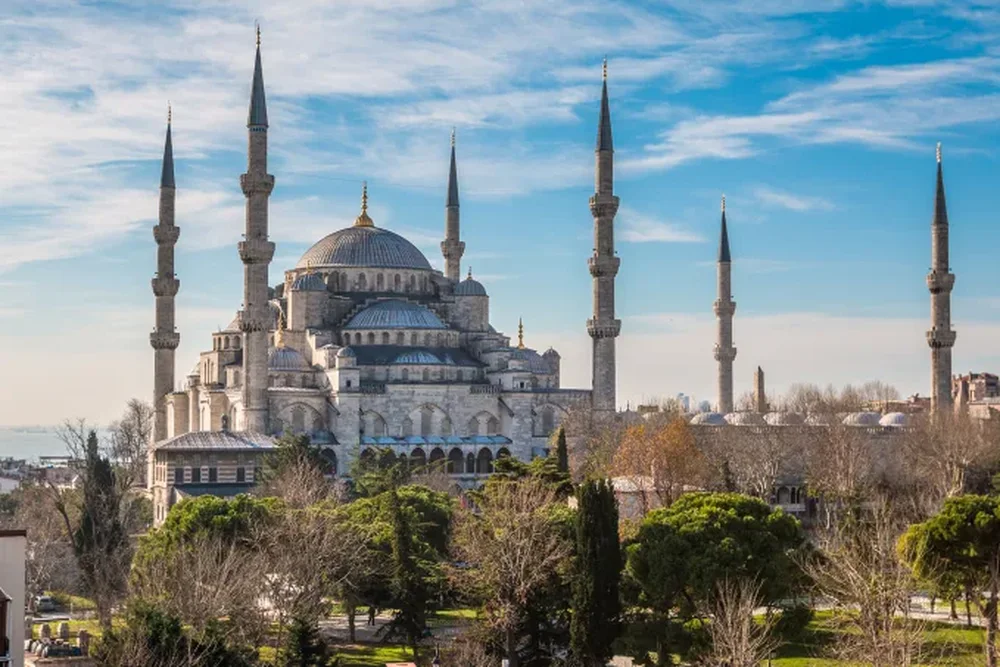
In the heart of Istanbul stands one of the most famous monuments of the Islamic world – the Sultan Ahmed Mosque, known worldwide as the Blue Mosque. With its six minarets and more than 20,000 blue-tinted ceramic tiles adorning its interior, it has been a symbol of the city for more than four centuries.
But behind its beauty lies a history filled with bloodshed, ambition, and religious controversy.
A teenage sultan who inherited a bloody empire
When Ahmed I ascended the Ottoman throne in 1603, he was only 13 years old. His father, Mehmed III, had gone down in history for one of the bloodiest acts of the Ottoman Empire: the execution of 19 of his brothers to avoid a power struggle.
A few months before Ahmed became sultan, his older half-brother, Mahmud, was also assassinated.
The young man inherited a powerful empire, but also a dynasty tainted by murders within the family.
A challenge to Hagia Sophia
At the age of 19, Ahmed decided to build a mosque that would rival the Hagia Sophia, the Byzantine masterpiece that stood just 300 meters away.
Architect Sedefkar Mehmed Ağa created one of the most perfect examples of classical Ottoman architecture, combining Islamic elements with Byzantine heritage.
But the project immediately sparked controversy.
The six minarets scandal
At that time, Ottoman imperial mosques were usually built with a maximum of four minarets.
Ahmed ordered the construction of six minarets, placing his mosque on the same level as the Great Mosque of Mecca (Masjid al-Haram), Islam's holiest site.
The decision caused outrage in the Muslim world.
Rumors spread that the sultan was considering himself equal to the Prophet Muhammad.
To quell the controversy, according to tradition, Ahmed financed the construction of a seventh minaret in Mecca, restoring the distinction between the two shrines.
Why is it called the "Blue Mosque"?
The name is not related to the appearance.
Inside are over 20,000 Iznik tiles, decorated with floral motifs and shades of blue, while around 260 windows fill the prayer hall with light that creates an almost heavenly atmosphere.
In the past, chandeliers were lit with oil, and ostrich eggs were hung in them, because it was believed that they would repel spiders.
Not just glass
The complex was not just a place of prayer.
It included a madrasa, hospital, hostel, kitchen for the poor, Arasta bazaar, and the mausoleum of Sultan Ahmed, becoming a religious, economic, and social center for the city.
The decision that changed Ottoman history
Ahmed I didn't just leave behind the Blue Mosque.
He also made a decision that changed the course of the Ottoman Empire.
Unlike his predecessors, he refused to kill his younger half-brother to secure the throne.
Instead of executions, the princes began to be kept isolated in the palace, in the so-called "Cage".
Historians believe that this practice produced rulers without political and military experience, contributing to the gradual weakening of the Ottoman Empire during the 17th century.
A monument that survived the centuries
Sultan Ahmed died of typhus at the age of only 27.
But the mosque he built continues to be one of the most visited monuments in the world.
After a six-year restoration, it fully reopened in 2023 and remains one of Istanbul's most powerful symbols – a masterpiece that emerged from a period filled with rivalries, scandals and royal bloodshed.