

Kosovo is once again entering an electoral process that, instead of solutions, is producing another chapter of uncertainty. In less than a year and a half, the country is going to parliamentary elections for the third time.
The June 7, 2026 elections will be the second early elections in a row for Kosovo, after those of December 2025, which came as a result of the failure of the ninth legislature to consolidate institutions.
Even the tenth legislature failed to fulfill one of the fundamental constitutional obligations, the election of the president, leading to the dissolution of the Assembly and the announcement of elections by the acting president, Albulena Haxhiu.
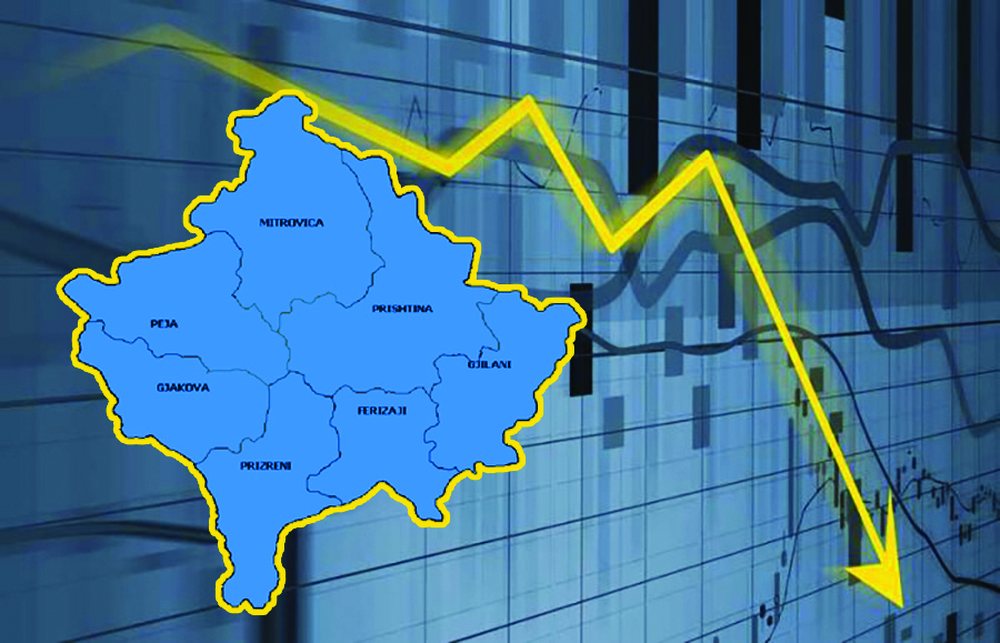
The political crisis in the country and the move to new elections are creating serious uncertainty for Kosovo's economy, jeopardizing the stability of businesses and economic development in general.
The Director of the Chamber of Commerce and Industry, Kushtrim Ahmeti, emphasized that frequent elections are bringing direct costs to the economy.
"Each new electoral process means months lost for decision-making and development projects. This is costing businesses delays, financial losses, and huge uncertainty about the future and investments."
The economy cannot wait indefinitely for political cycles – it needs immediate stability."
He emphasizes the role of DHTIK, lobbying for concrete solutions, proposing facilitating policies, and mediating communication between institutions and the private sector.
"Business representatives reported rising production costs, high dependence on imports, lack of institutional support, and delayed decision-making, factors that are making operating in the market increasingly difficult."
The American Chamber of Commerce in Kosovo has also issued strong warnings.
Mayor Arian Zeka recalled that political crises in the country have a clear history of negative impact on the economy.
"Historically, whenever we have had political deadlocks... this has always reflected in the economic growth rate, and during 2026 the expectations are for a low rate, entirely due to the prolonged political crisis."
He stressed that without institutional stability, foreign investments remain at risk.
"Foreign investors need stable institutions, they need stable environments, they need representatives of state institutions with whom they can talk and make their commitments and, at the same time, feel that their investments will be safe and will not be affected by any crisis or political uncertainty, which is characterizing our country.
"I hope that the next elections will be held as soon as possible in an orderly manner, so that after them we will not have any further delays in either the constitution of the Assembly of the Republic or the establishment of the new government and the election of the president of the country."
According to him, the lack of functional institutions is also creating a communication gap with potential investors.
"It's important that these investors have someone they can talk to."
On the other hand, the Kosovo Chamber of Commerce has raised the alarm about the risk of losing funds from the European Union.
Mayor Lulzim Rafuna warned that the lack of institutions could cost hundreds of millions of euros:
"The remaining amount of funds cannot be obtained without reforms... there is a very high risk that we will lose a very large portion of the funds."
Kosovo has around 880 million euros available from the EU Growth Plan, but has so far only received 63 million euros in pre-financing. The rest remains conditional on reforms that, in the absence of a functional Assembly and a government with a full mandate, cannot be implemented.
Rafuna stressed that the current situation makes it almost impossible for these processes to progress.
"It's too late now, all political parties are focused on the campaign."
In addition to the internal crisis, Kosovo's economy is also facing external pressures. According to Rafuna, the country has imported inflation as a result of rising energy and fuel prices.
"We are a country that imports a lot, and along with imports we have also imported price increases and inflation. The price of fuels is an operating cost for every business and this has automatically caused inflation."
While economist Safet Gërxhaliu says that these choices are a luxury and convenience that even European countries cannot afford.
Gërxhaliu also mentioned the inflation and price increases that have hit Kosovo.
"We are living in a time of global crisis, we are living in a time when inflation has gripped and hit the largest economies and not only Kosovo. We are in a time when the prices of essential products in Kosovo are really higher and are damaging the standard of living of Kosovo citizens and we are in a time when Kosovo needs numerous investments and capital projects, from which citizens' businesses will also benefit."
He also mentioned the lack of political compromise, while not believing that elections will be a solution, due to, as he said, the aggressive approach of the government.
"Kosovo will also lose in terms of absorbing funds from donors, especially from the European Union. It will damage its image, because none of the foreign investors will come to invest in Kosovo, in a country where there is no political stability and where there is no pro-business policy."
"Imports will increase and cash will be exported, and in this regard, in economic terms, we will have major consequences."
Over 10 million for one pair of elections
In this situation, even the budget for organizing the elections reflects the high cost of the political crisis. The Central Election Commission has approved a budget of 10,887,186.45 euros for the June 7 election process.
The election campaign will last only 10 days and 7 hours, from May 28 to June 7 at 06:59, while voting will be held from 07:00 to 19:00. The process also includes diaspora voting (May 25 – June 6), voting in diplomatic missions on June 6, as well as a series of registration and accreditation deadlines throughout May.
Compared to European countries, where three election cycles usually take place within 7 to 10 years, Kosovo is setting a new record, three elections within a year and four months.
In this reality, elections are no longer perceived as a solution mechanism, but as a symptom of a deep institutional crisis that is protracted and producing direct consequences for the country's economy and development.
Kosovo will go to new elections on June 7th after politicians failed to elect a president by April 28th, as required by the Constitution. These are the third national elections held in the country since February 2025.
The entire past year was accompanied by a political stalemate, due to the inability of politics to find a solution for building institutions.