


Following the failure of recent diplomatic talks in Pakistan between Iran and the US, there is uncertainty about whether hostilities will resume after the two-week ceasefire expires, and the Balkans' proximity to the Eastern Mediterranean has naturally raised concerns about the potential effects of the conflict spreading.
At present, the war is unlikely to directly destabilize the Western Balkans, although the situation remains volatile. Instead, the region will experience a largely indirect impact, through economics, diplomacy, and security issues, rather than through military confrontations. Although the Balkans are geographically close to the Middle East, their main exposure to conflict will come indirectly through rising energy prices, diplomatic positioning, and the potential for security risk spillover, rather than through direct military consequences.
The most immediate effect of the war on the Western Balkans will be economic. The region, like the rest of the world, will have to cope with rising gas and oil prices, which are already being felt. The economies of the Western Balkans remain dependent on fossil fuel imports. As a result, higher energy prices will put additional pressure on economies that have struggled to narrow their development gap with the EU.
There is also a problem with storage capacity, as the EU has set targets for member states to hold emergency oil reserves for 90 days – a target that non-EU countries in the Western Balkans are struggling to meet. According to a 2025 report by the EU Energy Community, oil reserves in countries such as Albania and Bosnia and Herzegovina were low or almost non-existent. In the context of the war in Iran, Serbia has secured a new three-month gas supply deal from Russia.
Second, there is a geopolitical dimension. The war will simply reinforce the reality that the Western Balkans are the periphery of the Euro-Atlantic world. Over the past 20 years, the EU has faced a series of crises, from the global financial crisis, the Eurozone crisis, the migration and refugee crises, the COVID-19 pandemic, the war in Ukraine, to the internal divisions and dysfunctions of Europe. Each of these crises has further diverted the EU’s attention from the Balkans, strengthened illiberal governance, and allowed the influence of non-Western powers to grow. The war in Iran further diverts Europe’s attention from the region, making EU enlargement even more complicated, even for frontrunners like Montenegro and Albania, while local governance issues remain unresolved.
The situation would be even worse if the war were to trigger a new refugee crisis in Europe. Although there are currently no immediate signs of such a thing, it remains a possibility and brings to mind the last refugee crisis of 2015. It was then that the EU began to see the Western Balkans more as a buffer zone against waves of refugees, rather than as a candidate region for future membership. The crisis gave authoritarian local leaders the opportunity to exchange their cooperation on migration issues for Europe’s silence on democratic regression. Any future refugee crisis would almost certainly increase the likelihood of this scenario repeating itself.
Western Balkan leaders position themselves
The third dimension is diplomatic. The war with Iran is now forcing Balkan countries to define their positions on the developing conflict. As during the UN debates on the war in Gaza in 2023, governments in the region are adjusting their positions depending on regional disputes and relations with major powers. Montenegro condemned Iran’s attacks on Gulf countries, expressing support for the US, but at the same time called for de-escalation. North Macedonia was a little more open to US support, emphasizing that diplomacy and deterrence must go hand in hand.
Since the fall of communism, Albania has maintained a pro-Israel stance, reflecting its broader orientation toward the United States. However, from time to time, as in 2023, it has been forced to balance its alliance with the United States with relations with other partners such as the EU and Turkey. Today, there is no longer any ambiguity. In January 2026, Albanian Prime Minister Edi Rama met with his Israeli counterpart Benjamin Netanyahu in Jerusalem and received a standing ovation in the Israeli parliament, the Knesset. Rama has been criticized domestically for his silence on the suffering of the Palestinians.
With the outbreak of war with Iran, Rama expressed support for the US, Israel and Arab countries. Albania has also declared Iran’s Islamic Revolutionary Guard Corps (IRGC) a terrorist organization. Kosovo’s President, Vjosa Osmani, enthusiastically supported the US attacks on Iran, writing on social media that “the hour of freedom has come for the people of Iran”, thus reaffirming Kosovo’s position alongside the US. Earlier, in January 2026, Kosovo, together with Albania, joined Trump’s Peace Council and both countries recently announced that they will send peacekeepers to Gaza as part of the US-led peace initiative.
In Bosnia and Herzegovina, Milorad Dodik, the informal leader of Bosnian Serbs and the Serb-dominated entity of Republika Srpska, wrote in X that “Republika Srpska will stand firmly with its friends and allies in Israel,” stressing that Israel and Republika Srpska face a “common existential threat posed by radical Islam,” while praising Donald Trump’s defense of Judeo-Christian civilization. This approach is not only related to Bosnia’s internal divisions, but also to Dodik’s long-standing policy of rapprochement with Israel, which began in 2012 when he led Bosnia and Herzegovina to abstain from a UN General Assembly vote to recognize Palestine as a non-member state. Dodik has also lobbied the Trump administration to lift sanctions against him, and in October 2025 the Trump administration lifted them.
Serbia finds itself in a more complicated diplomatic position. As part of its “multivector” foreign policy, Serbia has attempted to balance good relations with both Israel and the Palestinians. Today, Belgrade must balance relations between the US and Israel on the one hand and Iran on the other. After failed expectations that Donald Trump would significantly improve US-Serbia relations, Belgrade sees little benefit in worsening relations with Washington over a conflict over which it has limited influence.
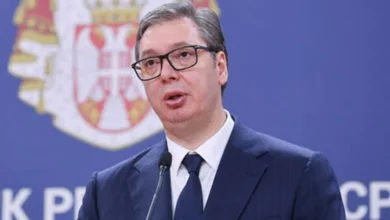
For the Serbian government, Israel and its lobby groups have become one of the last channels of access to the Trump administration. This was also reflected in the participation of Serbian officials in the American-Israel Public Affairs Committee (AIPAC) conferences in 2020 and 2026, as well as in Serbian ammunition shipments to Israel. Recently, Serbia, along with other Western Balkan countries, aligned itself with the EU’s decision to designate Iran’s Islamic Revolutionary Guard Corps (IRGC) a terrorist organization. During a surprise visit to the United Arab Emirates, Serbia’s main partner in the Arab world, Serbian President Aleksandar Vučić, condemned Iranian attacks on Gulf countries. In one of the most surprising moves, Serbia also announced that Israeli defense company Elbit Systems will build a drone factory on Serbian territory.
Serbia duhet gjithashtu të ketë parasysh Iranin, i cili nuk e njeh pavarësinë e Kosovës. Për këtë arsye, Serbia do të përpiqet të qëndrojë nën radar dhe me gjasë do të detyrohet të abstenojë gjatë votimeve për konfliktin në OKB dhe në institucione të tjera ndërkombëtare. Në përmbledhje, ndërsa malazezët dhe maqedonasit e mbështesin me kujdes SHBA-në dhe Izraelin, shqiptarët janë plotësisht të rreshtuar me ta, ndërsa serbët, pavarësisht një prirjeje të kujdesshme drejt Izraelit dhe SHBA-së, vazhdojnë t’I balancojnë marrëdhëniet dhe të mos mbajnë plotësisht vetëm një anë.
Rreziqet e përhapjes dhe shqetësimet e sigurisë
Së fundi, ekziston dimensioni i sigurisë. Mbetet një mundësi – por jo domosdoshmëri – që Ballkani të tërhiqet në rivalitetet e sigurisë së Lindjes së Mesme. Kjo buron nga afërsia e rajonit me Lindjen e Mesme, prania e objektivave të mundshëm si turistë izraelitë, investitorë dhe misione diplomatike, si dhe shërbime sigurie me përvojë të kufizuar në përballjen me konfliktet e Lindjes së Mesme. Në fakt, kjo ka ndodhur tashmë në vitin 2012, kur Hezbollahu, si përfaqësues i Iranit, kreu një sulm terrorist ndaj turistëve izraelitë në qytetin bullgar Burgas, në shenjë hakmarrjeje për vrasjet e shkencëtarëve bërthamorë iranianë dhe komandantëve të Hezbollahut.
Serbia dhe Bosnja dhe Hercegovina mund të bëhen zona të mundshme për tensione të tilla, duke pasur parasysh praninë historike të Iranit dhe ndjeshmëritë politike rajonale. Edhe Shqipëria mbetet e ekspozuar. Që nga viti 2013, ajo ka strehuar anëtarë të opozitës iraniane, grupit “Muxhahedinët e Popullit të Iranit” (MEK), një organizatë militante me strukturë të ngjashme me një kult. Prania e tyre ka kontribuar në rritjen e tensioneve mes Tiranës dhe Teheranit. Në vitin 2022, marrëdhëniet u përkeqësuan më tej kur Shqipëria ndërpreu marrëdhëniet diplomatike me Iranin pas akuzave se qeveria iraniane kishte kryer sulme kibernetike ndaj institucioneve shtetërore shqiptare.
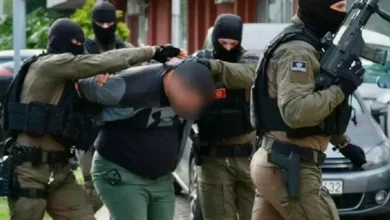
Ekziston gjithashtu mundësia e sulmeve nga individë të radikalizuar që veprojnë si “ujq të vetmuar”. Në qershor 2024, një oficer i xhandarmërisë që ruante ambasadën izraelite në Serbi u qëllua në qafë me një hark, nga një agresor i cili më pas u vra nga forcat e sigurisë. Në vitin 2012, një boshnjak i besimit vehabi me pasaportë serbe qëlloi ndaj ambasadës amerikane në Sarajevë, përpara se të plagosej dhe të arrestohej nga autoritetet lokale. Konfliktet në Lindjen e Mesme mund të nxisin gjithashtu individë të radikalizuar dhe të përkeqësojnë tensionet ndërkomunitare në rajon.
Këto realitete të sigurisë kanë qenë një faktor i rëndësishëm në angazhimin e Izraelit me Ballkanin gjatë 15 viteve të fundit, së bashku me fushatën diplomatike për t’i shtyrë vendet e Ballkanit të jenë më të prirura ndaj Izraelit në lidhje me çështjen palestineze. Serbët dhe shqiptarët, si dy nga grupet etnike më të mëdha dhe më strategjike në Ballkan, kanë qenë bashkëbiseduesit kryesorë për qeverinë izraelite.
Ultimately, the war with Iran reinforces the reality that the Western Balkans remain on the periphery of global geopolitics, affected more by indirect consequences than by direct confrontations. The people of the region have more reason to worry about the corruption and authoritarian tendencies of their governments than about US-Israeli airstrikes or Iranian drones. Belgrade, Sarajevo and Tirana remain safer than Tehran, Dubai or Tel Aviv./reporter