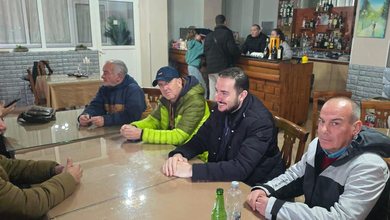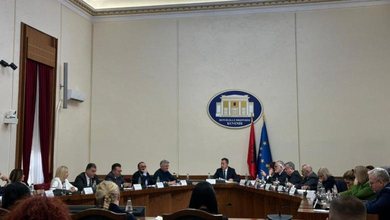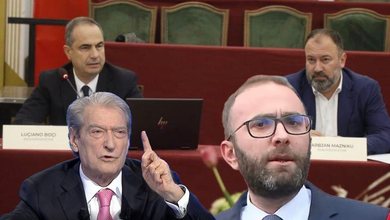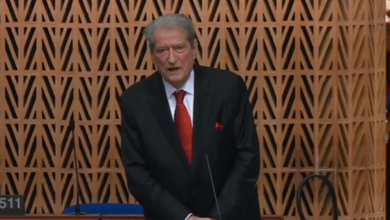



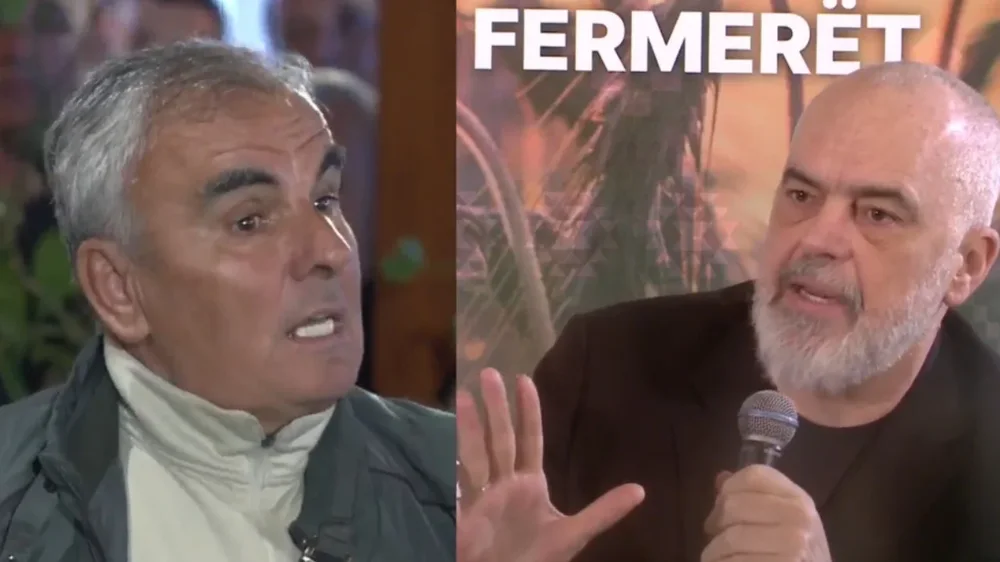
A citizen intervened during Prime Minister Edi Rama's meeting in Divjaka, raising concerns about the situation of farmers, whom he described as the most vulnerable segment of society.
His intervention brought a reaction from the Prime Minister, who requested that the citizen sit down and respect the order of speaking, emphasizing that the meeting had rules and that several people could not speak at the same time.
Rama: How do you understand this?
Farmer: Wait a minute, I'm a farmer!
They're trying to keep him from talking.
Farmer: I have up to 20 hectares of land. We are the most vulnerable class! I'm not doing politics, but I have a family.
Rama: I do politics, because I deny it. Please, please!
Farmer: I respect you, but we take the goods….
Rama: No one is forced on me. You won't take my word for it. Sit down, sit down, sit down! Wow. Because there is a queue and politeness. Words are not taken by force.
I will keep my family, not by words. We are in trouble
Rama: There are 500 people here. If they all went at the same time, it would be done here… I can't hear you because I'm going to leave. But what you said is impossible. In an open economy, closing borders for products because you want to. Once again, even before you take it upon yourself to accuse this or that…
Prime Minister Edi Rama held a meeting with farmers today as part of the presentation of the National Scheme 2026, where he emphasized that the agricultural sector is expected to benefit from more funds from the European Union.
During his speech, Rama stated that the state budget for agriculture could reach up to 1 billion euros, if necessary, underlining the strategic importance of this sector for the country's economy. He announced that 250 million euros have currently been made available for agriculture, while calling on farmers to use these funds and apply for loans through the banking system. The Prime Minister also called for greater commitment from local governments, ordering mayors to be more active and cooperate closely with farmers and agriculturists in the implementation of support schemes.