


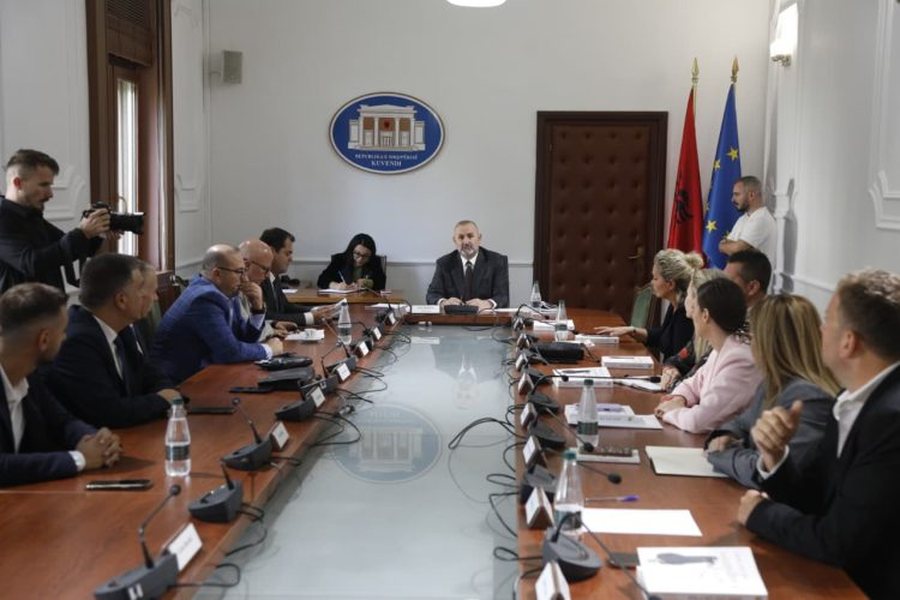
Komic's amendments propose changes to two laws; "On the Status of Prosecutors and Judges" and "Government Bodies of the Justice System".
The changes come as a result of requests filed by the justice bodies themselves in the Assembly for several years and mainly affect the 'vetting' of the selection of candidates for the High Prosecutorial Council and the High Judicial Council, aiming to 'embody the norms and practices' of the process for the vetting of the figure of non-magistrates elected from the ranks of the legal profession, civil society or the academic world.
In this context, the criteria for verifying the assets and integrity of the candidates' image are tightened in the process of their verification by the Ombudsman as the institution that carries out the first phase of document verification. The new provisions require that this process collect information about the candidates from all investigative, tax, etc. bodies.
The proposals also fulfill a request from the Prosecutor General for a more active role in the process of selecting heads of prosecution offices and adding criteria for vetting candidates for these positions.
"In the case of selecting the head of the prosecution, the opinion of the Prosecutor General on the candidate is also considered," one of the provisions states.
For magistrates seeking to be elected to head prosecutorial offices or courts, in addition to the vetting of assets and professional integrity, "current disciplinary measures" are added as an exclusion criterion from the competition.
The accompanying report of the draft laws emphasizes that the formulations came as a result of a long consultative process between the working group established in the Laws Committee in 2022 and reflect the comments of experts from international missions assisting the implementation of justice reform, such as the Delegation of the European Union and OPDAT.
The new provisions also aim to address the concerns of the High Inspector of Justice regarding the lack of interest of magistrates in applying for inspectorships.
The report states that magistrates will be encouraged to work on a permanent basis through legal changes that provide for the extension of the period of secondment to a longer period of 7 years and allowing magistrates to remain seconded even after the end of the general 10-year mandate, up to 15 years.
“This would enable magistrates who are close to retirement, but who have already reached the ten-year limit, to extend their delegation accordingly,” argues the proposer.
The draft law also provides for a "transitional provision" regarding the appointment of presidents of courts or prosecutors' offices for a transitional period from the entry into force of this law until December 31, 2028.
According to this provision, all magistrates who exercise their duties as presidents of courts of general and administrative jurisdiction, as well as heads of prosecutors' offices at courts of general jurisdiction of first instance and prosecutors' offices at courts of general appellate jurisdiction, are considered 'ipso lege' appointed presidents and heads.
The criteria for being automatically appointed under this law are related to passing the vetting process and fulfilling duties related to the administration of the institution.
The changes in the transparency of the Councils' decision-making aim to address the concerns of the media and civil society regarding the manner of anonymized publication of decisions related to professional evaluation, as announcements with anonymized names made these decisions incomprehensible.
In the accompanying report, Komici claims that the content of the changes is based on the institutions' own proposals and reflects the latest positions of international experts from the European Union's EU-Just mission and the American OPDAT. /BIRN/