


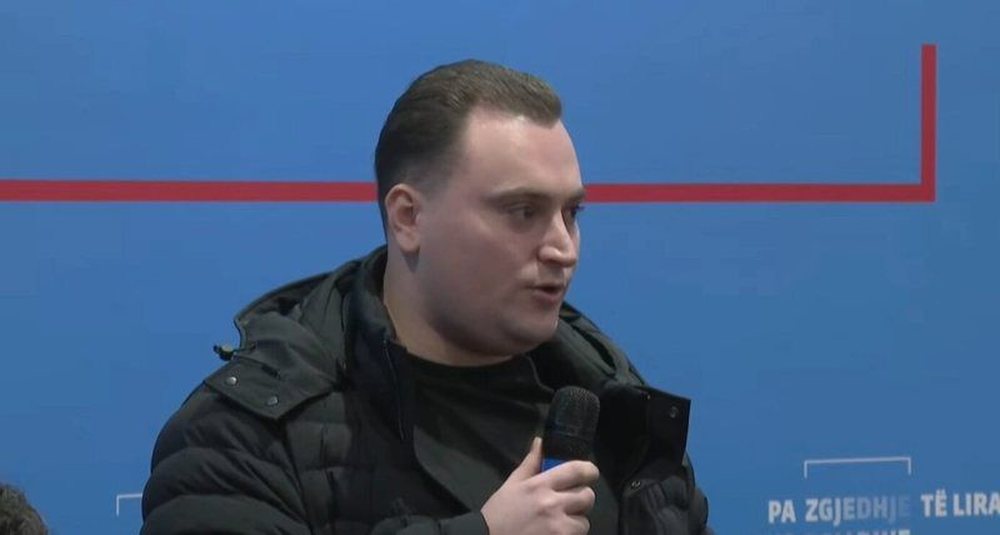
Glauk Olldashi, the son of the late former MP Sokol Olldashi, has articulated a direct criticism of the leader of the Democratic Party, Sali Berisha, during a meeting held with the DP Youth Forum.
In an intervention that contradicts the usual rhetoric of party structures, Olldashi has openly admitted that the Democratic Party is suffering from serious internal problems, which according to him should be discussed initially within the party.
"The DP has many problems today. It would be good to have a meeting without cameras and media, because I am of the principle that the problems of the house are discussed within it and not in the eyes of the world," he said.
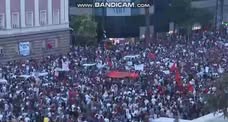
But his strongest criticism is related to the organization of weekly rallies in front of the Prime Minister's Office, which, according to Olldashi, have low participation and are damaging the party's image.
"Every Monday we hold a Pulpit in front of the Prime Minister's Office and the turnout is not very high. People don't want to come on Mondays, the problem lies with the Pulpit," he said, taking aim at the quality of the speakers.
According to Glauk Olldashi, some of the people who take the floor on the podium are not worthy of representing the Democratic Party and are seriously damaging public perception.
"My opinion is that many of the speakers there are not worthy of representing us. I don't know who chooses them, but the speakers who appear there are blaming us, they speak carelessly, some even stupidly. It harms us all, especially us young people. Damaging the image of the DP harms us more than you, doctor," he said.
Instead of the current format, Olldashi suggested a more thematic and professional approach for the Forums, with a focus on concrete issues and the participation of experts.
"Every Monday we will have a specific Podium: one for education, one for medicine, agriculture, oil workers. The problems in Albania are endless. We need experts so that when people follow us, they listen to us attentively and don't see faces that make us laugh," he said.
His intervention marks one of the most open criticisms from the younger generation within the DP towards the current leadership, highlighting the tension between the party's traditional discourse and the demand for reform of its image and content.