

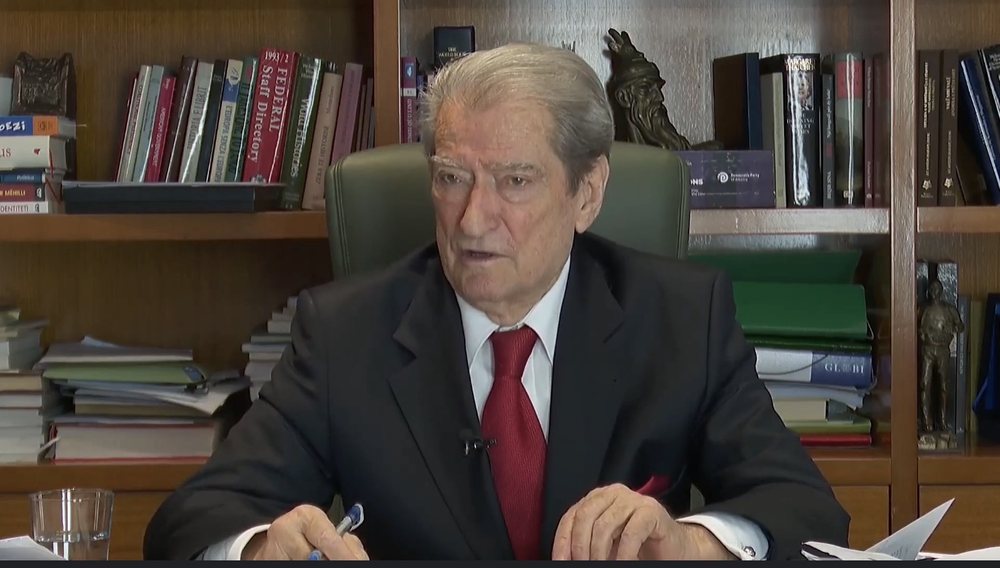
The leader of the Democratic Party, Sali Berisha, has commented on the developments in the United States and Venezuela, openly welcoming the decision of the US administration to overthrow and arrest Venezuelan President Nicolas Maduro. In a public statement, Berisha said that the US military forces and the US government made the decision to remove the "dictator of Venezuela" and evacuate him abroad, in order to subject him to justice.
According to Berisha, Maduro's removal from power is "good news for all free people in the world" and especially for the Venezuelan people, who, according to him, have suffered for years under a regime linked to drugs and electoral manipulation. He added that this development is also good news for Albanians, using the situation in Caracas as a parallel to the political reality in Albania.
Berisha compared Prime Minister Edi Rama to Maduro, describing him as his "clone" and bringing back the term "Ramaduro", which, according to him, has also been used by international media. He stated that the developments in Venezuela are a great encouragement for the Albanian opposition to do its political duty and work for the removal from power of a government that, according to him, rests on stolen votes, links to crime and theft of Albanians.
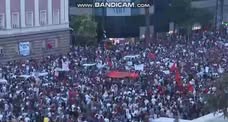
At the same time, Berisha announced the call for a joint round table with other political forces and representatives of civil society, speaking about the need for a broad opposition unity and the creation of a technical government as a solution to the political crisis in the country.
But this rhetoric of support for US actions and calls for democracy are accompanied by a strong political contradiction. Sali Berisha himself continues to be declared “non grata” by the US administration, a status that has not changed despite his continued lobbying efforts in Washington. According to public records, including lobbying contracts and payments amounting to several million euros, Berisha has attempted to influence the Donald Trump administration to lift this status, but without success.
In this context, while Berisha welcomes the American crackdown on an authoritarian regime in Latin America and uses it as a model for Albania, he himself remains sanctioned by the same American administration that calls for democracy and the rule of law. This contradiction, combined with the expulsion of Ervin Salianj from the leadership of the Democratic Party just a few days ago, raises questions about the sincerity of the calls for unity, inclusiveness, and democratic standards within the opposition itself.