


By Muriel
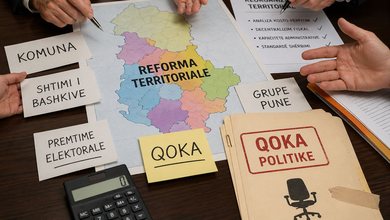
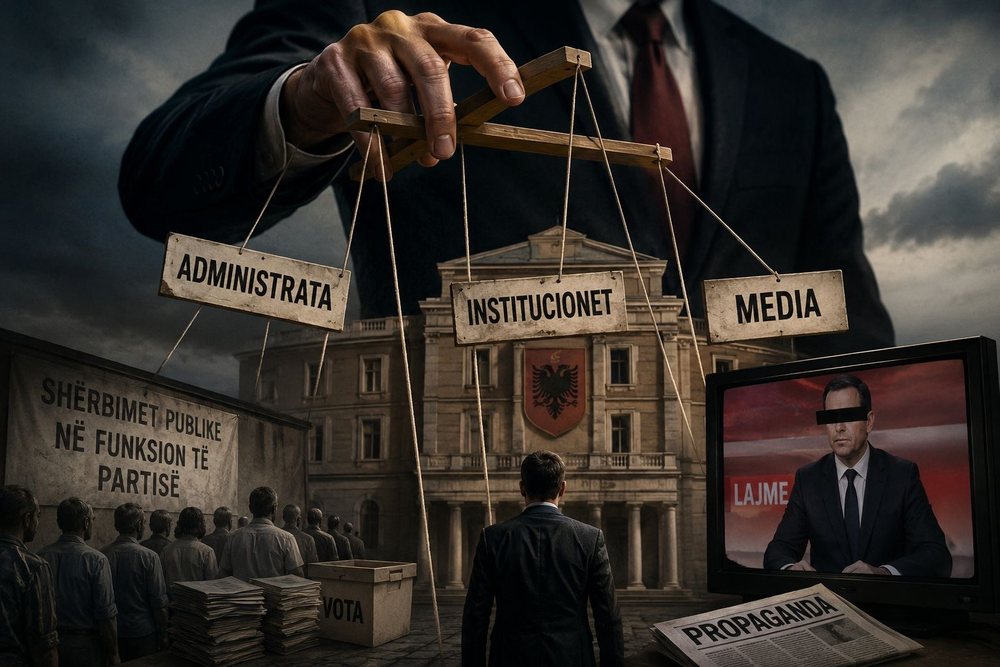
The latest report on Albania, adopted on May 5, 2026 by the European Parliament's Foreign Affairs Committee, should not be read as a praise for the government, but as an X-ray of a state where the government has captured the institutions, the administration and the media. While Rilindja, as usual, reads this document with the eye of propaganda, transforming Brussels' remarks about corruption and pressure on voters into "historic progress", the diplomatic reality speaks of a mechanism where the state has been put totally at the service of political power. Albania's problem is not the closed door of Brussels, but the key to the state that has been kept in the pocket of the government for years.
This state capture proves that elections are not only stolen on election day; modern theft begins much earlier, when public administration turns into an electoral department and public services are transformed into instruments of control. When international reports speak of a lack of equal conditions and intimidation of public employees, they describe a process controlled by electoral garb, where the main question remains: was the citizen truly free to choose in a climate where the campaign is carried out with the state budget and social fear on its side?
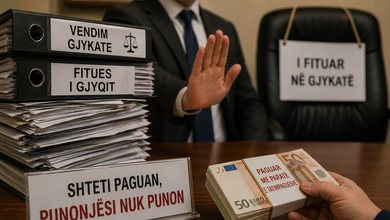
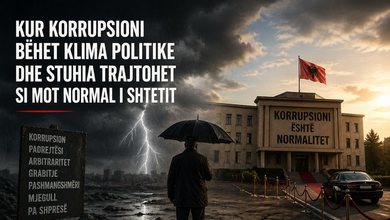
In this context, the administration has been transformed from a public service into a political machine. In the Renaissance state, the state office is treated as party property, where the citizen no longer feels the protection of the law, but the pressure of political alignment. This sophisticated system of dependence, where those who remain silent survive and those who align themselves are rewarded, shows that corruption is not simply a moral deviation, but the real fuel of the system. Tenders, concessions and appointments function as a cycle where public money feeds the clientele, which then finances the campaign that keeps power afloat. A government that has built its existence on this model cannot fight corruption without affecting itself.
The same logic of control is applied to the public sphere, where the media lives in a freedom of direction. It is not necessary to close the media to annihilate criticism; it is enough to create a decorative pluralism where screens are numerous but permitted questions are few. When journalists are treated as enemies and independent media are economically weakened, democracy remains a mere facade. This autocratic climate is not proclaimed by decree, but is gradually built through control of sources, intimidation in the dark corners of power, and the softening of institutions that should be independent.
At the end of the day, Rilindja uses Europe simply as a scenography for podiums and summits, while real European standards, such as fearless justice and a parliament that controls the government, remain violated. The May 5 report is a mirror, not a medal. It reminds us that Albania does not enter the European Union with geopolitical pictures, but when the citizen votes without fear and when the administration no longer works for the party. Until then, any claim to triumph is simply a mask on the face of a captured state.