


By Neli Demi
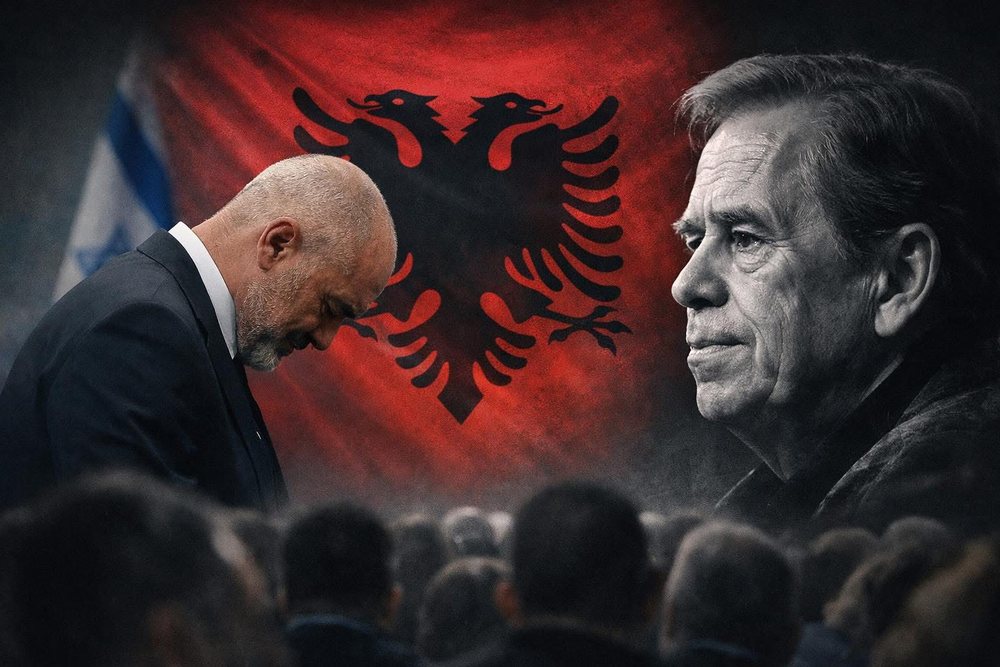
When Václav Havel is mentioned, one usually thinks of dissidence, prison, heroism. But Havel is not interesting because of his suffering. He is dangerous because of his clarity.
In the essay “The Power of the Powerless,” Havel doesn’t analyze the dictator. He analyzes the normal man. The vegetable vendor who puts the slogan “Workers of all lands, unite” in his shop window not because he believes in it, but because he fears the consequences of not putting it up.
This small act, Havel says, is the foundation of power.
Not violence. Not even the police.
But voluntary participation in a lie, justified as "wisdom."
Today we do not live in classical totalitarianism.
But the mechanism is the same.
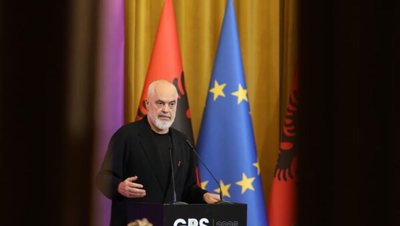
What we saw yesterday in Israel from Edi Rama was not a diplomatic slip. It was structured behavior. A deliberate act of symbolic humility, built on an internalized fear: the fear of being left without support, without protection, without "the big guys" above one's head.
The problem is not that Rama doesn't know what's happening. The problem is that he does. And he chooses, rationally, not to live in the truth, but in what Havel would call life within a lie.
In Albania, this lie has a beautiful name: national interest.
This name also justifies silence in the face of injustice, submission in the face of force, and the relativization of every moral norm.
Like Havel's vegetable vendor, the current government in Albania does not say: "This is right." It says: "This is necessary." And society accepts it.
Here lies the real problem. Not with Rama as an individual, but with the Albanians' relationship with fear.
We are no longer afraid of prison. We are afraid of isolation and indirect punishment. We are afraid of the idea that "without external support, we do not exist." This fear produces servility. And servility, when repeated, becomes a political culture.
Havel warned that the strongest power is the one that no longer needs to force. The one that waits, because it knows that man will adapt himself, to survive. Today, Albania is not oppressed. It adapts.
And the question that needs to be asked is not whether Rama's act was excessive or tactically wrong. The real question is much more uncomfortable: How long will we call servility realism and fear prudence?
Because, as Havel would say, the moment we give up the truth to maintain security, power no longer needs to deceive us.
We do it ourselves.