


By Neli Demi
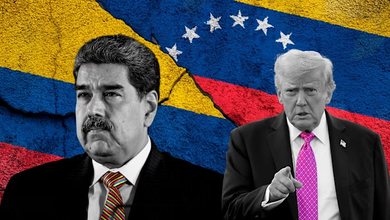
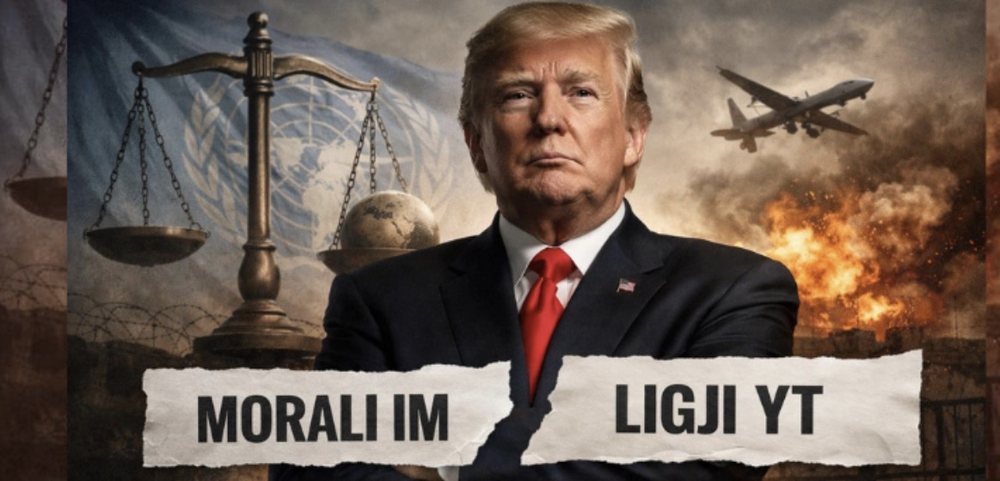
When a president declares that the only limit to his power is “personal morality,” we are no longer dealing with a political debate, but with a fundamental shift in the way power itself is understood. In his January 8 interview with The New York Times, Donald Trump does not simply challenge international law or multilateral institutions; he articulates a worldview in which the limit shifts from public order to the mind of the individual. This is not simply a style of governance but, in my view, a symptom of a power that can no longer tolerate mediation.
In modern democracies, power never exists naked. It is always mediated by law, institutions, treaties, and checks and balances that transcend the individual. Even the most powerful presidents operate within a symbolic order that does not belong to them personally. It is precisely this order, often slow, imperfect, and even irritating, that makes power predictable and livable.
When this order is replaced by the statement “the border is my morality,” a fundamental shift occurs: the law is privatized, responsibility is subjectivized, and the border ceases to be shared. It is no longer the system that restrains the individual, but the individual who decides whether the system is valid or not. This is not simply political arrogance; it is a form of thought in which power refuses any mediation.
From law to will
The rejection of international law and the relativization of treaties are not just tactical choices. They signal a shift from the order of rules to the order of will. In this logic, force becomes the criterion of legitimacy and agreements are seen as obstacles, not as guarantees of stability. The law does not disappear, but remains awaiting the will of those who have the power to implement or bypass it.
This type of power does not see the border as protection, but as weakness. Therefore, it always seeks to shift it outside itself, to the other: to "weak" allies, "inefficient" institutions, "outdated" rules.
The psychology of possession
One of the most revealing moments of the interview is the way Greenland is discussed. The argument is not built on strategic needs or legal frameworks, but on the idea of "ownership". Possession, that is, ownership, is presented as a psychological necessity for success.
Here politics speaks the language of psychology: agreement is not enough because it requires trust; a treaty does not calm because it presupposes dependence on the other. Only possession gives the feeling of total control. It is the logic of a power that does not tolerate uncertainty and that, to reduce anxiety, needs to possess, not to cooperate.
Unpredictability as a weapon
When fear is used as a diplomatic tool, law becomes unnecessary. Unpredictability becomes a weapon, and threat replaces rule. This form of power works in the short term, because fear produces rapid submission. But it does not produce trust, nor stability.
A world ruled by fear is a world that imitates fear. Every such act legitimizes others to act in the same way. And so, what begins as a show of force ends up as a cycle of global insecurity.
The power that rejects the superego
International institutions, law, and treaties function as a kind of collective superego: an external authority that sets limits even when the desire to act is great. When this authority is rejected and replaced by “personal morality,” the limit does not disappear, but becomes unstable. It depends on the mood, the interest, and the moment experienced by the individual.
A power without sustainable limits is always a source of anxiety, not only for those who experience it, but also for those who exercise it. Because the lack of limits does not bring peace, but the obligation to always be stronger, more threatening, more uncontested.
A symptom of our times
This is not just the story of one president. It is the story of a time when symbolic boundaries are weakening and the temptation to replace law with will is growing. In this climate, power that promises absolute control seems tempting. But history shows that power that accepts no limits does not produce order, but cycles of fear and conflict.
Ultimately, the question is not whether a leader has personal morality. The question is whether an interconnected world can be safe when the limits of power are no longer shared, but determined by the mind of a single man.